Austria Begins Eurofighter Supersonic Training With Night-Vision Exercises
Austria begins Eurofighter supersonic training on November 3, including night-vision interception exercises and high-speed airspace defense operations.

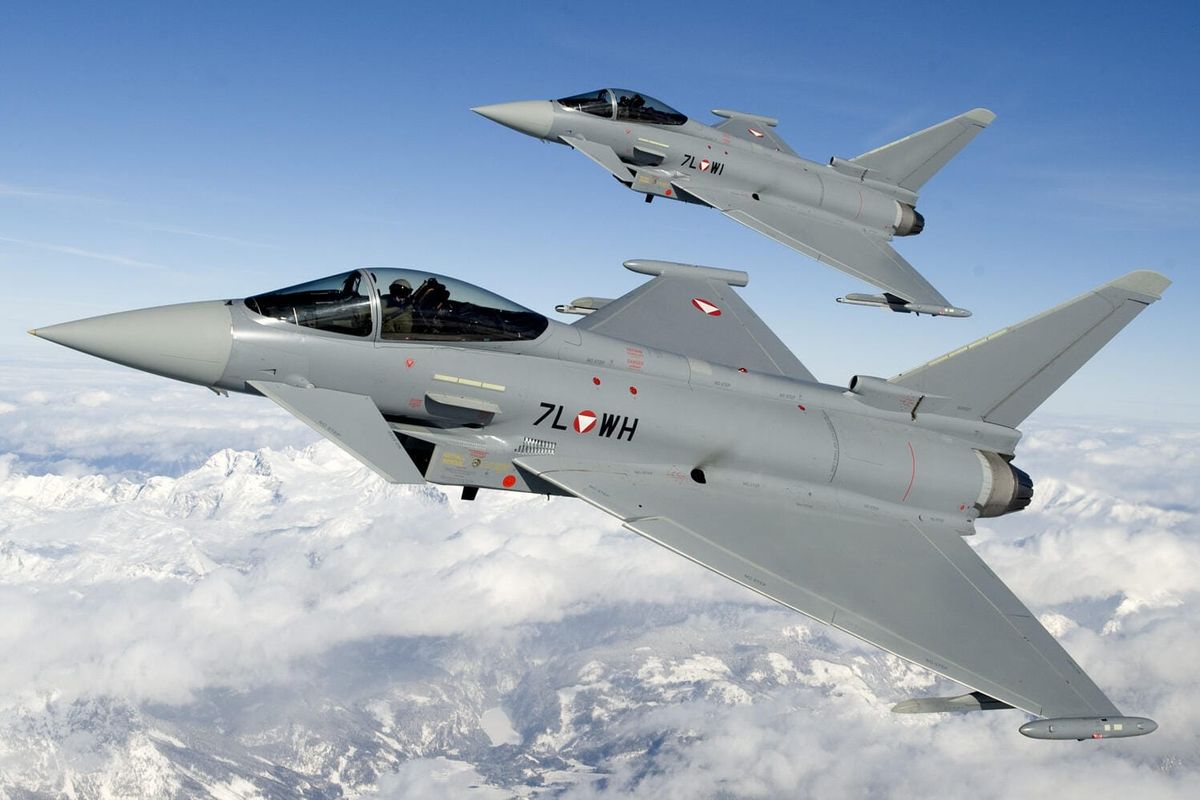
Austria's Armed Forces are beginning a new round of Eurofighter Typhoon supersonic training on November 3, with pilots conducting high-speed interception exercises and practicing aircraft identification under reduced visibility using newly introduced night-vision goggles.
The training is scheduled between November 3 and 13, marking the Austrian Air Force's second supersonic exercise period of 2026. Up to three supersonic flights are planned on designated training days between 8 a.m. and 7 p.m., according to the Austrian Ministry of Defense.
The program includes exercises on November 3–4 and November 10–12, with some flights extending beyond regular operating hours to allow pilots to train in daylight and darkness.
Night-Vision Training Strengthens Air Interception Capabilities
According to information distributed by the Styrian Military Command, trainee Eurofighter pilots will use newly introduced night-vision goggles to practice visually identifying and intercepting airborne targets under limited visibility conditions.
The exercises are intended to reproduce the physical demands of high-speed flight that cannot be fully simulated on the ground. They also require close coordination between fighter pilots, military radar controllers, and civilian and military air traffic control.
Austria's Eurofighter fleet remains central to the country's airspace surveillance and interception capability. The Austrian Armed Forces operate 15 Eurofighter Typhoon aircraft while longer-term plans to replace the fleet remain under consideration.
As previously reported by AdriaDefense, Austria's Chief of the General Staff, Harald Vodosek, has called for a future fleet of 36 combat aircraft to strengthen national air defense capabilities.
Supersonic Flights to Cover Much of Austria
The training will take place across large parts of Austrian airspace, excluding densely populated areas and the federal states of Tyrol and Vorarlberg.
Flight areas will be coordinated with civilian air traffic control. To limit noise on the ground, aircraft will conduct supersonic flights above 12,500 meters, with acceleration phases kept as short as possible.
No supersonic training flights are planned between noon and 1 p.m. or during weekends. The military will also monitor the geographical distribution of sonic booms to avoid repeatedly exposing the same areas to high noise levels.
The Bundesheer said supersonic training is necessary for maintaining operational readiness, particularly when pilots must respond quickly to unidentified aircraft entering Austrian airspace.
The November exercise is part of routine operational training and does not involve a newly announced aircraft procurement or deployment.
Sources: Austrian Armed Forces