Austria Launches Military Pilot-Sharing Model With Austrian Airlines
Austria is testing a new model allowing military pilots to split the year between the Bundesheer and Austrian Airlines, with the first two aviators now beginning Airbus A320 training.

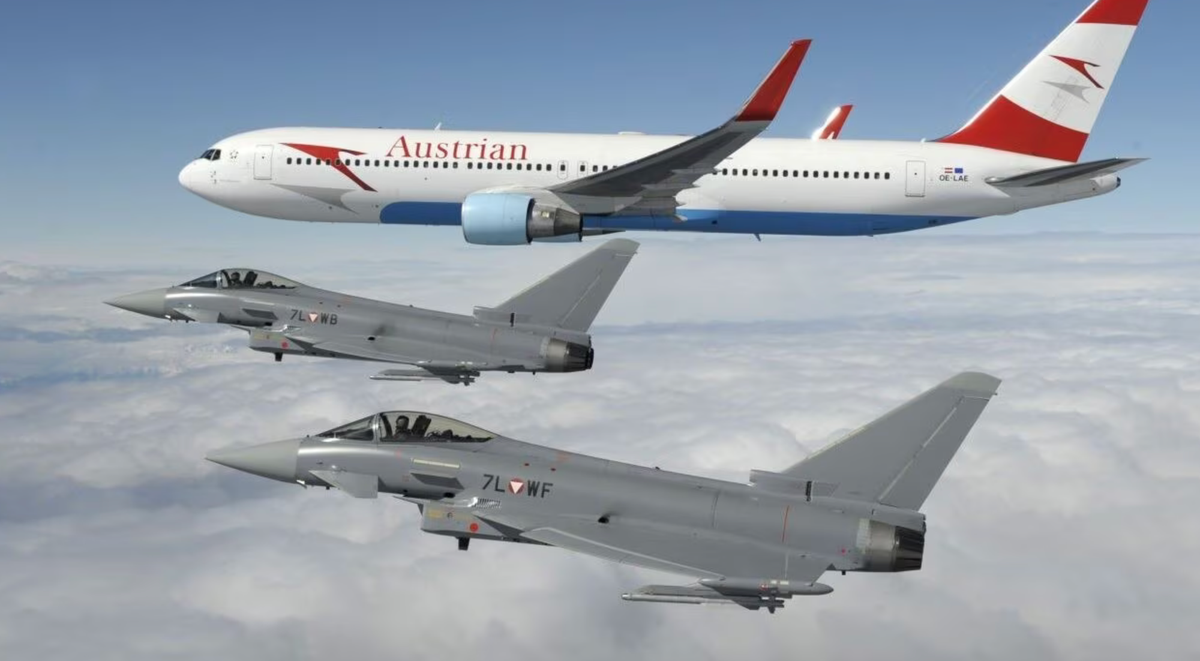
Austria’s armed forces and Austrian Airlines are launching a pilot-sharing model that could see military aviators divide their working year between the Austrian Air Force and the country’s flag carrier.
Two Austrian Armed Forces pilots, one jet pilot and one helicopter pilot, began Airbus A320 type training with Austrian Airlines on September 28, according to Austrian newspaper Kronen Zeitung. The initiative is intended to test whether experienced military aviators can work simultaneously for the armed forces and the civilian airline without being permanently lost to commercial aviation.
Under the planned model, the pilots would spend six months of each year flying for the Austrian Armed Forces and the other six months operating commercial services for Austrian Airlines.
The proposed annual rotation would place the pilots with the Bundesheer from November through April and with Austrian Airlines from May through October. After the first operating season, Austria’s air force plans to evaluate the model before deciding on further implementation.
A320 training starts first
The first two participating military pilots have already started their Airbus A320 type training.
According to the report, Austrian military pilots obtain basic fixed-wing flying qualifications and relevant licenses during their military flight training, meaning the aircraft-specific A320 qualification represents the main additional training required before entering airline service.
The type training is expected to be completed during summer 2027. The two pilots could then begin operating Austrian Airlines passenger flights, with the dual-employment model planned to become fully operational from 2028.
Austrian Airlines’ short- and medium-haul fleet is centered on the Airbus A320 family, and the airline plans to operate an exclusively A320-family short- and medium-haul fleet from 2029.
Keeping military pilots in uniform
For the Austrian Armed Forces, the primary objective is personnel retention.
Military pilots can currently leave the Bundesheer after completing their minimum service commitment and move entirely into commercial aviation. Under the new arrangement, participating pilots would remain available to the military for at least six months annually for another ten years while also developing a parallel civilian airline career.
That would allow the armed forces to retain experienced pilots and the considerable investment made in their training while giving personnel access to a civilian career path that would otherwise potentially draw them away from military service completely.
For Austrian Airlines, the arrangement could provide additional cockpit capacity during periods of higher commercial demand.
The initiative is also intended to contribute to Austria’s broader effort to rebuild a pool of militia pilots who combine civilian aviation employment with military qualifications.
The concept itself is not entirely new. Austria previously used airline pilots as military reserve aviators, while cooperation between the Bundesheer and Austrian Airlines has existed for decades. The Bundesheer’s own historical records document joint flying activities with Austrian Airlines, including training involving Eurofighters and Austrian passenger aircraft.
Part of a wider Austrian Air Force expansion
The personnel initiative comes as Austria is significantly expanding and modernizing its air capabilities.
The Ministry of Defence said in March 2026 that 16 pilots were active on the Eurofighter Typhoon system, with additional pilots undergoing jet and military flight training.
In July, another 17 military pilots completed their basic flight training in Zeltweg. Eleven moved toward instrument-flight training while another six had already begun advanced type training.
The demand for trained crews is expected to increase further. Austria has ordered 12 Leonardo M-346FA aircraft, which are scheduled to be based at Linz-Hörsching from 2028, while four Embraer C-390 Millennium transport aircraft are also being introduced into service. The first C-390 is currently scheduled for delivery in May 2028.
Against that backdrop, retaining experienced military aviators while making military service more compatible with civilian aviation careers could become an increasingly important element of Austria’s air force personnel strategy.
Austrian Airlines Chief Operating Officer Stefan-Kenan Scheib and Austrian Air Force commander Major General Gerfried Promberger are among the senior officials involved in the cooperation. Scheib has responsibility for Austrian Airlines’ flight operations, crew training, technical operations and other operational divisions.
Source: Kronen Zeitung