Cerberon and Dynamit Nobel Defence Complete Flight Test of Modular Drone Weapon System
Germany's Cerberon Defence Systems and Dynamit Nobel Defence successfully tested their Modular Lethality Kit aboard a flying drone, advancing a modular approach to loitering munitions.

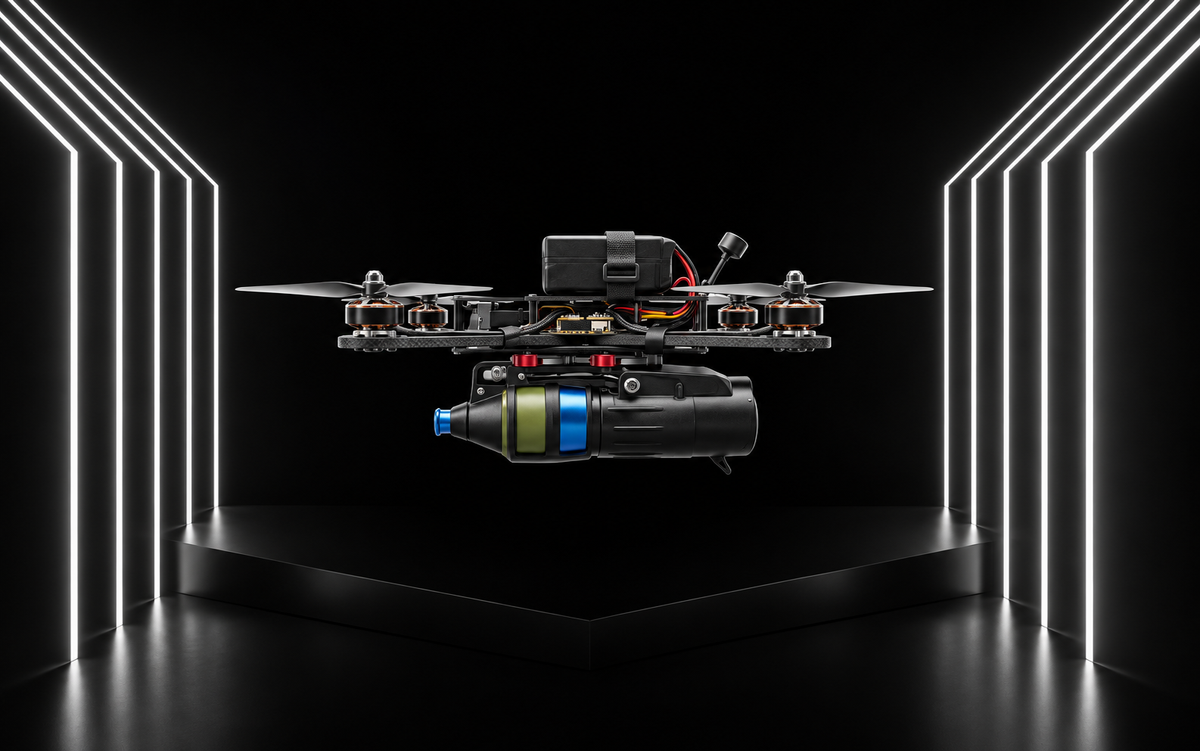
German defense technology companies Cerberon Defence Systems and Dynamit Nobel Defence (DND) have successfully tested the complete functional chain of their Modular Lethality Kit (MLK) under flight conditions, marking a new development milestone for a system designed to turn compatible drones into loitering munitions.
The companies announced on November 16 that the integrated warhead and safety module had been tested aboard a flying drone under controlled conditions inside a Dynamit Nobel Defence test facility.
The trial demonstrated the interaction between the drone and the module's integrated operating and safety functions, according to the manufacturers.
Further open-air flight tests are planned in Thuringia during November, with development continuing toward manufacturer qualification.
Turning Existing Drone Platforms Into Loitering Munitions
The MLK is designed as a modular system that can be integrated with different unmanned aircraft platforms, allowing manufacturers to incorporate a weapon and its associated safety functions without developing a complete integrated solution independently.
According to the companies, the module combines a warhead, an electronic safe-and-arm device and additional safety electronics, including late-arming and flight-abort functions.
The system is intended to support qualification under applicable NATO safety standards. However, the successful flight test does not mean that the complete system has already received military qualification or entered operational service.
The manufacturers say the modular approach could allow armed forces to procure drone platforms and associated weapon modules separately, giving customers greater flexibility when selecting suppliers.
German Production and Industrial Cooperation
Cerberon is responsible for the MLK's development, systems architecture, safety concept and qualification strategy, while Dynamit Nobel Defence contributes its warhead expertise, final assembly and testing infrastructure.
The companies say structural components, warheads and safety electronics are manufactured in Germany, with final assembly conducted by Dynamit Nobel Defence.
Cerberon also plans to establish German production of electronic safe-and-arm devices through its cooperation with Turkish specialist Artron.
According to the companies, MLK integration activities are already underway with several German drone manufacturers, while discussions are taking place with additional industry partners and potential military customers.
The announcement adds to Cerberon's growing presence in European unmanned weapons development.
As AdriaDefense previously reported, Cerberon was among the top ten companies in the European Defence Agency's Sentinel Strike Challenge, although it did not advance to the final operational testing stage.
Dynamit Nobel Defence has also been expanding its unmanned systems activities, including cooperation with Croatia's DOK-ING on remotely operated mine-laying technology.
The MLK project reflects a broader shift in the European defense industry toward modular unmanned weapons, where aircraft platforms, payloads and mission systems can increasingly be developed and procured through separate industrial partnerships.
The next important milestone will be completion of flight testing and qualification, followed by evidence of customer adoption and operational deployment.