Bulgaria Air Defense Gaps Exposed After Drone Incursion
A drone explosion near Bulgaria’s border with Romania has renewed scrutiny of radar coverage, counter-drone defenses and the pace of air defense modernization.


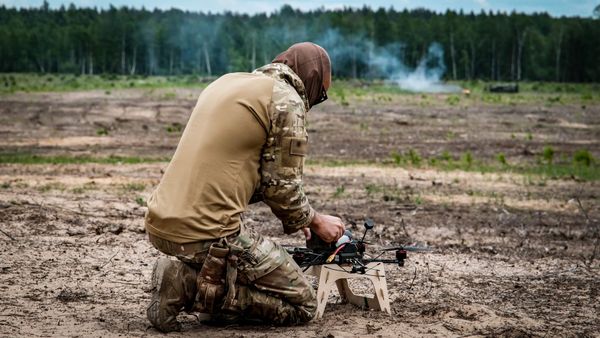
Bulgaria’s ability to detect and counter low-flying unmanned aircraft is facing renewed scrutiny after a drone crossed from Romania and exploded near Kardam on August 8, 2026. The aircraft was not detected before entering Bulgarian territory, exposing a gap that Sofia is trying to address through new radars, counter-drone capabilities and the IRIS-T SLM air defense program.
The incident occurred close to strategically important energy infrastructure near the Bulgarian-Romanian border. No casualties or infrastructure damage were reported, but the proximity of the explosion to the Trans-Balkan gas pipeline infrastructure has focused attention on the difficulty of detecting small aircraft operating at low altitude.
Bulgarian security specialists have warned that the problem extends beyond a single border incident. The challenge for Sofia is increasingly one of building a layered architecture capable of detecting and engaging drones alongside conventional aircraft, cruise missiles and other aerial threats.
Kardam incident highlights Bulgaria’s low-altitude detection gap
Bulgaria’s Ministry of Defense assessed the aircraft involved in the August 8 incident as most likely a Maya decoy drone of a type used by the Ukrainian Armed Forces. Authorities said there was no indication that the intrusion into Bulgarian territory was intentional.
The more significant issue for Bulgarian air defense planners is that the aircraft apparently crossed Romanian and Bulgarian airspace without being detected by existing surveillance systems. Prime Minister Rumen Radev subsequently pointed to the continuing challenge of detecting small, low-altitude drones and to delays affecting new high-precision radars.
That vulnerability is not limited to the military domain. Earlier in 2026, Bulgarian counter-drone specialist Stoyko Topalov warned that the country’s airports lacked dedicated anti-drone systems after drone activity near Vasil Levski Airport in Sofia disrupted operations.
The incidents illustrate the distinction between traditional air surveillance and counter-unmanned aircraft system requirements. Fighter aircraft and medium-range surface-to-air missiles remain necessary against conventional threats, but small drones can require additional sensors, electronic warfare equipment and lower-cost interceptors.
Bulgaria is buying seven new radars and IRIS-T SLM
Sofia has already launched major programs intended to replace parts of its Soviet-era air defense infrastructure. In June 2026, Bulgaria’s National Assembly approved €195 million for seven new three-dimensional radar systems for the Bulgarian Air Force, with the acquisition intended to modernize national airspace surveillance and improve NATO interoperability.
The country is also acquiring the German IRIS-T SLM medium-range ground-based air defense system through the European Sky Shield Initiative. Bulgaria and Germany signed the program agreement for the joint procurement in September 2024.
The initial Bulgarian acquisition was valued at €182,114,311 and covered one IRIS-T SLM system. The approved framework also provided options for up to five additional IRIS-T SLM systems and one longer-range IRIS-T SLX system through 2032.
IRIS-T SLM provides an engagement range of about 40 kilometers, while manufacturer Diehl Defence has been expanding production as European demand for ground-based air defense increases. The company expects production of up to 10 IRIS-T SLM and SLS firing units in 2026 and aims for capacity of up to 16 annually within two years.
Counter-drone defense remains a separate requirement
Medium-range missile systems alone do not resolve Bulgaria’s vulnerability to small unmanned aircraft. Using comparatively expensive surface-to-air missiles or fighter aircraft against low-cost drones can create both operational and economic constraints, particularly during sustained or mass attacks.
Bulgaria has therefore also examined dedicated counter-unmanned aircraft systems. Reports in February indicated that Sofia was considering the acquisition of more than 100 Greek Centauros counter-drone systems through the European Union’s Security Action for Europe financing mechanism. Centauros, developed by Hellenic Aerospace Industry, focuses on electronic countermeasures against unmanned aircraft.
Such capabilities could complement rather than replace Bulgaria’s conventional air defense modernization. A layered network would require surveillance radars, passive and specialized drone sensors, electronic warfare systems, short-range effectors and medium-range systems such as IRIS-T SLM to address different threat classes.
Bulgaria’s air defense gap matters across NATO’s Black Sea flank
Bulgaria occupies NATO territory on the western Black Sea and borders Romania, another alliance member that has faced repeated concerns over drones approaching or entering its airspace since Russia’s full-scale invasion of Ukraine.
The Kardam incident demonstrates that the challenge is no longer limited to countries directly bordering Ukraine. Even an apparently unintended incursion can place an explosive-carrying unmanned aircraft close to civilian infrastructure without triggering timely detection.
For Sofia, the modernization challenge is consequently broader than replacing individual Soviet-era systems. Bulgaria must connect new radars, counter-drone equipment, fighter aircraft and surface-to-air missile systems into a layered network that can detect targets across very different altitude, speed and radar-signature profiles.
The seven planned radars and the IRIS-T program represent major elements of that transition. The August 8 incident, however, indicates that the timing of those programs and the development of dedicated low-altitude counter-drone coverage will remain central issues for Bulgarian air defense planning.
Bulgaria air defense: Key questions
Why did the August 8 drone incident raise concerns about Bulgarian air defense?
The drone crossed from Romania into Bulgaria and exploded near Kardam without being detected beforehand by Bulgarian or Romanian surveillance systems. The incident highlighted the difficulty of detecting small aircraft flying at low altitude.
What new air defense system is Bulgaria buying?
Bulgaria is acquiring the German IRIS-T SLM medium-range surface-to-air missile system through the European Sky Shield Initiative. The initial acquisition covers one system, with options for up to five additional IRIS-T SLM systems and one IRIS-T SLX system.
Is Bulgaria replacing its air defense radars?
Bulgaria’s parliament approved €195 million in June 2026 for seven new three-dimensional radar systems for the Bulgarian Air Force. The project is intended to improve surveillance and interoperability with NATO networks.
Is Bulgaria developing dedicated counter-drone defenses?
Bulgaria has been assessing additional counter-drone capabilities alongside its conventional air defense modernization. Reported options include more than 100 Greek Centauros systems, although the potential acquisition should be distinguished from Bulgaria’s already established IRIS-T program.