Bulgaria Receives Two Axon Counter-Drone Systems After Incursion
Bulgaria has received two Axon counter-drone systems after an August 8 drone incursion, with two more systems expected to arrive shortly.

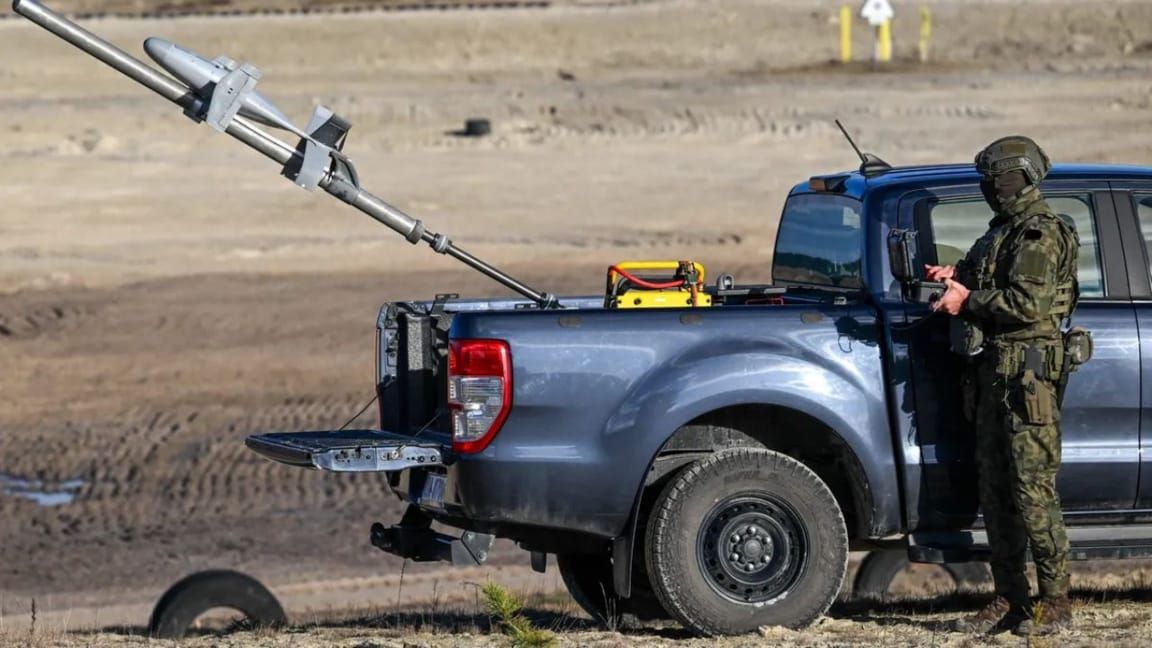
Bulgaria has received two counter-drone systems from U.S. technology company Axon and plans to put them into operation after personnel complete familiarization with the equipment. Two additional systems are expected to arrive shortly, expanding the country's ability to detect and counter unmanned aircraft after a drone crossed into Bulgarian airspace on August 8.
The Bulgarian Ministry of Defense confirmed the deliveries to the Bulgarian News Agency, according to Radio Bulgaria. The ministry did not disclose the contract value, configuration, deployment locations, or an operational date for the first two systems.
August 8 drone incident exposed a low-altitude detection gap
The accelerated acquisition follows an August 8 incident near Kardam, a village close to Bulgaria's border with Romania. A drone entered Bulgarian airspace from Romania and exploded in a sunflower field without causing casualties or infrastructure damage.
Bulgarian authorities assessed the aircraft as likely a Maya decoy drone associated with Ukrainian operations. The incident was not considered intentional, but the aircraft reached Bulgarian territory without being detected before the explosion.
The location added significance to the incident. The drone exploded near infrastructure associated with the Trans-Balkan gas pipeline, including compressor facilities on the Bulgarian and Romanian sides of the border. Bulgarian officials subsequently highlighted shortcomings in detecting small aircraft operating at low altitude.
Defense Minister Dimitar Stoyanov said after the incident that Bulgaria needed new systems capable of detecting and destroying unmanned aerial vehicles and that procurement should proceed quickly. The first two systems were delivered within days of those statements.
Axon expands Bulgaria's counter-UAS capability
Radio Bulgaria identified the supplier as U.S. company Axon. Axon Enterprise completed its acquisition of counter-drone specialist Dedrone in October 2024 and now markets counter-UAS capabilities as part of its broader security technology portfolio.
Dedrone technology combines multiple sensor types for drone detection and identification. Axon's counter-drone architecture can integrate radio-frequency sensors, radar and electro-optical systems, while its command-and-control software fuses information from different sensors into a common operating picture.
Bulgaria already has a local commercial channel for the technology. Bulgarian company Kontrax identifies itself as the country's exclusive distributor of Dedrone by Axon and lists configurations using radio-frequency sensors, radar, cameras and centralized command-and-control software.
The Ministry of Defense has not publicly specified which Axon or Dedrone configuration Bulgaria received. It therefore remains unclear whether the delivered equipment consists primarily of detection systems, electronic countermeasures, portable equipment, or a broader combination of sensors and effectors.
Bulgaria faces drone risks from the Black Sea and Romanian border
The August 8 incursion was not Bulgaria's first encounter with unmanned aircraft linked to the war in Ukraine. Bulgarian Navy personnel have repeatedly recovered or destroyed drones found in the Black Sea.
On June 29, the Bulgarian Navy reported destroying an unmanned aircraft found approximately 2.85 kilometers east of the Albena resort inside Bulgarian territorial waters. Another drifting drone had been destroyed seven nautical miles east of Kranevo on June 26.
On July 21, another unmanned aircraft was found approximately 21 miles east of Bulgaria's Black Sea coast near Ahtopol. A Turkish minehunter participating in the Black Sea Mine Countermeasures Task Group inspected the object and identified it as an aircraft with a damaged wing.
The incidents illustrate two distinct requirements for Bulgaria. The armed forces need to monitor drones and other small aerial targets approaching NATO territory, while military sites, airports and critical infrastructure require localized protection against unauthorized unmanned aircraft.
Bulgaria had already identified the civilian aviation component of the problem before the August incident. Following an unauthorized drone appearance at Sofia Airport in February 2025, the government proposed separate counter-drone arrangements for airport operators and a state-operated system covering a wider perimeter around airports.
Counter-drone defenses are becoming part of NATO air protection
Bulgaria's procurement fits a wider NATO effort to strengthen defenses against unmanned aircraft. NATO Communications and Information Agency testing in 2026 has focused on connecting radars, radio-frequency sensors, command-and-control systems and interceptors into interoperable counter-UAS architectures.
The operational problem extends beyond acquiring individual jammers or sensors. Small drones can fly below traditional air surveillance coverage, while autonomous systems may not emit the radio-frequency signals used by some counter-drone detectors.
For Bulgaria, the immediate issue will be how the four Axon systems are deployed and integrated with existing military surveillance and command structures. The ministry has not announced whether they will protect fixed military or infrastructure sites, operate near the Romanian border, or form part of mobile counter-UAS units.