Bulgaria's Ukraine Arms Policy Highlights Gap Between Political Constraints and Defense-Industrial Reality
Despite banning direct arms exports to Ukraine, Bulgaria has become an increasingly important supplier within Europe's defense-industrial supply chain.

More than four years after Russia's full-scale invasion of Ukraine, Bulgaria continues to maintain a policy that prohibits direct state-authorized arms exports to Kyiv. Yet the country's defense industry has emerged as a significant beneficiary of Europe's rearmament effort, creating a growing disconnect between official policy and industrial reality.
At the center of the debate lies Bulgaria's unique position within the European defense ecosystem. Unlike many NATO allies that openly provide military assistance to Ukraine, Sofia has historically faced political divisions over direct weapons transfers. Public opinion, coalition politics, and the influence of parties skeptical of deeper involvement in the conflict have repeatedly constrained government decisions.
However, the country's defense-industrial base operates within a different strategic framework.
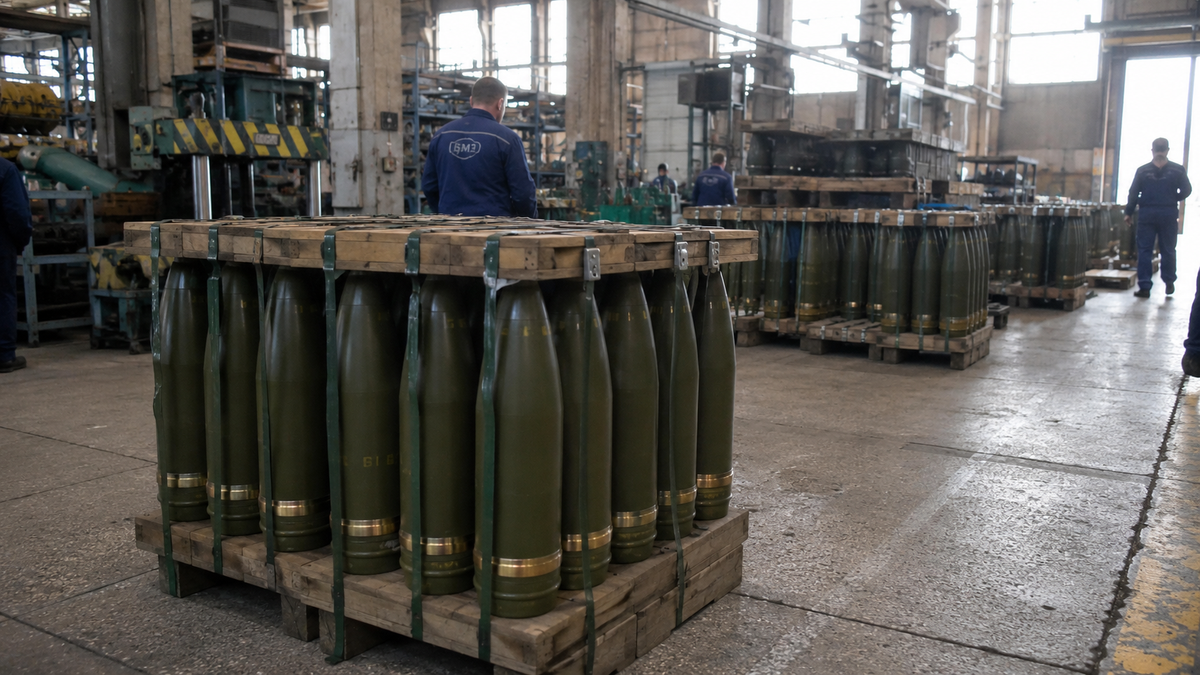
Bulgaria remains one of Europe's key producers of Soviet-standard ammunition, artillery rounds, and military equipment compatible with systems still widely used by Ukrainian forces. Since 2022, demand for these products has surged as NATO members sought to replenish stockpiles while supporting Ukraine's war effort.
As a result, Bulgarian manufacturers have experienced substantial growth in production and exports. Although Sofia does not directly ship weapons to Kyiv, Bulgarian-made ammunition and military equipment have continued to enter international supply chains through contracts with allied governments and commercial intermediaries. This has allowed Bulgaria to contribute indirectly to Ukraine's military sustainment while avoiding the political costs associated with direct transfers.
The situation illustrates a broader reality facing several Central and Eastern European countries: defense-industrial policy and political messaging do not always move in parallel.
From an industrial perspective, Bulgaria has become increasingly important to European ammunition production. The war exposed long-standing weaknesses in Western manufacturing capacity and highlighted the value of countries that retained legacy production lines capable of rapidly producing large volumes of artillery ammunition and Soviet-caliber munitions.
This industrial relevance has strengthened Bulgaria's position within European defense planning. As the EU and NATO continue efforts to expand ammunition output and reduce supply chain vulnerabilities, Bulgarian facilities are likely to remain important regardless of the country's domestic political debates over Ukraine.
The policy also raises questions about the future direction of Bulgarian defense strategy. Maintaining restrictions on direct exports may become more difficult as European defense integration deepens and allies place greater emphasis on coordinated military assistance programs. At the same time, Bulgarian governments have sought to avoid domestic political polarization by framing support through industrial and commercial channels rather than overt military aid.
For the defense industry, the most important development may be the long-term transformation of Bulgaria from a legacy Warsaw Pact producer into a strategic supplier within Europe's emerging rearmament framework. Investment in production capacity, modernization of facilities, and sustained demand from NATO countries are reshaping the sector in ways that are likely to outlast the war itself.
Ultimately, Bulgaria's approach demonstrates how modern defense support can extend beyond official arms transfer announcements. While political restrictions continue to limit direct exports to Ukraine, the country's industrial base remains deeply integrated into the broader European effort to sustain military readiness, replenish stockpiles, and support Ukraine's defense through allied procurement networks.