China’s Spy Agency Warns AI Is Becoming a National Security Threat
China’s Ministry of State Security has warned that artificial intelligence could pose growing risks to political stability, critical infrastructure and sensitive data, as Beijing increasingly treats AI as a national-security and counterintelligence issue.

China’s Ministry of State Security has issued an unusually direct warning over the national-security risks posed by artificial intelligence, highlighting threats ranging from deepfakes and influence operations to cyberattacks and sensitive-data exposure.
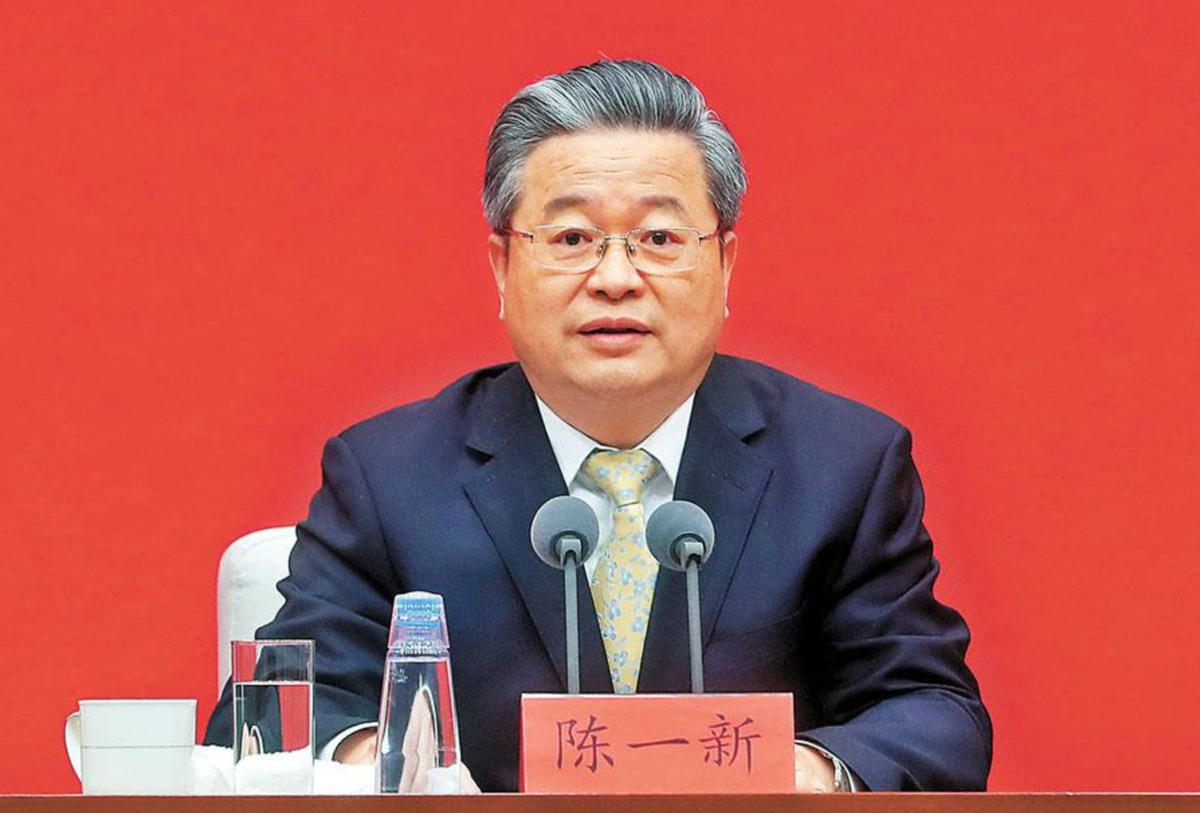
Chen Yixin, China’s minister of state security, said artificial intelligence could increasingly be used by hostile actors to threaten the country’s political, institutional and ideological security, according to remarks published in China Cyberspace, the official journal of the Cyberspace Administration of China.
The intervention is notable because the Ministry of State Security, or MSS, is China’s principal civilian intelligence and counterintelligence agency.
While Beijing has previously introduced extensive rules governing artificial intelligence, most public discussion has focused on technology regulation, data governance and industrial policy. The latest warning places AI more explicitly within China’s national-security framework.
Chen pointed to the growing ability of generative AI systems to produce convincing deepfakes, fabricated information and large volumes of automated online content.
Chinese officials have warned that such systems could be used to create what they describe as “intelligent troll armies” capable of conducting large-scale influence operations and manipulating public opinion.
The MSS also highlighted cybersecurity risks.
Advanced AI models can assist users in identifying software vulnerabilities, analyzing networks and generating code that could be adapted for malicious purposes. Intelligence agencies and military organizations worldwide are increasingly examining how AI could accelerate both offensive and defensive cyber operations.
The warning also reflects growing concern about the use of foreign AI platforms inside sensitive organizations.
Chinese security authorities have previously cautioned that employees using unauthorized services to access overseas AI models could inadvertently expose personal information, commercial secrets or sensitive government data.
That concern is becoming increasingly relevant beyond China.
Governments, defense companies and intelligence organizations are integrating commercial AI models into workflows involving large datasets, software development, satellite imagery and intelligence analysis.
The same capabilities that make these systems commercially valuable also make them inherently dual-use.
Advanced models can potentially assist with intelligence collection, surveillance, targeting analysis, cyber operations and the processing of large volumes of classified or sensitive information.
The United States has taken a similar view from the opposite side of the geopolitical competition.
Washington has imposed restrictions on exports of advanced semiconductors and related technologies to China, arguing that high-end computing infrastructure could contribute to military and intelligence capabilities.
China, meanwhile, has accelerated efforts to develop domestic AI models and reduce reliance on foreign chips and technology.
The latest intervention by the MSS suggests Beijing increasingly sees artificial intelligence not simply as a strategic industry, but as part of the broader intelligence and national-security competition between major powers.
As AI systems become embedded across government and industry, counterintelligence agencies are likely to pay increasing attention not only to who has access to sensitive information, but also to which AI models process that information, where those systems are hosted and who ultimately controls the underlying infrastructure.