Croatia's ORQA joins EU-Ukraine drone industrial initiative
Croatian drone manufacturer ORQA has joined the EU-Ukraine Drone Deal as one of its 18 founding companies. The initiative could give the Osijek-based company a larger role in joint production, technology development and European drone supply chains.

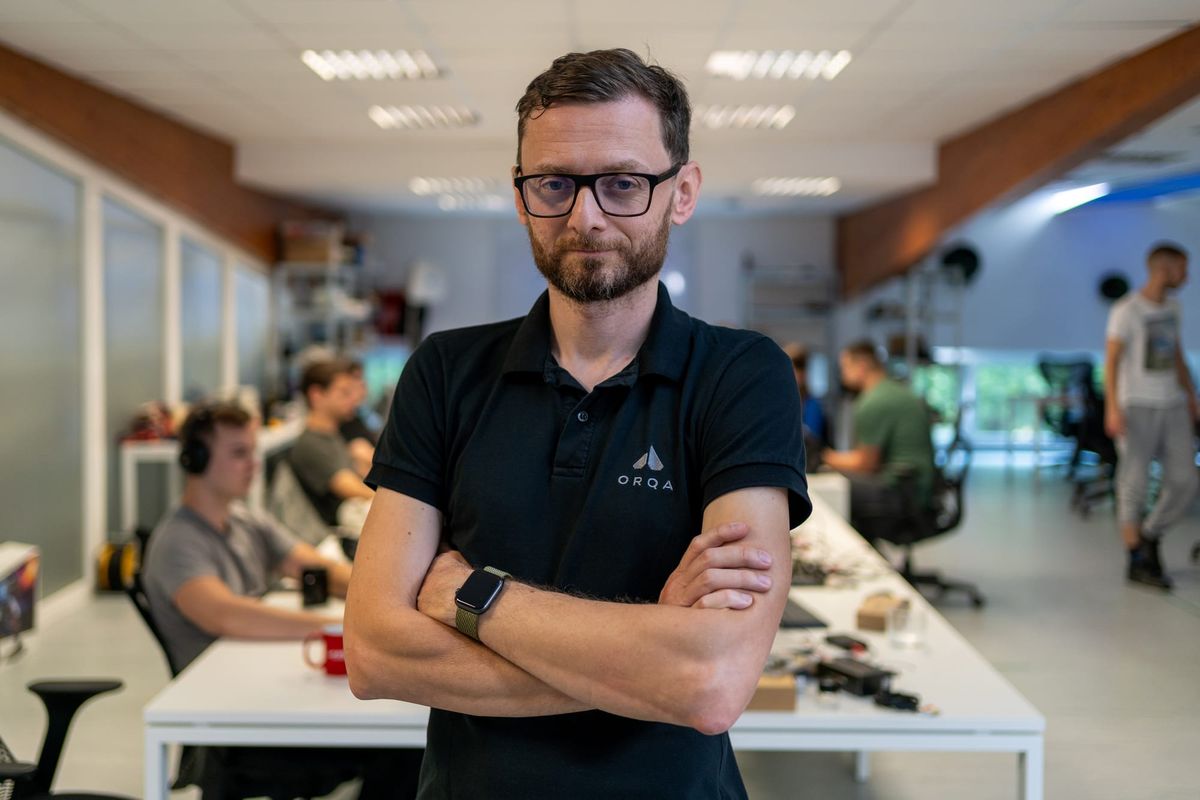
Croatian drone manufacturer ORQA has been selected as one of 18 founding members of a new EU-Ukraine industrial initiative focused on drones and counter-drone systems.
The European Commission and Ukraine launched the EU-Ukraine Drone Deal on July 15 as part of a broader defense industrial partnership. The framework is intended to connect Ukrainian operational experience with European manufacturing capacity, financing and research programs.
ORQA is one of nine participating companies based in the European Union. The other European founding members are Indra Group, Fincantieri, WB Electronics and WB Group, Destinus, Delair, RSI Europe, Terma and Quantum Systems.
Nine Ukrainian companies are also participating: Skyfall Industries, Greentech Harvest, Tencore, Deviro, Vyriy Industry, Athlon Avia, TAF Industries, UFORCE and F-Drones. The first meeting of the founding members is scheduled to take place in Brussels in September.
A framework for joint production
The EU and Ukraine plan to promote joint production of drones and counter-drone systems by the end of 2026. The wider industrial partnership is expected to address procurement procedures, technical standards, intellectual property protection and obstacles to forming joint ventures.
The initiative also calls for targeted technology transfers and investment in dual-use production in Ukraine. Cooperation could later be expanded to the joint production of anti-ballistic missile systems by 2028.
The European Commission separately disbursed EUR 1 billion for Ukrainian drone procurement under the EUR 90 billion Ukraine Support Loan. That funding is not an announced contract for ORQA or the other founding members. The Commission has not disclosed specific production allocations, procurement commitments or funding shares for individual companies participating in the Drone Deal.
This distinction is important. ORQA has secured a position in the industrial framework, but participation does not automatically translate into orders. The commercial value will depend on the projects selected, procurement rules, intellectual property arrangements and the ability of members to establish viable production partnerships.
ORQA brings an existing manufacturing base
ORQA was founded in 2018 and conducts its development and production activities in Osijek. Its work covers FPV systems, radio-frequency technology, controllers, video transmission, electronics, software and complete unmanned aerial systems.
The company says it employs more than 150 people and performs most engineering activities internally. ORQA presents this vertically integrated model as a way to maintain control over system architecture, production and critical supply chains.
According to the company, its facility in Osijek has the capacity to produce as many as 280,000 drones annually. ORQA has also developed a distributed manufacturing program intended to raise potential output through international partners to as many as one million systems per year.
These figures describe production capacity rather than confirmed annual deliveries. They nevertheless show that ORQA is positioning itself for high-volume manufacturing rather than remaining exclusively a developer of specialized FPV equipment.
In March 2026, ORQA announced that it had raised EUR 12.7 million in Series A financing. The company said the investment would support expansion of its global manufacturing program and international production network.
Existing cooperation with Ukraine
ORQA already had an industrial link with Ukraine before joining the EU initiative.
In April, the company signed a cooperation memorandum with Ukrainian drone manufacturer General Cherry. The planned partnership covers interceptor drones, components and other unmanned systems, with production activities proposed in both Croatia and Ukraine.
The companies also announced plans for an underground component production facility in Ukraine under the Build in Ukraine framework. Joint serial production was additionally proposed for Croatia. The projects remain development plans, and neither company has published confirmed output targets or a detailed production schedule.
This earlier agreement gives ORQA a more developed starting position than companies entering the EU-Ukraine framework without an existing Ukrainian partner. It may allow the Croatian manufacturer to connect its component development and European production capacity with Ukrainian experience in interceptor drones and systems designed for contested environments.
Supply chains will be a central issue
The drone war in Ukraine has demonstrated the importance of access to motors, flight controllers, communications equipment, sensors, processors and other electronic components.
ORQA has emphasized European production and reduced reliance on Chinese critical components as central elements of its industrial model. The company has argued that greater use of European components would reduce supply risks and prevent operationally driven drone innovations from being transferred through foreign component suppliers.
The EU-Ukraine framework could support this approach if it creates sufficient demand for European-made components. Higher production volumes would be necessary to reduce unit prices and make European suppliers more competitive against established Asian manufacturers.
However, replacing external components across the full drone supply chain will require more than final assembly. European manufacturers will need reliable access to semiconductors, batteries, electric motors, optical systems, communications modules and production equipment.
The industrial value of the initiative will therefore depend partly on whether it develops a broader supplier network or concentrates work among a limited group of final system manufacturers.
Regional significance
ORQA's selection gives Croatia a direct position in an emerging EU-Ukraine drone ecosystem that includes several of Europe's larger defense groups and specialized unmanned system manufacturers.
For Central and South-Eastern Europe, the initiative could create opportunities beyond complete drone production. Companies working in electronics, software, communications, machining, optics, energetic materials and system testing could enter the supply chain through partnerships with founding members.
ORQA could serve as a regional industrial anchor if higher production volumes generate demand for additional suppliers. Such an outcome would require long-term procurement signals, common technical requirements and contracts large enough to justify new investment.
National procurement will also matter. Export-oriented manufacturers generally need domestic testing, military certification and reference customers before they can compete effectively for multinational programs.
The September meeting will be the first test
The first meeting of the 18 founding members in Brussels will provide an early indication of how the Drone Deal will operate.
Key issues will include the governance structure, selection of joint projects, access to EU financing, protection of intellectual property and the division of production between Ukraine and EU member states.
For ORQA, the initiative offers access to a larger industrial and procurement framework at a time when the company is expanding capacity and developing partnerships outside Croatia. It could strengthen the company's position as a European supplier of FPV and tactical unmanned systems.
The outcome, however, will depend on whether the political framework produces funded programs and repeat orders. Until those mechanisms are defined, ORQA's selection should be viewed as an industrial opportunity rather than a confirmed procurement award.