Czech Defense Update: Tatra Expansion, New Orders and Mortars
Czech defense developments include new Tatra production capacity, regional truck procurement, Slovak cooperation and plans for new 120 mm mortars.

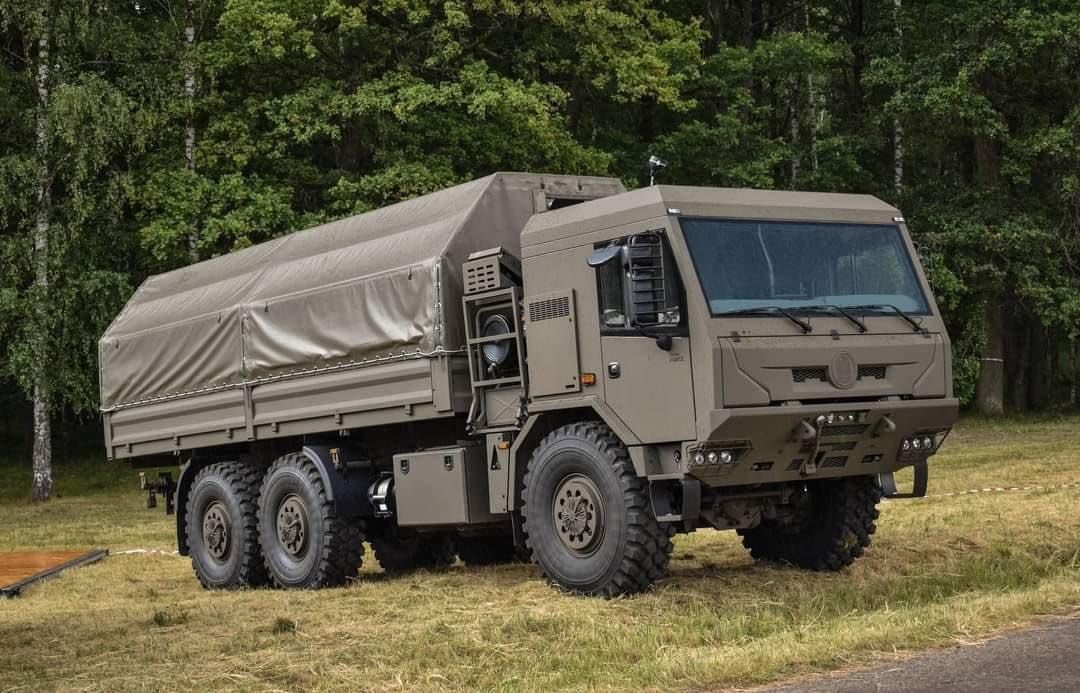
The Czech defense sector is entering a new round of industrial expansion and military procurement, with additional Tatra production capacity, regional military truck programs and potential joint acquisition of 120 mm self-propelled mortars. Czechoslovak Group is investing approximately €49.7 million in Kopřivnice, while Czech military vehicle procurement is increasingly being coordinated with Slovakia and Croatia.
The developments reflect a broader Czech effort to replace aging equipment while increasing domestic defense production. They also show how Prague is using common procurement frameworks with neighboring NATO members to aggregate demand around Czech-made military vehicles and potentially other land systems.
CSG invests €49.7 million in Czech military production
Czechoslovak Group announced on September 4 that it will invest approximately €49.7 million over the next three years to expand military land-system production at the Tatra Defence complex in Kopřivnice.
The project will add approximately 14,000 square meters of production space in two stages, alongside new machinery, measuring equipment and surface-treatment technologies. The investment covers welding, machining and painting, giving the facility additional capacity across several important stages of military vehicle manufacturing.
Construction of the first 5,500-square-meter hall is already underway. It will focus primarily on welding, with trial production scheduled to begin in December 2026 and completion of the administrative section planned for April 2027.
A second stage will add approximately 8,500 square meters for machining and painting. CSG expects that part of the project to be completed during the first quarter of 2028.
The timing is significant because the Czech military is replacing older logistics vehicles while Tatra platforms are attracting additional demand from other Central and Southeastern European NATO members.
Czech military can acquire up to 872 Tatra vehicles
The Czech Ministry of Defense already has a framework agreement covering up to 872 Tatra T-815 military vehicles, with deliveries possible through September 2031.
The framework has a maximum value of CZK 13.35 billion and a minimum procurement quantity of 98 vehicles. It covers Tatra T-815 6x6 flatbed trucks, Tatra T-815 8x8 flatbeds and Tatra T-815 8x8 container carriers.
By 2025, the Czech Republic had placed binding orders for 280 vehicles under the framework.
The procurement addresses a long-term logistics requirement as the Czech Armed Forces replace older trucks, including vehicles that have remained in service for decades.
Additional specialized Tatra vehicles are entering service through separate contracts. In May 2026, the Czech Armed Forces accepted 12 Tatra 815-7 8x8 vehicles designed to transport heavy staff equipment and antenna masts. The contract was worth approximately CZK 338 million including VAT.
Tatra chassis also support other Czech modernization programs, meaning production demand extends beyond conventional cargo trucks.
The Czech SPYDER air-defense system, for example, uses Tatra 815-7 8x8 vehicles for system components. The common chassis approach allows Czech industry to support logistics, air defense and other specialized military applications around the same vehicle ecosystem.
Czech Republic prepares to join Slovakia's larger Tatra framework
Prague and Bratislava are also moving toward deeper coordination of military truck procurement.
In July 2026, Czech Defense Minister Jaromír Zůna and Slovak Defense Minister Robert Kaliňák oversaw the signing of a document preparing the Czech Republic to join Slovakia's framework agreement for Tatra T-815 vehicles.
Slovakia concluded the framework in December 2025. It covers up to 1,289 vehicles and has a potential value exceeding €1 billion.
The arrangement follows earlier cooperation in the opposite direction.
Slovakia joined the Czech Tatra framework in December 2024, initially planning to acquire up to 250 vehicles. Prague had structured its agreement to allow allied countries to participate, creating an early mechanism for aggregating regional military vehicle demand.
The Czech Republic is now preparing to use Slovakia's newer framework as well.
The approach allows both countries to use existing procurement structures instead of developing entirely separate acquisition programs for comparable vehicle requirements. It also creates larger potential production volumes for the Czech and Slovak industrial base.
Croatia joins the regional Tatra procurement network
The Czech Tatra framework has also expanded southward.
Croatia joined the Czech framework after identifying a potential requirement for up to 420 Tatra T-815 vehicles. The planned mix includes 6x6 flatbed trucks and 8x8 vehicles equipped with hook-loading systems for container transport.
Croatian participation gives the program a broader Central and Southeastern European dimension and adds another NATO customer to the Tatra military vehicle ecosystem.
For participating armed forces, operating related platforms can provide practical benefits in logistics, maintenance, spare parts and training. Larger multinational orders can also provide manufacturers with greater visibility over future production requirements.
The Czech, Slovak and Croatian programs do not constitute a single order for thousands of vehicles. They remain separate national requirements linked through framework agreements and access arrangements.
That distinction is important, but so is the emerging pattern: several NATO countries are increasingly consolidating military mobility requirements around the same Czech-origin vehicle family.
Czech Republic and Slovakia examine joint 120 mm mortar procurement
Military trucks may not be the end of Czech-Slovak procurement cooperation.
Prague and Bratislava agreed in July to continue examining the possibility of jointly acquiring SAM-120 120 mm self-propelled mortars. No final acquisition contract, quantity or delivery schedule has yet been announced.
The Czech Armed Forces currently operate the older 120 mm PRAM self-propelled mortar based on a lengthened BVP tracked chassis.
The legacy system carries 80 mortar rounds, can reach a maximum road speed of 63 km/h and has a stated range of 550 km, according to the Czech Armed Forces. Its replacement forms part of the broader requirement to modernize fire-support capabilities inherited from the Cold War period.
A common Czech-Slovak mortar acquisition could apply the same principle already being used for military trucks: combining similar requirements to create a larger procurement program.
However, the mortar initiative remains at an earlier stage than the Tatra programs. Until Prague and Bratislava define quantities, funding and contractual arrangements, it should be treated as a potential joint acquisition rather than an approved purchase.
Tatra becomes a common platform across Czech modernization programs
The developments around Tatra are important because the Czech vehicle industry supports more than military logistics.
The Tatra 815-7, also known as the Tatra Force family, provides a common heavy mobility platform for cargo transport, containers and specialized mission equipment.
Czech SPYDER air-defense components use Tatra 815-7 8x8 vehicles, while the chassis family also provides a basis for artillery, engineering and other military applications.
That gives Prague an industrial advantage when modernizing multiple capabilities simultaneously. A common domestic vehicle platform can simplify maintenance and logistics while keeping a greater portion of procurement spending inside the Czech industrial base.
The same logic becomes more significant when neighboring countries operate comparable platforms.
Slovakia's potential requirement for up to 1,289 vehicles and Croatia's participation in the Czech framework for up to 420 vehicles create a regional market extending beyond Czech Armed Forces demand.
Czech defense industry expands for a larger European market
CSG's €49.7 million Kopřivnice investment should therefore be viewed as more than a factory expansion.
The additional welding, machining and painting capacity is arriving while the Czech Republic increases military procurement and neighboring NATO countries expand their use of Czech military vehicles.
It also reflects a wider transformation of the Czech defense-industrial base.
The country retains established capabilities in military vehicles, ammunition, small arms, radars and aerospace manufacturing. Higher European defense spending and requirements to expand production capacity are giving those companies a larger potential market than domestic Czech procurement alone.
For Tatra and CSG, regional framework agreements provide a route to larger and more predictable production volumes.
For Prague, they offer another mechanism for connecting military modernization with domestic industrial capacity.
The next development to watch is whether the Czech-Slovak model expands beyond trucks. A joint 120 mm mortar acquisition would demonstrate that Prague and Bratislava are prepared to apply coordinated procurement to combat systems as well as military logistics.
Czech defense update questions and answers
How much is CSG investing in Czech military production?
Czechoslovak Group plans to invest approximately €49.7 million over three years at the Tatra Defence complex in Kopřivnice. The project will add around 14,000 square meters of production space for processes including welding, machining and painting.
How many Tatra military vehicles can the Czech Republic buy?
The Czech Ministry of Defense framework allows procurement of up to 872 Tatra T-815 vehicles through September 2031. The framework has a maximum value of CZK 13.35 billion.
Are Slovakia and Croatia also buying Tatra military vehicles?
Slovakia has a separate framework covering up to 1,289 Tatra vehicles, which the Czech Republic is preparing to join. Croatia has joined the Czech framework after identifying a potential requirement for up to 420 vehicles.
Are the Czech Republic and Slovakia buying new self-propelled mortars?
Not yet. Prague and Bratislava are examining a possible joint acquisition of SAM-120 120 mm self-propelled mortars, but no final contract, quantity or delivery schedule has been announced.