MSPO 2026 Opens With Heavy IFV, GLADIUS 2 and New Drones
MSPO 2026 opens in Poland with a new heavy IFV, GLADIUS 2, Piorun 2, KAMD counter-drone system and new Polish-Ukrainian defense projects.


The 34th International Defence Industry Exhibition, known as MSPO 2026, opens today in Kielce, Poland, with several new military systems and industrial agreements scheduled to emerge during the four-day event. Poland will unveil a full-scale demonstrator of its new heavy infantry fighting vehicle, WB Group will present GLADIUS 2 and additional unmanned systems, while South Korea's Airbility will give its KAMD counter-drone system its world premiere.
The September 8-11 exhibition will also bring the Piorun 2 missile, new Polish small arms, unmanned ground and surface vehicles and a new Polish light combat aircraft concept. Ukraine's Ivchenko-Progress and Poland's PZL Defence are scheduled to sign an agreement today covering development and production of the AI-04PL jet engine in Poland.
Canada is this year's Lead Nation Partner, while Polska Grupa Zbrojeniowa, or PGZ, is the strategic industrial partner. The exhibition opens to visitors at 10:00 today, with the first major Polish equipment premiere scheduled just one hour later.
Taken together, the confirmed announcements point to the main themes likely to define MSPO 2026: unmanned warfare, counter-UAS systems, greater Polish defense production and deeper industrial cooperation with Ukraine, South Korea and other NATO partners.
Poland's new heavy infantry fighting vehicle debuts at full scale
One of the most significant land-system premieres will come from Huta Stalowa Wola, part of PGZ. A full-scale demonstrator of Poland's new heavy infantry fighting vehicle is scheduled to be unveiled at 11:00 today, immediately after a PGZ management briefing.
The vehicle is being developed as a heavier and more protected complement to Poland's amphibious Borsuk infantry fighting vehicle rather than a direct replacement. The full-scale demonstrator marks a major step beyond the smaller model previously used to present the concept.
PGZ describes the heavy IFV as one of the principal premieres of its MSPO 2026 display. The group is bringing more than 300 pieces of equipment, systems and other products from 28 companies, with the exhibition divided across seven operational and industrial domains.
The distinction between demonstrator and production vehicle remains important. The platform shown in Kielce represents the direction of the program, but further development and testing will determine the configuration that could eventually enter Polish service.
For Poland, the project also illustrates an emerging two-tier approach to mechanized infantry. Borsuk provides an amphibious tracked platform, while the heavy IFV program is intended to prioritize greater protection for operations alongside Poland's expanding heavy armored formations.
Piorun 2 leads a wider group of new PGZ systems
The heavy IFV will not be PGZ's only new system at MSPO 2026. MESKO will display a model of the Piorun 2 very-short-range air-defense missile, extending one of Poland's most established missile product lines.
Piorun 2 represents a more substantial development than a simple modification of the existing Piorun. MESKO has previously indicated that the concept retains elements associated with Piorun's infrared guidance while introducing a substantially different missile structure and propulsion system, together with an initial-phase guidance solution.
Huta Stalowa Wola will meanwhile show an M120 Rak mortar turret in a containerized configuration. The system combines the 120 mm mortar with electro-optical equipment, a day-night commander's observation system and automatic aiming and loading functions.
Fabryka Broni Łucznik-Radom will present the 5.56 x 45 mm MSBS Grot C10 FB-A3 and a new 5.56 x 45 mm light machine gun. The latter remains at the factory-testing stage and is being developed jointly with the Military Institute of Armament Technology and Military University of Technology.
Bydgoskie Zakłady Elektromechaniczne BELMA will add a modular scatterable mine-laying system installed on a Tatra 6x6 vehicle. PGZ is also placing counter-UAS systems, unmanned platforms, maritime security and space technologies prominently within its exhibition.
WB Group prepares more than the GLADIUS 2 premiere
WB Group could produce the largest concentration of new unmanned systems on the opening day.
The official MSPO schedule reserves 13:30 to 17:00 today for WB Group's dedicated Premiere Day in Hall 6. The format is significant because the company has indicated that GLADIUS 2 will be one of several new systems rather than its only unveiling.
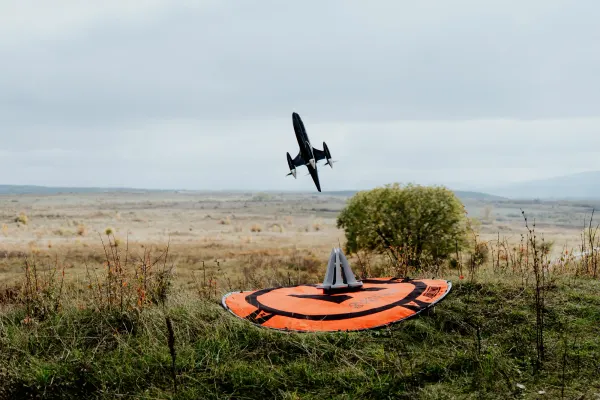
The principal confirmed system is GLADIUS 2, a new jet-powered unmanned strike platform that extends the GLADIUS family toward longer-range missions.
The program is already connected to Polish military procurement rather than existing solely as an export concept. The next question for the Kielce presentation will be how WB Group positions the new platform within its wider reconnaissance, targeting, communications and strike architecture.
The company is also expanding into the maritime unmanned domain with the StormRider 550, a 5.5-meter unmanned surface vessel. The modular platform can support patrol, reconnaissance, training and strike-related roles depending on configuration and installed sensors or effectors.
WB Group has developed low-profile and high-profile configurations of the StormRider 550. One low-profile variant is intended to intercept and kinetically neutralize other unmanned surface vessels, while other configurations can carry sensors including navigation radar, sonar and electro-optical equipment.
The company has deliberately left parts of today's premiere program undisclosed. That makes the 13:30 presentation one of the opening day's events most likely to produce additional systems not fully detailed before the exhibition.
Airbility KAMD makes its world premiere in Poland
MSPO 2026 will also host the world premiere of KAMD, a counter-unmanned aerial system developed by South Korea's Airbility.
The system is designed to intercept aerial threats while operating in environments where Global Navigation Satellite System signals are unavailable or unreliable. KAMD combines Simultaneous Localization and Mapping-based navigation with inertial sensors to continue operating during satellite-navigation jamming and spoofing, according to information released ahead of the exhibition.
Airbility will show KAMD alongside two additional interceptor platforms.
The AB-U10 uses a net to capture drones without destroying them, giving it potential applications around airports, infrastructure and populated areas. The AB-U60 is designed for kinetic interception at greater ranges and can accommodate larger effectors.
The company will also present AIRLOCK C2, which integrates sensors and effectors and manages the detection, identification and neutralization sequence.
KAMD adds an international counter-UAS premiere to a show where drone defense is already one of the most visible technology categories.
GEREON RCS brings autonomous ground operations to MSPO
Germany's ARX Robotics will display its GEREON RCS modular unmanned ground vehicle, adding another autonomous system designed for operation without dependence on GNSS.
GEREON RCS can carry a payload of up to 500 kg, reach 13.5 km/h and travel up to 40 km on one battery charge. Its batteries take approximately 2.5 hours to recharge, while the platform can remain in standby for up to 72 hours.
The vehicle combines LiDAR, thermal and stereoscopic cameras and 360-degree RGB cameras to support AI-assisted autonomous operation. It can also operate under remote control, with communications options including military radios, LTE, 5G and Starlink.
Its modular architecture allows a common tracked vehicle to accept different mission payloads rather than requiring a separate platform for every role.
The appearance of GEREON fits a wider MSPO focus on unmanned ground systems and lessons from Ukraine. The official program includes discussions on moving UGV technology from battlefield experience toward industrial-scale production.
Poland's AT Combat concept targets the counter-drone mission
MSPO 2026 will also include a new Polish aviation concept.
Polish company PARASNAKE will display a model of the AT Combat, a light twin-engine multirole aircraft being developed from the AT-6 platform, which is currently undergoing flight testing.
The configuration presented in Kielce represents an armed version intended for counter-UAS missions and includes an observation and targeting system.
PARASNAKE is also considering the platform for pilot training, patrol, reconnaissance and photogrammetry missions. Multiple configurations will be presented at MSPO, although the aircraft remains a development project rather than an operational Polish military system.
Its presence adds another dimension to the counter-drone trend at this year's exhibition. Instead of relying only on ground-based missiles, guns and interceptor drones, the concept proposes a relatively light manned aircraft for part of the counter-UAS mission set.
Ukraine and Poland will sign AI-04PL engine production agreement
One of today's most concrete industrial developments is already listed in the official MSPO schedule.
At 13:30, Ukraine's Ivchenko-Progress and PZL Defence, part of Poland's UNIMOT Group, are scheduled to sign an agreement covering the development and production of the AI-04PL jet engine in Poland.
Unlike several broader cooperation discussions taking place during MSPO, the AI-04PL event is explicitly listed as a contract signing.
The project is significant because it connects Ukrainian aerospace engineering with industrial capacity inside Poland. It also fits a wider movement toward relocating, duplicating or expanding production capacity for Ukrainian defense technologies inside NATO and European Union countries.
Ukraine will have a broader role later in the exhibition. The MSPO program includes Polish-Ukrainian defense-industry discussions covering unmanned systems and mechanisms for future industrial cooperation.
For Poland, the AI-04PL agreement therefore sits within a wider effort to use domestic manufacturing capacity not only for Polish-designed systems, but also for technologies developed with foreign partners.
Canada and South Korea put industrial cooperation on the agenda
Canada is the Lead Nation Partner at MSPO 2026, giving the country a prominent industrial and government presence in Kielce. Canadian Defense Minister David J. McGuinty is among the senior officials listed by the organizer, alongside Polish Defense Minister Władysław Kosiniak-Kamysz.
The Canadian presence extends beyond a national pavilion. The official exhibitor list includes companies and organizations spanning aerospace, maritime, electronics and defense sectors, while the wider program includes Canadian investment meetings and defense-industry discussions.
South Korea remains equally important because its defense relationship with Poland has already moved into large-scale procurement.
A POL-KOR session scheduled from 14:00 to 16:00 today will bring together Hyundai Rotem, Korea Aerospace Industries and Hanwha Aerospace. The event is organized with South Korea's Defense Acquisition Program Administration, Korea Research Institute for Defense Technology Planning and Advancement and Korea Defense Industry Association.
The official topic covers previous export experience and future cooperation. The participants directly connect the discussion to the companies behind Poland's K2 tank, FA-50 aircraft and K9 artillery relationships, although the published schedule does not confirm a new procurement contract for today's session.
That distinction matters. MSPO is likely to generate new announcements, but industrial discussions should not be presented as contracts until the governments or companies formally confirm them.
Poland's armed forces put AI and new technologies on display
The Polish Armed Forces will maintain their own substantial presence alongside the commercial exhibition.
The 27th Armed Forces Exhibition includes 28 exhibitors representing the Ministry of National Defense, military branches, Cyber Defense Forces, Military Police, military universities and other defense institutions.
This year's military exhibition focuses on artificial intelligence and technology, including AI applications and 3D-printing systems. The display occupies Hall 10 and an outdoor exhibition area.
The Military University of Technology and Polish Space Agency are also scheduled to sign a framework cooperation agreement at 10:30 today, adding a space and dual-use technology component to the opening-day program.
These institutional events are less visible than a new armored vehicle or drone, but they reinforce the wider shift in Poland's defense policy toward building domestic research, engineering and production capacity.
MSPO 2026 puts production alongside procurement
The systems arriving in Kielce span very different missions, but a common pattern runs through many of the most important announcements.
Poland is still undertaking one of Europe's largest military modernization programs, but procurement alone no longer defines its defense-industrial strategy. Domestic manufacturing, technology ownership, supply-chain resilience and the ability to develop follow-on systems are increasingly prominent.
The heavy IFV represents Polish development of another tracked combat platform alongside Borsuk. Piorun 2 extends a domestic missile family, while GLADIUS 2 and WB Group's wider portfolio show how Poland is building its own unmanned strike and reconnaissance ecosystem.
The AI-04PL agreement adds another model by combining Ukrainian technology with production in Poland. Cooperation with South Korea is increasingly judged not only by how many systems Poland receives, but also by the extent to which manufacturing, maintenance and future development move into the Polish industrial base.
PGZ itself is making that industrial theme explicit. The group says MSPO will host agreements and letters of intent covering technology transfer, localization, expanded domestic production capacity and industrial cooperation.
Not all of those agreements have been disclosed before the exhibition opens.
That means the systems already confirmed for September 8 are only the starting point. New contracts, partnerships and previously undisclosed equipment could still emerge before MSPO closes on September 11.
MSPO 2026 questions and answers
When and where is MSPO 2026?
MSPO 2026 takes place at Targi Kielce in Kielce, Poland, from September 8 to 11, 2026. The exhibition opens at 10:00 on September 8, 9 and 10, while the final day runs from 10:00 to 15:00.
What new military systems are being unveiled at MSPO 2026?
Confirmed new systems include Poland's full-scale heavy infantry fighting vehicle demonstrator, WB Group's GLADIUS 2 and StormRider 550, Airbility's KAMD counter-UAS system and a model of Poland's AT Combat aircraft concept. PGZ is also displaying Piorun 2, new small arms and additional counter-drone and unmanned systems.
What is the biggest Polish premiere at MSPO 2026?
The full-scale demonstrator of Poland's heavy infantry fighting vehicle is one of the most significant confirmed land-system premieres. PGZ has scheduled its official presentation for 11:00 on September 8.
What defense agreements are expected at MSPO 2026?
Ivchenko-Progress and PZL Defence are scheduled to sign a contract on September 8 for development and production of the AI-04PL jet engine in Poland. PGZ has separately indicated that MSPO will include agreements concerning technology transfer, localization, domestic production capacity and industrial cooperation, although not all have been disclosed in advance.