Estonia Launches EUROGUARD Autonomous Warship Prototype Under €95 Million EU Program
Estonia's Baltic Workboats has launched the 45-meter EUROGUARD semi-autonomous naval prototype, part of a €95 million European defense program involving partners from ten countries.

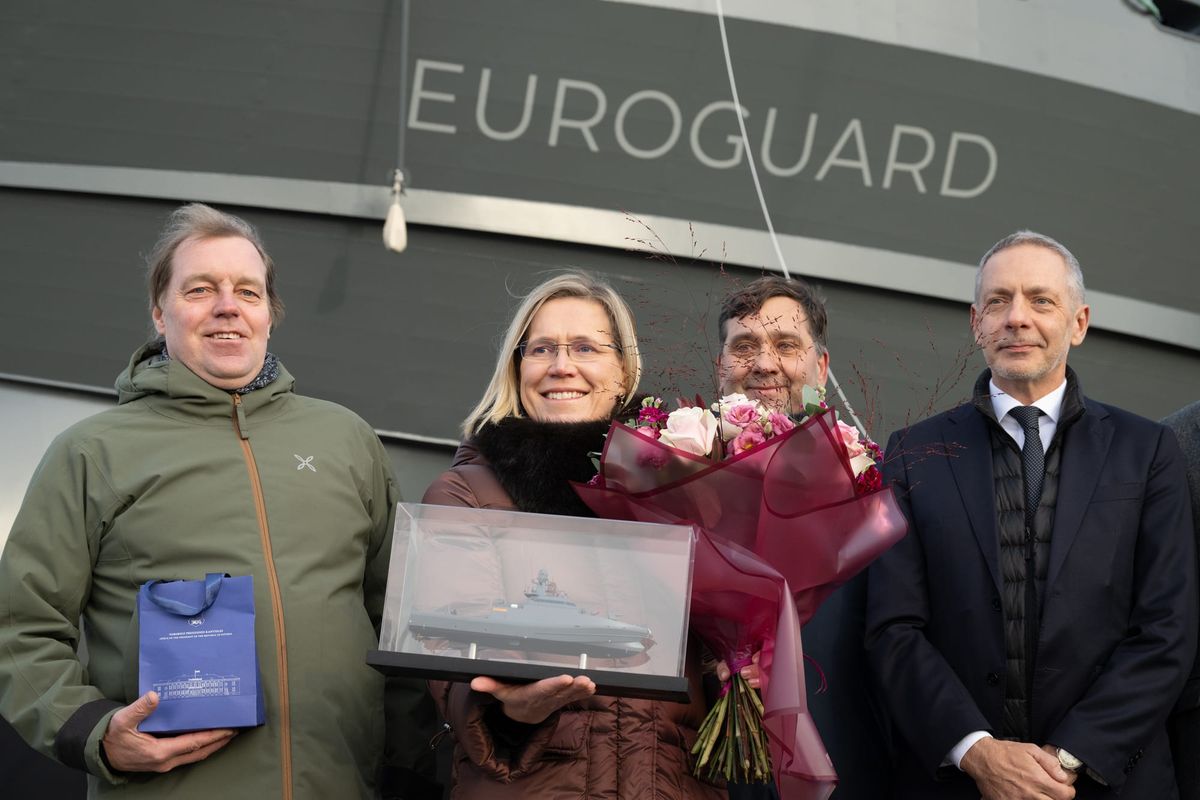
Estonian shipbuilder Baltic Workboats has launched the 45-meter EUROGUARD modular naval vessel, marking a major milestone in a €95 million European defense research and development program focused on semi-autonomous maritime operations.
The experimental vessel was launched on November 18 at the company's shipyard in Nasva, on the Estonian island of Saaremaa, during a ceremony attended by Estonian President Ülle Madise.
EUROGUARD is the largest military vessel built in Estonia since the country regained independence in 1991 and is intended to demonstrate technologies that could support a new generation of European naval platforms.
The project is backed by the European Defence Fund (EDF), which is providing €65 million of the total development budget.
A modular platform for multiple naval missions
EUROGUARD is designed to perform several military and maritime security tasks using a common platform that can be adapted to different operational requirements.
The vessel is being developed for missions including maritime surveillance, naval mine detection and countermeasures, protection of undersea infrastructure, search and rescue, and the deployment and control of unmanned systems.
Its planned capabilities include autonomous navigation, remote operation from shore, obstacle and threat detection, and secure military communications.
According to project information, EUROGUARD is designed for speeds of at least 20 knots, a range of at least 2,000 nautical miles and operational endurance of up to ten days.
These specifications are design targets for a prototype undergoing development and testing, rather than verified operational performance.
Following the launch, the shipbuilder will continue installing onboard equipment and integrating the systems required for future demonstrations.
Testing and operational evaluations are scheduled to continue in 2027.
European defense companies join forces
Baltic Workboats coordinates the EUROGUARD program, which brings together industrial and research organizations from ten European countries.
The European Commission identifies participants including Naval Group, Leonardo, Thales, Damen Schelde Naval Shipbuilding, Kongsberg Maritime, Navantia and several specialist technology companies and research institutions.
The consortium combines shipbuilding expertise with autonomous navigation, sensors, maritime systems integration and naval mission technologies.
Estonia's leadership of the project also highlights the growing role of smaller European countries in developing advanced military technologies through cross-border industrial cooperation.
Speaking at the launch, Baltic Workboats CEO Margus Vanaselja emphasized the significance of Estonia's ability to build military vessels domestically rather than relying exclusively on foreign shipyards.
European naval autonomy gains momentum
The project comes as European governments and defense manufacturers increase investment in unmanned and semi-autonomous maritime platforms.
Such systems are attracting growing attention for surveillance, mine countermeasures and the protection of critical infrastructure, particularly in the Baltic Sea.
As previously reported by AdriaDefense, companies including Saildrone and Rheinmetall are also expanding activities involving unmanned surface vessels in Europe.
EUROGUARD adds a larger modular platform to these efforts, with the objective of developing technologies that could eventually be integrated into operational naval fleets.
The November launch represents an important industrial milestone, but the vessel remains a research and demonstration platform. Its successful introduction into operational military service has not yet been established.