Europe's Ammunition Boom Is Splitting. The Balkans Face a Reckoning.
Europe's artillery ammunition market is changing even as demand remains strong. New disclosures from Czechoslovak Group and industrial investments across Poland, Slovakia, Bulgaria, Romania and Bosnia reveal a growing divide between production capacity, technology and supply-chain resilience.

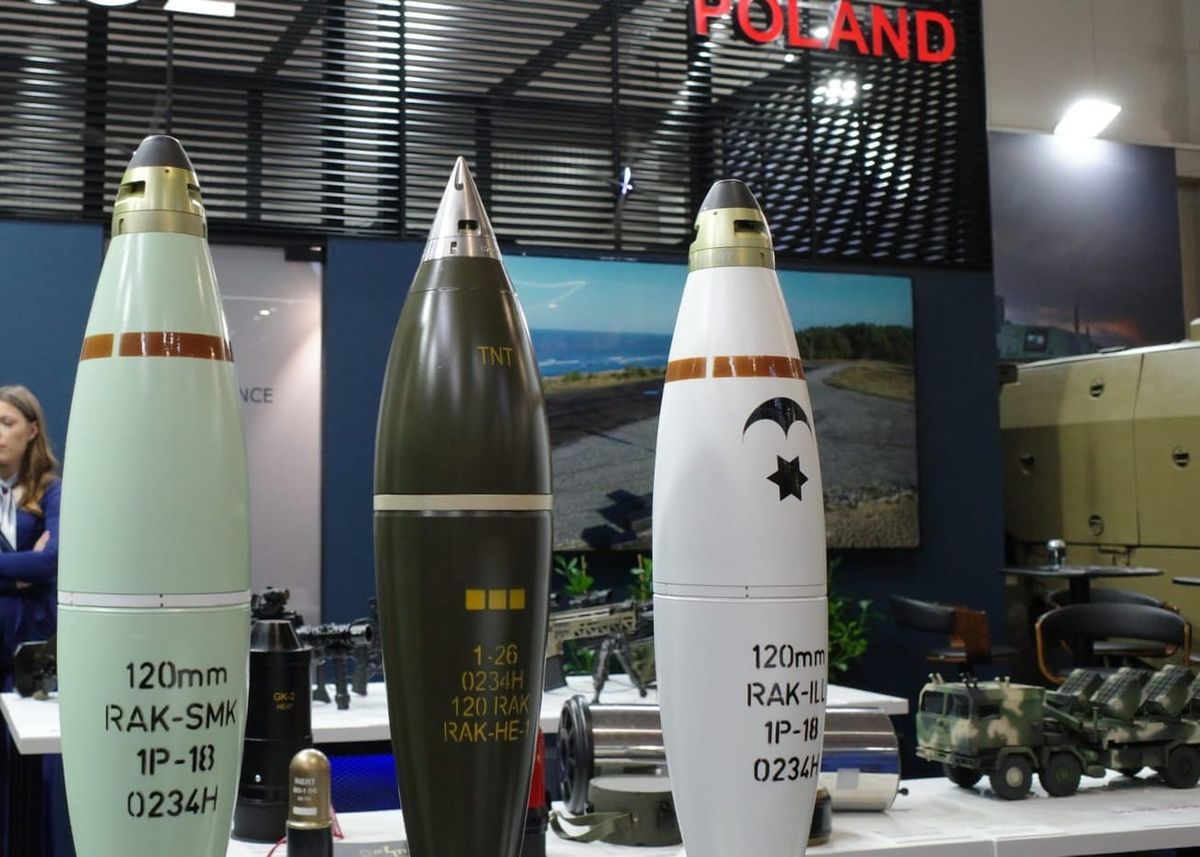
Demand for artillery ammunition remains strong, but a warning from one of Europe's largest manufacturers reveals a market increasingly divided by technology, supply chains and access to long-term contracts.
AdriaDefense Analysis | November 2026
Europe's ammunition industry is still expanding. Governments are signing large procurement contracts, manufacturers are investing in new facilities, and the war in Ukraine continues to drive demand for artillery shells. Yet a disclosure by one of the continent's largest defense companies suggests that the next phase of the boom may look very different from the first.
On November 11, Czech defense conglomerate Czechoslovak Group (CSG) reported that demand was shifting toward extended-range artillery ammunition. The company had accelerated sales of standard-range ammunition from its inventories at prices below those achieved in earlier periods, temporarily weighing on profitability.
The development was notable because CSG was not reporting a collapse in its ammunition business. Revenue from medium- and large-caliber ammunition increased 10.3% during the first nine months of 2026, reaching €3.03 billion. Across its wider businesses, the group reported an order backlog of €18 billion.
In the third quarter, almost all its in-house ammunition production was devoted to extended-range products.
CSG also lowered its expected full-year operating profit margin from 24–25% to approximately 21%, citing both lower-priced sales of standard-range inventory and an increased contribution from military vehicle programs, where margins are still developing.
The company's November 11 trading statement does not establish that artillery ammunition prices are falling across Europe. It does, however, provide unusually direct evidence that demand for different ammunition categories is evolving at different speeds.
For manufacturers across Central and Southeastern Europe, that distinction could prove decisive.
The central question is no longer simply how much ammunition Europe needs. It is what kinds of ammunition European customers will buy, which suppliers can produce them competitively, and whether factories built or expanded during the war will remain commercially viable if battlefield consumption changes.
A Growing Market With Diverging Demand
CSG's disclosure illustrates an important contradiction in Europe's defense industrial expansion.
Demand for medium- and large-caliber ammunition remains robust, according to the company. But demand for standard-range products has moderated compared with previous quarters, while prices for long-range ammunition have remained stable.
CSG has responded by prioritizing extended-range production and increasing control over its supply of explosives, propellants and other critical components.
The company is targeting fully integrated in-house production of extended-range ammunition and associated energetic materials by the end of 2027. Its investment program includes new capabilities in Germany and expansion across its European industrial network.
The distinction between standard- and extended-range ammunition is particularly important because the products are not necessarily interchangeable from a commercial or operational perspective. Range, accuracy, compatibility, reliability and qualification requirements influence what military customers order.
However, CSG's product mix cannot be assumed to represent every European manufacturer's market. The group operates at considerable scale, with different customers and capabilities from smaller ammunition producers.
There is also an important qualification to its €18 billion backlog: the figure covers multiple business segments and includes signed contracts, framework arrangements and orders the company classifies as highly probable but not yet fully effective.
Nevertheless, the disclosure raises a question for manufacturers whose production portfolios remain concentrated in conventional ammunition designs.
Can they respond quickly enough when customers change their requirements?
That question is particularly relevant in Southeastern Europe, where established defense manufacturers operate alongside new industrial projects intended to strengthen NATO-standard ammunition production.
Poland Is Securing Demand Before Expanding Production
Poland provides a clear example of how government procurement can shape the future of the ammunition industry.
On May 30, 2026, the Polish Ministry of National Defense announced a contract worth more than PLN 13.5 billion net for several hundred thousand rounds of 155 mm artillery ammunition.
The agreement was signed between the Armament Agency and the PGZ-AMUNICJA consortium, led by Polska Grupa Zbrojeniowa. Its participating companies include Dezamet, Mesko, Nitro-Chem, Gamrat and Belma.
According to the official ministry announcement, the contract is financed through the European Union's Security Action for Europe (SAFE) instrument and supports Poland's National Ammunition Reserve program.
This is more than a purchase agreement.
It illustrates an industrial model in which substantial government orders provide a foundation for investment in domestic manufacturing capabilities.
The contract does not prove that every component will be produced in Poland or that all the required capacity is already operational. Its significance is the existence of a large procurement commitment supporting the development of that capacity.
Poland is building its ammunition industry around a combination of military requirements, long-term purchasing commitments and domestic industrial policy.
CSG is already part of this wider supply chain. In its November trading statement, the Czech company reported an agreement worth more than €100 million with Poland's Dezamet for 155 mm ammunition components, including pyrotechnic components and fuze subassemblies.
As AdriaDefense previously reported, the partnership illustrates how national ammunition programs can generate cross-border industrial business.
For manufacturers elsewhere in the region, access to such procurement networks may be as important as the ability to manufacture ammunition itself.
A factory without dependable orders remains exposed to changes in demand, even when its technical capabilities are strong.
Slovakia Is Investing in the Components Europe Needs
The transformation is also visible in Slovakia, where traditional ammunition manufacturing is increasingly being combined with investments in critical production inputs.
On March 4, 2026, French energetic-materials specialist Eurenco and ZVS Holding announced an agreement to establish a joint venture for manufacturing modular artillery charge systems in Strážske, eastern Slovakia.
ZVS Holding is jointly owned by the Slovak state, through DMD Group, and CSG's MSM Group.
According to Eurenco's official announcement, the planned investment is approximately €300 million, with production expected to begin in 2028.
The proposed facility is intended to manufacture several hundred thousand modular propellant charge systems annually.
Those figures describe planned capacity, not current output.
The investment is significant because propellant charges are among the essential components required to turn artillery projectiles into complete, operational ammunition.
Additional capacity to manufacture projectile bodies alone cannot resolve shortages of energetic materials.
By expanding production of modular charges, Slovakia is positioning itself in a segment of the supply chain that major European manufacturers have identified as strategically important.
The project also highlights the growing role of international partnerships. Technology, capital and industrial experience from established European suppliers are being combined with existing manufacturing infrastructure in Central Europe.
That approach could influence how future ammunition production networks develop throughout the region.
Bulgaria Is Betting on Industrial Integration
Bulgaria represents another important example of the industry's changing structure.
On October 28, 2025, Germany's Rheinmetall and Bulgarian state-owned manufacturer VMZ-Sopot signed an agreement to establish a joint venture for artillery ammunition and energetic materials.
The project carries an announced investment value of approximately €1 billion.
Under the agreement, Rheinmetall would control 51% of the joint venture and VMZ the remaining 49%.
The original industrial plan envisaged annual production capacity of approximately 100,000 artillery shells, propellant charges for up to 150,000 rounds and 1,300 metric tons of propellant powder.
Rheinmetall initially expected projectile-casing production to begin in 2027 and energetic-material production in 2028, according to its official October 2025 announcement.
Those dates were original planning assumptions rather than confirmed operational milestones. The project's structure and implementation timetable have subsequently been subject to further discussions, as AdriaDefense reported in October 2026.
The importance of the project lies in its industrial ambition.
Bulgaria is seeking to combine established ammunition manufacturing expertise with access to Rheinmetall's technology, financing and international supply network.
The proposed investment would add capabilities relevant to NATO-standard ammunition production while strengthening domestic access to energetic materials.
For manufacturers across the region, this illustrates a potential direction of competition.
The next generation of ammunition production may be increasingly concentrated in integrated industrial networks capable of supplying multiple components, rather than manufacturers operating as isolated suppliers of individual products.
Whether the proposed Bulgarian facility ultimately achieves its intended capacity will depend on implementation, financing and successful production ramp-up.
The signed agreement establishes the industrial intention, not the outcome.
Romania Is Pursuing the Same Critical Capability
Romania is making a parallel investment in propellant production.
On November 3, 2025, Rheinmetall and Romanian manufacturer Pirochim Victoria, a subsidiary of the state-owned Romarm group, announced a joint venture to develop a propellant-powder facility in Victoria, Brașov County.
The planned investment exceeds €500 million, with Rheinmetall holding 51% and Pirochim Victoria 49%.
According to Rheinmetall's official announcement, the facility is intended to manufacture approximately 300,000 modular propellant charges annually, alongside additional propellant powder for domestic requirements.
Production was initially scheduled to begin in 2028.
As in Bulgaria, the figures represent projected industrial capacity rather than operational output.
The Romanian project demonstrates that several countries are independently pursuing the same strategic objective: reducing dependence on a relatively limited number of suppliers of propellants and energetic components.
That is commercially significant because the value of a complete artillery ammunition supply chain extends beyond the projectile itself.
A manufacturer that can reliably secure critical inputs may be better positioned to meet demanding delivery schedules and negotiate long-term supply agreements.
Conversely, a manufacturer dependent on externally sourced propellants could remain exposed even when it has sufficient capacity to manufacture projectile bodies.
Bosnia's Challenge Is Control Over Its Supply Chain
Bosnia and Herzegovina retains an established defense industrial base, including Pretis in Vogošća and Binas in Bugojno.
Both operate within the country's wider ammunition and defense manufacturing ecosystem, although their individual products and industrial capabilities differ.
The more relevant question for the country's artillery industry is not how much total arms and ammunition exports have increased, but whether manufacturers can secure the inputs, technology and contracts required for sustainable production.
An important development came on April 22, 2026, when the Government of the Federation of Bosnia and Herzegovina approved BAM 5 million for a project to establish propellant-powder production capacity at Pretis.
The government's official decision described the investment as part of efforts to modernize the defense industry and strengthen one of its strategically important manufacturers.
The allocation should not be interpreted as evidence that the plant has been completed or that production has begun.
But it identifies a recognized industrial need.
Without secure access to propellant and other essential materials, manufacturing capacity alone does not guarantee the ability to supply complete ammunition reliably.
In August, the Federation's Ministry of Energy, Mining and Industry also reported that representatives of several domestic defense companies had agreed on steps toward stronger cooperation in supplying raw materials and strategic industrial inputs.
The ministry's official statement emphasized supply security and more predictable production.
For Pretis and other manufacturers, the commercial challenge extends beyond additional investment.
They must compete in a market where large European companies are expanding technological capabilities, vertically integrating production and securing multi-year procurement arrangements.
Bosnia's industrial experience remains valuable. Yet the public information examined for this analysis does not establish how much of its artillery industry's revenue depends on Ukrainian wartime consumption, the duration of its existing contracts or the profitability of specific ammunition products.
Without those figures, claims that particular Bosnian artillery manufacturers would suffer substantial losses after a ceasefire cannot be demonstrated.
The strategic question is clearer: can domestic manufacturers move beyond reliance on established products and secure a stronger position in Europe's evolving ammunition supply chains?
Serbia Reveals a Different Vulnerability
While some countries are investing in new production capacity, Serbia's defense industry has experienced disruptions linked to export policy.
On June 23, 2025, the Serbian Ministry of Defense announced the suspension of exports of domestically manufactured weapons and military equipment. Subsequent exports would require additional authorization from the National Security Council.
The measure affected an industry that includes established artillery and mortar ammunition manufacturers.
The consequences were acknowledged publicly in January 2026.
During a government session, President Aleksandar Vučić said ammunition warehouses were full because exports had been suspended or reduced. He also described difficulties with salary payments at defense factories.
The remarks were published by the Serbian Ministry of Defense.
They represent an official government assessment, not an independently verified inventory audit. They also do not establish the precise financial condition of individual producers.
Nevertheless, the episode illustrates a risk distinct from changes in ammunition technology or customer demand.
Manufacturing capacity has limited commercial value if the finished products cannot reach customers.
For export-oriented ammunition producers, government licensing policy, access to international markets and reliable delivery arrangements are essential elements of competitiveness.
A market may have willing buyers while a particular manufacturer remains unable to complete sales.
Serbia's experience therefore complicates any simple explanation of the industry's future based exclusively on battlefield demand.
Europe Is Investing Beyond the Immediate War
The industry's longer-term outlook must also account for governments' efforts to rebuild national stockpiles and reduce strategic dependencies.
On October 14, 2026, the European Commission announced €168.2 million in funding for eight industrial reinforcement projects under the European Defence Industry Programme.
The projects are expected to support approximately €1.26 billion in investment across facilities producing energetic components for ammunition, missiles and unmanned systems.
According to the European Commission, the investments are intended to reduce manufacturing bottlenecks, improve security of supply and expand European defense production capabilities.
The investment commitments do not guarantee that every planned project will achieve its production targets.
But they demonstrate that industrial expansion is being supported by policies extending beyond immediate ammunition deliveries to Ukraine.
A ceasefire or reduction in battlefield activity would not automatically eliminate requirements to replenish national military inventories, maintain training stocks or support newly acquired artillery systems.
It could, however, change the urgency, composition and commercial conditions of procurement.
Manufacturers dependent on short-term wartime demand could face different risks from those supplying national armies under long-term contracts.
The difference may become particularly important where new factories are expanding capacity for products that face changing customer requirements.
What Happens When Wartime Demand Changes?
The central risk for Europe's ammunition producers is not necessarily a sudden collapse in total demand.
It is a divergence between what factories are capable of producing and what customers will be prepared to purchase.
Three developments are already documented.
First, CSG has reported weaker demand for standard-range ammunition relative to previous quarters while prioritizing extended-range products.
Second, governments such as Poland are securing substantial ammunition procurement commitments intended to support their own military capabilities and industrial bases.
Third, investment in Slovakia, Bulgaria, Romania and Bosnia and Herzegovina is increasingly focused on production inputs that determine whether complete ammunition can be manufactured reliably.
These developments do not establish that all conventional artillery ammunition will become commercially unattractive. Different calibers, ranges and ammunition types serve different military needs, and procurement priorities vary between countries.
Nor do they demonstrate that a ceasefire would cause a specific percentage decline in revenue for Balkan producers.
Company-level assessments would require verified information on production by ammunition category, confirmed order backlogs, contract durations, margins, inventories and exposure to particular customers.
Much of that information is not publicly disclosed.
What can be established is that the competitive environment is changing while European military procurement remains substantial.
Manufacturers with flexible production capabilities, reliable access to energetic materials and diversified long-term customers may be better positioned to adapt.
Those dependent on a narrow product range, constrained supply chains or uncertain export arrangements could face greater commercial risk.
This is a distinction between possible exposure and demonstrated financial vulnerability. The available evidence supports the former, but does not yet permit a credible ranking of individual Balkan producers by the latter.
The Next Industrial Divide
For decades, ammunition manufacturing in parts of Central and Southeastern Europe depended on industrial capabilities inherited from earlier military systems.
The war in Ukraine renewed the strategic importance of those factories and their products.
But the next phase of European ammunition procurement may reward a different combination of capabilities: technical modernization, access to critical components, reliable delivery and integration into long-term procurement programs.
Poland is using government contracts to support domestic production. Slovakia is developing modular propellant capacity through an international partnership. Bulgaria and Romania are pursuing major investments with Rheinmetall. Bosnia is seeking to strengthen a critical part of its ammunition supply chain, while Serbia has demonstrated the consequences of disrupted export access.
Meanwhile, CSG's latest results show that even a large, financially successful manufacturer must adjust its product mix as customer requirements evolve.
The outcome for smaller artillery producers will depend on decisions that are not yet visible in public financial data: which products they modernize, which contracts they secure and whether their investments are matched by dependable demand.
Europe will continue to need artillery ammunition. But the business of supplying it is becoming more complex.
For Balkan manufacturers, the most important question may no longer be how much ammunition they can produce during the war in Ukraine.
It is whether they will still be making the ammunition Europe wants to buy when the market changes.
Sources and methodology
This analysis is based on primary-source disclosures available as of November 14, 2026, including Czechoslovak Group's nine-month trading statement, official announcements by Eurenco and Rheinmetall, government procurement information from Poland, communications from the Serbian Ministry of Defense, decisions of the Federation of Bosnia and Herzegovina, and European Commission industrial funding announcements.
All financial values, contract amounts and investment estimates are drawn from those official sources. Corporate revenue figures, order backlogs, signed procurement agreements, government funding allocations and planned industrial investments are treated as distinct categories.
Planned factory capacity is not presented as operational production. Company-specific forecasts of postwar revenue or profitability have not been calculated because sufficient verified public information is unavailable.