FOREUS CEO Stefan Embacher on AI, Industrial Espionage and Europe’s Intelligence Sovereignty
The Austrian intelligence executive discusses the future of private intelligence, Europe’s growing security vulnerabilities and why FOREUS sees Southeast Europe as a strategic market for expansion.


EXECUTIVE INTERVIEWS | INTELLIGENCE
Interview by Daniel Opoku, Editor-in-Chief, AdriaDefense
Europe’s intelligence challenges are increasingly extending beyond government agencies and into corporate boardrooms. Sanctions exposure, industrial espionage, complex ownership networks and emerging technological threats are forcing businesses to reconsider how they assess risk and protect their interests.
For Vienna-based intelligence company FOREUS, the response lies in combining artificial intelligence, proprietary technology and experienced investigators to identify connections that conventional due diligence may overlook. The company operates across corporate intelligence, financial investigations and security services, while developing intelligence platforms for both businesses and public institutions.
FOREUS has also been expanding internationally, including through its new subsidiary in Banja Luka, positioning Southeast Europe as an important market in its broader growth strategy.
In this interview with AdriaDefense, Stefan Embacher, Co-Founder and CEO of FOREUS, reflects on his experience in the Austrian Armed Forces and at Palantir, explains the growing role of AI in intelligence operations, and discusses the security challenges he believes European businesses and governments are still underestimating.
From Information to Intelligence
Your career has taken you from the Austrian Armed Forces to Palantir and ultimately to founding FOREUS. Having experienced intelligence from military, technological and entrepreneurial perspectives, what has fundamentally shaped your understanding of how intelligence creates strategic advantage?
Three environments, one lesson: intelligence is not about having information, it is about understanding it earlier and more completely than anyone else.
In the Austrian Armed Forces I learned that decisions are almost always made under uncertainty, with incomplete information and under time pressure. The quality of a decision depends on the quality of the picture you have of the situation. At Palantir I saw what technology can do when it connects data at scale: suddenly patterns become visible that no analyst could ever see alone. And as an entrepreneur I learned that strategic advantage does not come from data volume, but from the speed at which you turn data into a decision.
What shaped me most is the realization that people can look at the same reality and see completely different things – depending on what they know. A businessman sees a potential partner. An analyst sees ownership structures, previous companies, court cases, assets and a network of people across several countries. Same person, different reality. That gap is where strategic advantage is created – and that gap is exactly where FOREUS works.
When you founded FOREUS, what opportunity did you recognize in the intelligence market that established consulting and technology companies were not adequately addressing? How has that original vision evolved as the company has grown?
When we founded FOREUS, we saw a striking imbalance. The capabilities to truly understand who is behind a company, a transaction or a network existed – but only within states. Businesses, on the other hand, were increasingly held responsible for exactly that knowledge: through sanctions regimes, anti-money laundering rules, supply chain laws and, more recently, NIS2. Responsibility had been democratised. The means had not.
Consulting firms delivered reports, technology companies delivered databases. What was missing was the combination: a platform that connects data at scale and specialists who can interpret it and act on it. That is what we built.
Our original focus was cryptocurrency investigations and anti-money laundering in the blockchain space – one of the hardest environments to trace money. That discipline shaped our DNA. Today the vision is broader: we democratise information gathering, security and crisis management for companies and public institutions. But the core idea has not changed – giving those who carry responsibility the tools to actually carry it.
FOREUS uses a compelling statement: "Everyone has information. Few have intelligence." In a world where organizations have access to unprecedented amounts of data, what truly separates valuable intelligence from ordinary information? Can you share an example where that distinction made a significant difference to a client's decision?
Information tells you what is there. Intelligence tells you what it means – and what is likely to happen next. For us, intelligence is the highest level of insight: data is raw material, information is ordered data, intelligence is the ability to recognise what is really going on.
The difference lies in connection and context. A commercial register knows nothing about personal relationships. A sanctions list does not show the real power structures within a network. A social media profile does not explain an international asset structure. Each source alone is incomplete. Only when you connect them – and when experienced people interpret the result – does intelligence emerge.
A typical situation from our work, anonymised: a company is about to enter a cross-border transaction. All standard checks are clean – registers, sanctions lists, compliance questionnaires. But when we connect ownership data, historical company records, media sources and digital traces, it turns out that the counterparty is ultimately controlled by a person with close ties to a sanctioned network. Individually, none of these data points would have raised an alarm. Together, they changed the decision completely – and protected the client from significant financial and reputational damage.
AI, Security and European Sovereignty
Artificial intelligence is fundamentally changing how information is collected, analyzed and interpreted. How is FOREUS integrating AI into its intelligence capabilities, and where do you believe human expertise will remain irreplaceable, regardless of technological progress?
AI is at the core of our platform. It allows us to process, connect and analyse information at a speed and breadth no human team could achieve – from company registers and sanctions lists to financial and blockchain data, geodata and sources from the clearnet, deep web and darknet. With PANOPTIC, our AI-powered intelligence workspace, we condense millions of data points into networks and make relationships visible within minutes instead of weeks.
But AI does not replace judgement. It accelerates it. Human expertise remains irreplaceable in three areas: first, in asking the right questions – AI answers, but people define what matters. Second, in assessing context, intent and credibility – especially when information is deliberately manipulated. And third, in responsibility: someone has to stand behind a conclusion and the decision based on it.
That is why our model combines a proprietary AI platform with agile teams of specialists employed in-house. The machine delivers breadth and speed. The specialists deliver judgement. Only together do they produce an intelligence picture a decision-maker can rely on.
FOREUS serves both private-sector clients and government institutions, including through its sovereign intelligence platform VALKYRIE. How do the intelligence needs of corporations and public authorities differ, and what technological capabilities are becoming increasingly important to both?
The fundamental question is the same: who is behind something, how is it connected, and what risk does it pose? The difference lies in the purpose and the framework.
Companies need intelligence to make decisions and meet their due diligence obligations: before a transaction, before onboarding a supplier, when funds have been embezzled and moved across borders, or when they become the target of industrial espionage. Speed and economic relevance are decisive.
Public authorities need intelligence to protect the state and its citizens – and they operate under completely different requirements regarding sovereignty, data protection and control. That is why we developed VALKYRIE, our sovereign intelligence infrastructure for the B2G sector: sovereign nodes, zero-knowledge architecture and always-on monitoring. Sensitive data stays where it belongs.
Increasingly important for both are three capabilities: the fusion of very diverse data sources into one complete intelligence picture, the ability to work across borders and jurisdictions, and continuous monitoring instead of one-off checks – because risks today change faster than any annual review.
Europe is placing greater emphasis on technological sovereignty and reducing strategic dependencies. What would genuine European intelligence sovereignty look like in practice, and where do you see the most significant opportunities for European companies to contribute?
Genuine European intelligence sovereignty means that Europe can understand its own risks with its own tools – without depending on infrastructure that is subject to foreign jurisdictions or foreign interests.
In practice, that means three things. First, sovereign infrastructure: sensitive data must be processed and stored under European control. Second, European technology: platforms built in Europe, under European values and European law, that can compete with the best in the world. Third, European expertise: people who combine intelligence experience with technological understanding.
The biggest opportunity for European companies lies precisely in the space between states and markets. States cannot and should not do everything themselves. Businesses need intelligence capabilities that were previously reserved for governments. Whoever builds trusted, sovereign intelligence technology in Europe today is not just building a business – they are contributing to Europe's strategic independence. That is the role we want to play.
Economic security and national security are becoming increasingly interconnected through sanctions, strategic supply chains, foreign investment and industrial espionage. Which emerging intelligence challenges do you believe European businesses and governments are still underestimating?
Three challenges, in my view, are still clearly underestimated.
First, sanctions circumvention through complex structures. Most companies check their direct counterparty. Very few check who is behind the counterparty's counterparty. Nominees, intermediary companies and third-country structures are used precisely because standard screening stops at the first level.
Second, industrial espionage. Many European companies still see it as a cyber issue. In reality it is a network issue – it combines cyber attacks, insiders, front companies and targeted investments. If you only look at your IT, you miss the network behind the attack.
Third, the speed of regulation itself. NIS2, sanctions packages, supply chain and anti-money laundering rules – management boards are personally liable, but classic compliance structures cannot keep up anymore. In its current form, compliance is economically no longer sustainable. What companies need is intelligence instead of checklists.
“If you only look at your IT, you miss the network behind the attack.”
Expansion into Southeast Europe
FOREUS has evolved from its early focus on cryptocurrency investigations into a broader international intelligence and technology company. As you expand, how do you balance the development of proprietary technologies with the highly specialized human expertise that complex intelligence work requires?
By being clear about who does what. Technology scales, judgement does not – at least not automatically. So we let technology do what it does best: collecting, connecting and structuring information at scale. And we let our specialists do what only humans can do: interpreting, assessing and deciding.
Our roots in cryptocurrency investigations were a perfect school for this balance. In blockchain analysis you have enormous amounts of data, but the decisive step is always attributing an anonymous wallet to a real person or company. That requires both: powerful tools and experienced investigators.
Today we develop our own technology – CHRONUS, PANOPTIC, ODIN and VALKYRIE – and at the same time we build agile teams of specialists in-house. Every new product is developed together with the people who use it in real cases. That keeps our technology practical and our experts at the cutting edge.
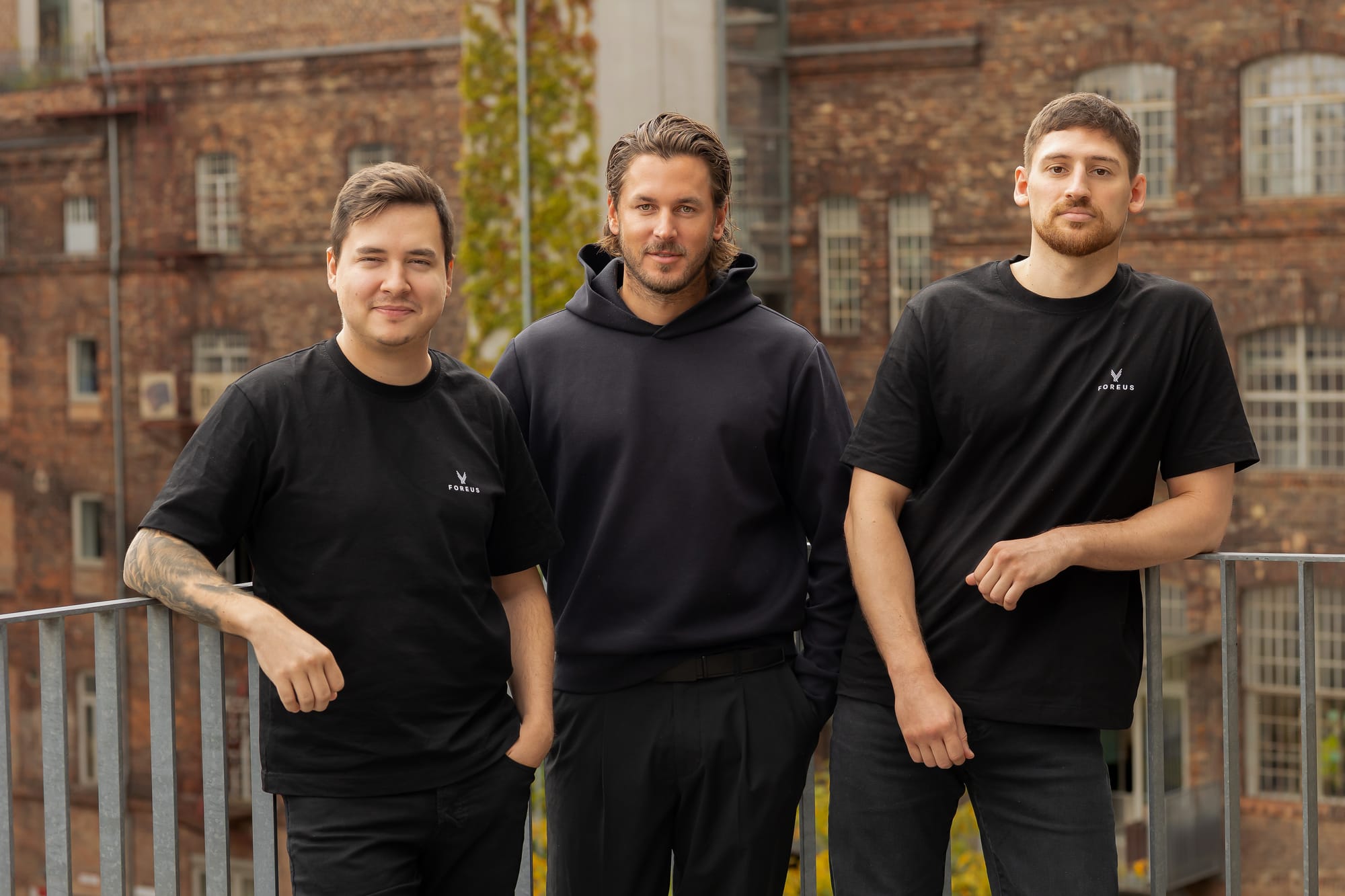
FOREUS recently expanded into Southeast Europe with a subsidiary in Banja Luka. What makes the region strategically important to your international growth plans, and what opportunities do you see for advanced intelligence services and technologies across Southeast Europe?
For us, the Balkans are not a peripheral market but a market of the future. With Foreus Southeast Intelligence d.o.o. in Banja Luka, we are not guests in the region – we are part of it, and from there we want to serve the entire Balkans.
There are several reasons for this decision. For years we have had a close and successful cooperation with the permanent economic representation of Republika Srpska in Austria, which prepared this step. Our target group is strongly present in the region: law firms, banks and financial institutions that face the same growing due diligence obligations and cross-border risks as their partners in Western Europe. And Austria and the Balkans share a long common history – Republika Srpska in particular. Many of the human and economic ties that exist today go back generations.
Strategically, the region sits at the intersection between the European Union and its neighbouring markets. Goods, capital and corporate holdings move across many borders and legal systems. That creates real demand – for sanctions screening, cross-border due diligence, asset tracing and recovery, anti-money laundering investigations and, for public institutions, sovereign intelligence infrastructure. We want to bring the same capabilities to the Balkans that are available in Vienna, Berlin or Lucerne.
Intelligence is ultimately an industry built on trust, discretion and expertise. As FOREUS continues to grow internationally, how do you build an organization that can scale while preserving the standards and professional judgment that clients expect when dealing with highly sensitive matters?
Trust cannot be scaled by marketing. It can only be scaled by standards, by people and by structure.
First, people: we recruit people who have already lived intelligence – who know what responsibility means when dealing with sensitive information. Second, structure: every case has a clear owner, every step is documented, nothing leaves the company without review. And third, technology: our platform is designed so that sensitive information is compartmentalised and access is strictly controlled.
As we grow internationally, we build the same standards into every new company and every new office – whether in Austria, Germany, Switzerland or Bosnia and Herzegovina. Discretion is not a feature for us. It is the foundation of our business.
The Future of Private Intelligence
Looking toward 2030, how do you expect the relationship between artificial intelligence, private intelligence companies and government security institutions to evolve? And what role do you envision FOREUS playing in shaping that future?
By 2030, I believe the line between intelligence technology and decision-making will largely disappear. AI will be embedded in every serious risk and security process – for companies as much as for governments. The question will no longer be whether intelligence is used, but whose intelligence and under whose control.
That is why the relationship between private intelligence companies and government security institutions will become more collaborative. States will focus on their sovereign core tasks, while trusted private providers deliver technology, data fusion and specialised expertise – faster and more flexibly than traditional structures allow. Combining clearnet, deep web and darknet data into one intelligence picture can already today significantly accelerate and simplify criminal investigations for security authorities.
FOREUS wants to shape that future. We democratise information gathering, security and crisis management – making capabilities that were previously reserved for states available to those who carry responsibility. Our ambition is clear: we are building the first independent and most influential private intelligence service in the world. We call that ambition True Realities.
Photography & Reproduction Notice
Photography by Adi Kronkop / AdriaDefense. Reproduction or republication of photographs requires authorization from the relevant rights holder. All authorized reuse must include the credit: “Photo: Adi Kronkop / AdriaDefense”.