Germany Leads Baltic Sea NATO Drone Defense Task Force
Germany and seven Baltic Sea NATO allies plan a joint drone defense task force to accelerate threat detection and information sharing.

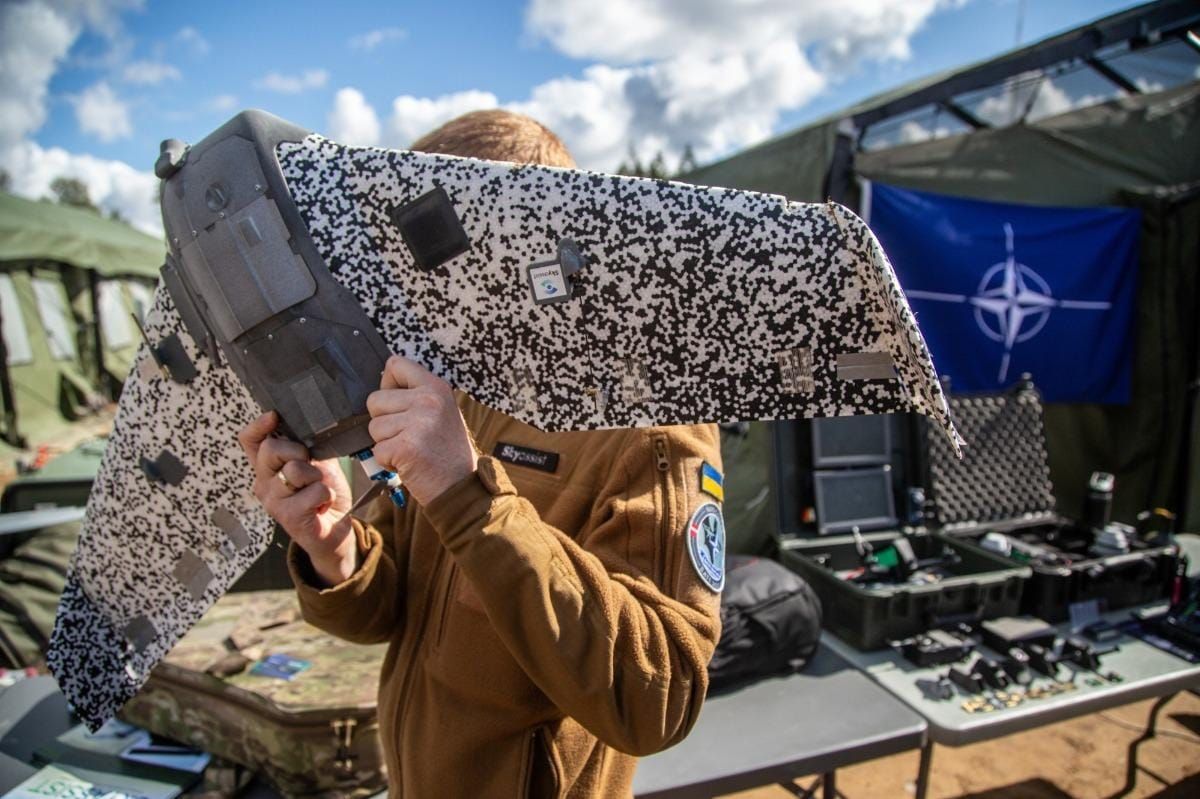
Germany and seven other NATO countries bordering the Baltic Sea plan to establish a joint drone defense task force designed to accelerate information sharing and improve responses to unmanned aircraft threats. German Interior Minister Alexander Dobrindt announced the initiative on August 28 as governments across northern Europe strengthen defenses against hybrid attacks targeting military and civilian infrastructure.
The planned task force would connect the eight NATO members bordering the Baltic Sea: Germany, Denmark, Estonia, Finland, Latvia, Lithuania, Poland and Sweden. The initiative adds another layer to a rapidly expanding network of counter-uncrewed aircraft system cooperation across NATO's northern and eastern flank.
Germany pushes faster Baltic drone threat information sharing
The task force will focus on rapid information exchange between participating countries when suspicious drone activity occurs, according to Dobrindt. The initiative responds to growing concern that individual national responses may not be sufficient when unmanned aircraft cross borders or operate around infrastructure shared by several countries.
The Baltic Sea has become an increasingly important security area since Russia launched its full-scale invasion of Ukraine in February 2022. NATO members have increased surveillance and military activity across the region following incidents involving pipelines, telecommunications cables and other undersea infrastructure.
Dobrindt warned that hybrid threats could intensify in the coming months. European governments have repeatedly raised concerns about sabotage, cyber operations, interference with critical infrastructure and unidentified drone activity, although responsibility for individual incidents has not always been established.
Leipzig drone incident increases pressure on European defenses
The German initiative follows an attempted drone attack at Leipzig/Halle Airport earlier in August. German investigators found at least three drones linked to the incident, including one carrying explosives near a Ukrainian Antonov cargo aircraft involved in military supply transport.
Investigators later recovered another drone and approximately 50 grams of suspected military-grade hexogen west of the airport. German Chancellor Friedrich Merz said on August 25 that authorities expected to identify those responsible, but Germany had not formally attributed the incident at that point.
Leipzig/Halle serves as an important European cargo hub and supports logistics connected to NATO and Ukraine. The incident illustrates the challenge posed by relatively small unmanned aircraft operating around airports, military logistics nodes and other critical infrastructure.
The Baltic initiative therefore extends beyond conventional military air defense. Effective protection against small drones requires coordination between armed forces, police, intelligence services, aviation authorities and operators of critical infrastructure.
NATO expands counter-UAS activity across the Baltic region
The planned task force follows a broader increase in NATO counter-UAS activity in the region.
In August, NATO Allied Command Transformation conducted Baltic Trust 26 in Latvia as part of its Layered Counter Unmanned Aircraft Systems Initiative experimentation program. The exercise brought Allied operators and industry together to test how multiple sensors and counter-UAS technologies could operate within integrated architectures.
AdriaDefense coverage: BlackTalon Counter-UAS System Tested at NATO BATT26 in Latvia
Latvia is separately examining an airborne counter-drone layer. The Latvian Air Force has sought information on light combat aircraft, including Embraer's A-29 Super Tucano, as Riga evaluates options for intercepting slow-moving drones alongside its ground-based air defense investments.
AdriaDefense coverage: Latvia Eyes A-29 Super Tucano for Counter-Drone Missions
Finland and Sweden also announced expanded military cooperation on August 28 covering territorial surveillance and counter-drone capabilities. Sweden plans to support Finland with Saab JAS 39 Gripen fighters and a corvette through at least the end of 2026, while additional cooperation could involve aerial and ground-based counter-drone systems.
Together, these initiatives indicate that NATO's northern members are moving toward a layered regional approach rather than relying solely on national counter-UAS capabilities.
Baltic drone defense is becoming a regional NATO requirement
Geography makes cross-border coordination particularly important around the Baltic Sea. Estonia, Latvia, Lithuania and Poland sit directly on NATO's eastern flank, while Finland shares a 1,340-kilometer border with Russia.
Sweden and Finland joining NATO also changed the military geography of the region. All European Union countries bordering the Baltic Sea are now NATO members, allowing national surveillance, air defense and maritime security initiatives to operate within a common alliance framework.
The proposed task force does not itself create a single Baltic counter-drone weapon system. Its immediate significance lies in establishing mechanisms for participating governments to exchange threat information and coordinate responses more quickly.
That distinction matters as NATO countries invest in radars, passive radio-frequency sensors, electronic warfare systems, interceptors and other counter-UAS technologies. The effectiveness of those systems increasingly depends on how quickly information can move between sensors, command structures and national borders.
The Baltic Sea initiative could therefore provide an organizational layer connecting national counter-drone investments already emerging across northern Europe. Its effectiveness will depend on how the eight governments structure information sharing, operational responsibilities and links between military and civilian authorities.
Baltic drone defense task force: key questions
Which countries will participate in the Baltic drone defense task force?
The planned initiative covers the eight NATO countries bordering the Baltic Sea: Germany, Denmark, Estonia, Finland, Latvia, Lithuania, Poland and Sweden.
What will the Baltic drone defense task force do?
Germany says the task force will improve rapid information sharing and coordination against drone and hybrid threats. Detailed information on its command structure, deployed equipment and operational procedures has not yet been announced.
Why is NATO strengthening counter-drone defenses around the Baltic Sea?
NATO members face increased concern over unidentified drones, sabotage and attacks against critical infrastructure. The war in Ukraine has also demonstrated how inexpensive unmanned aircraft can threaten military bases, logistics hubs, airports and infrastructure far behind conventional front lines.
Is NATO creating a single Baltic counter-drone system?
Not at this stage. The German-led proposal focuses on coordination and information exchange between eight countries, while individual NATO members continue developing and procuring their own counter-UAS capabilities.
The next key step will be whether the participating governments turn the task force into a permanent operational mechanism capable of connecting national sensors, authorities and response forces across the Baltic region.