Latvia Eyes A-29 Super Tucano for Counter-Drone Missions
Latvia is assessing light combat aircraft, including the A-29 Super Tucano, to intercept drones and add a national airborne layer to Baltic air defense.

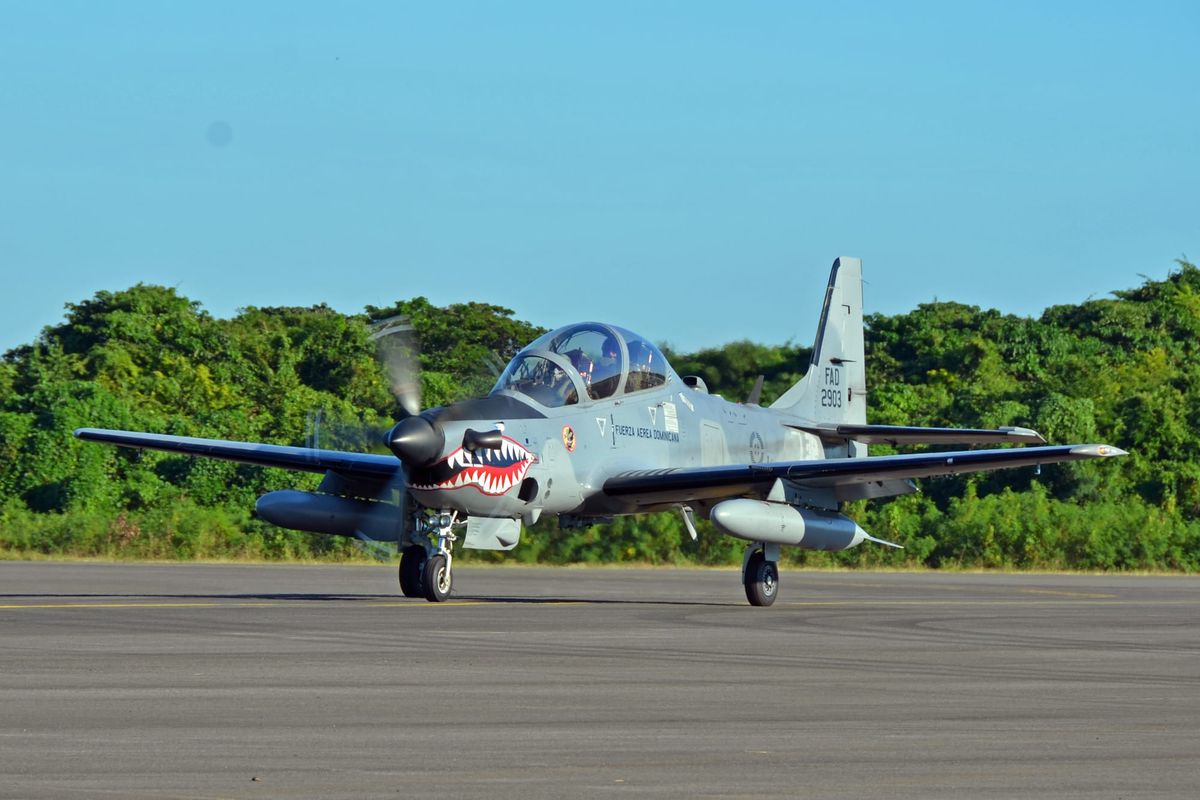
Latvia is evaluating light combat aircraft for counter-drone missions, with Embraer’s A-29 Super Tucano among the platforms under consideration. The Latvian Air Force has approached manufacturers for cost and delivery information as Riga examines whether a turboprop aircraft could provide a national airborne response to slow-flying drones alongside its ground-based air defense investments.
The assessment follows repeated drone incursions into Latvian airspace and could mark a significant change for the Latvian Air Force, which does not currently operate armed fixed-wing aircraft. NATO allies provide fighter coverage over Latvia through the Baltic Air Policing mission.
Latvian Air Force begins assessment of light combat aircraft
Outgoing Latvian Air Force commander Colonel Viesturs Masulis said the National Armed Forces Joint Staff had tasked the service with identifying suitable solutions. Manufacturers have already been contacted, and Latvia is waiting for financial and delivery estimates before conducting a detailed assessment and preparing a possible course of action.
Masulis discussed light combat and training aircraft with defense companies during the Global Air and Space Chiefs Conference in London in July 2026. He identified the A-29 Super Tucano as one of the aircraft being considered.
No procurement decision, aircraft quantity or dedicated budget has been announced. Latvia has committed more than €1 billion to strengthening air defense through an additional €200 million annually between 2023 and 2027, but that funding covers the wider air defense portfolio rather than a specific aircraft purchase.
Masulis indicated that a light combat aircraft should primarily serve as an airborne air defense platform against drones and other slow targets, while retaining the ability to support Latvian Land Forces.
A-29 counter-drone configuration targets low-cost aerial threats
The Latvian assessment comes as Embraer expands the A-29 specifically for counter-unmanned aircraft system missions.
In November 2025, Embraer announced a counter-drone concept using the aircraft’s existing systems alongside additional capabilities. The proposed configuration combines datalinks for receiving target coordinates, electro-optical and infrared sensors, laser-guided rockets and wing-mounted .50-caliber machine guns.
Embraer expanded the concept in March 2026 through a partnership with Valkyrie Aero to integrate the Gunslinger artificial intelligence suite. The system is intended to assist crews with detecting, tracking and engaging unmanned aircraft while using the A-29’s sensors and weapons.
The manufacturer presents the aircraft as an alternative to using frontline fighters against relatively inexpensive one-way attack drones. Its ability to fly at speeds closer to those of slow unmanned aircraft and remain airborne for extended periods could support patrol and interception missions, although the configuration has not been demonstrated operationally against Shahed or Geran-type one-way attack drones.
The A-29 offers more than six hours of endurance and can operate from short or relatively austere runways. Its existing weapons integration and electro-optical sensors give Latvia a potential route to combining surveillance and kinetic interception in a single platform.
A-29N would introduce a NATO-compatible combat aircraft
Embraer introduced the NATO-configured A-29N in 2023, adding communications and avionics intended to meet alliance requirements. Portugal ordered 12 aircraft for €200 million in December 2024 and became the first operator of the configuration when the first five aircraft were delivered one year later.
For Latvia, however, acquiring the A-29 would involve more than purchasing aircraft. Riga would have to establish an armed fixed-wing capability including pilots, ground crews, basing arrangements, weapons inventories, training and long-term sustainment.
That makes the procurement question different from adding another ground-based counter-drone system. An A-29 fleet could perform training and land-support missions in addition to counter-UAS operations, potentially giving Latvia a broader capability from the same aircraft.
It would not replace NATO Baltic Air Policing. Allied fighters would remain responsible for higher-end air policing and interception missions, while a Latvian light combat aircraft could address a different target set centered on slow and comparatively low-cost aerial threats.
Drone incursions are reshaping Latvia’s air defense requirements
Latvia’s interest has developed against a series of incidents involving unmanned aircraft linked to the war in Ukraine.
On June 8, 2026, NATO Baltic Air Policing fighters shot down a foreign drone over Latvia’s eastern Latgale region after the aircraft entered Latvian airspace. The Latvian National Armed Forces said the incursion resulted from Russian electronic warfare.
Latvia, Estonia and Lithuania had already issued a joint statement in March calling for stronger multilayered air defense following foreign drone incursions into NATO territory. The three governments identified additional sensors, counter-UAS systems and other air defense capabilities as priorities.
Latvia’s new defense leadership has continued to emphasize airspace and border security. Defense Minister Raivis Melnis identified implementation of lessons from Ukraine, particularly for national airspace and border protection, as a priority when he took office in May.
The A-29 assessment therefore reflects a broader shift in Baltic air defense planning. Latvia is not considering a conventional national fighter fleet, but rather whether a less costly armed aircraft can occupy the operational space between ground-based counter-UAS systems and NATO fast jets.
Whether that concept moves into procurement will depend on the cost, delivery schedule and sustainment requirements submitted by manufacturers. If Latvia proceeds, it would create the country’s first armed fixed-wing capability and add an airborne counter-drone layer to NATO’s eastern flank.
Latvia A-29 Super Tucano: Key questions
Is Latvia buying the A-29 Super Tucano?
No procurement decision has been announced. The Latvian Air Force is evaluating light combat and training aircraft, and the A-29 Super Tucano is one of the platforms under consideration. Manufacturers have been asked to provide cost and delivery information.
Why is Latvia considering the A-29 for counter-drone missions?
Latvia is examining whether a light combat aircraft could intercept slow-flying drones without relying on NATO fast jets or ground-based missiles for every target. Embraer is developing a dedicated A-29 counter-UAS configuration using sensors, machine guns, guided rockets and an AI-enabled decision-support system.
Does Latvia currently operate fighter aircraft?
Latvia does not operate armed fixed-wing aircraft. NATO allies provide fighter coverage through the Baltic Air Policing mission, meaning an A-29 acquisition would establish a new national combat aviation capability.
Has the A-29 been proven against Shahed-type drones?
Embraer is developing the A-29 for counter-UAS operations, but the proposed configuration has not been demonstrated operationally against Shahed or Geran-type one-way attack drones.