Germany’s Arminius Boxer Program Could Reach €77 Billion
Germany is moving toward a major Boxer order under Arminius, with an initial package near €25 billion and potential program value approaching €77 billion.

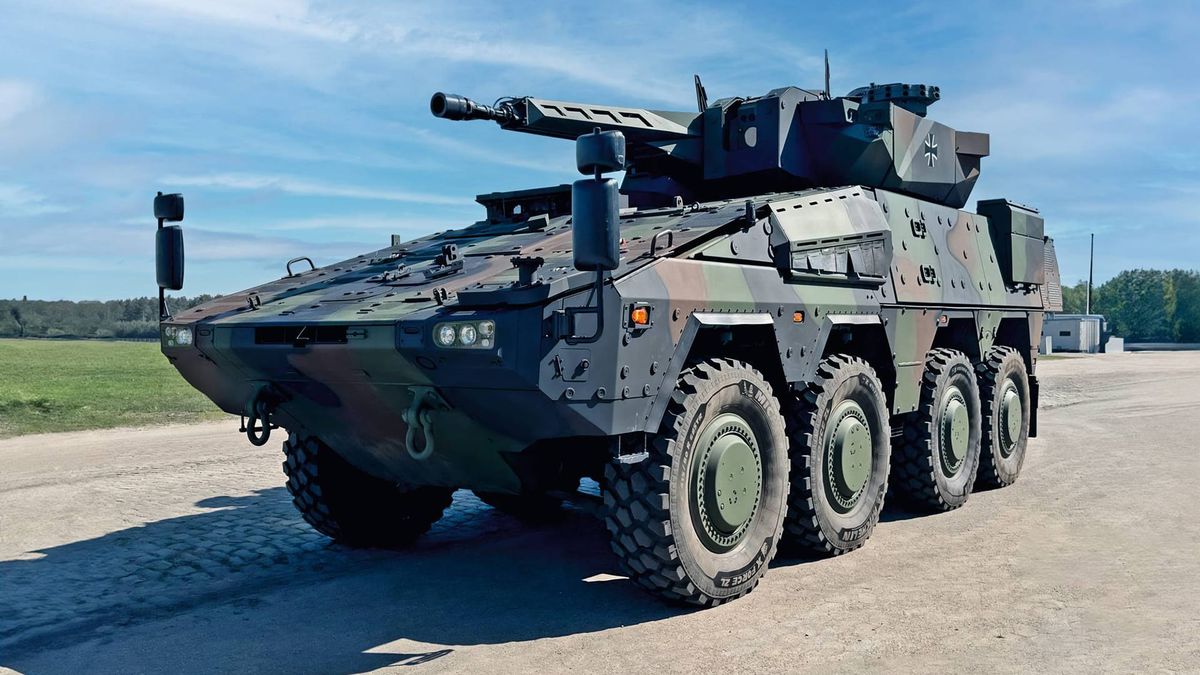
Germany is preparing a major expansion of its Boxer armored vehicle fleet under the Arminius program, with Rheinmetall expecting €12.4 billion from the initial vehicle contract alone. If Germany exercises the additional options currently proposed by industry, the overall industrial value of the program could approach €77 billion and potentially cover thousands of Boxer vehicles in multiple configurations.
Final negotiations for the initial Arminius package are expected in the second week of September, Rheinmetall Chief Executive Officer Armin Papperger told analysts during the company’s half-year earnings call. The German Bundestag is expected to consider funding on December 9, with a contract potentially following within five to 10 days.
Initial Arminius Boxer order could approach €25 billion
Rheinmetall expects its share of the initial vehicle contract to reach approximately €12.4 billion.
Boxer production runs through Artec, the joint venture involving Rheinmetall and KNDS Deutschland. German defense reporting indicates that Rheinmetall and KNDS Deutschland have agreed to divide revenue from the planned Boxer procurement equally, which would put the combined industrial value of the initial vehicle package at approximately €25 billion.
The vehicle contract would be accompanied by a separate support package. Papperger placed the total value of that agreement at approximately €4 billion, with about €2 billion expected to go to Rheinmetall.
Rheinmetall expects the vehicle agreement to be concluded before the end of 2026 if the Bundestag approves the necessary funding. The company anticipates a 30% advance payment, potentially exceeding €3 billion, either at the end of December or in January 2027.
The support contract could follow in early 2027.
Additional Boxer options could push Arminius toward €77 billion
The initial procurement represents only the first stage of the proposed Arminius framework.
Rheinmetall has submitted two additional options for later Boxer orders. Papperger valued Rheinmetall’s portion of the first option at approximately €14 billion, covering another production phase between 2030 and 2035.
A second option for additional vehicles has been valued at approximately €12 billion for Rheinmetall.
If those figures represent Rheinmetall’s share under the same industrial division used for the initial procurement, the combined value of the additional vehicle options could reach approximately €52 billion across Rheinmetall and KNDS Deutschland. Added to an initial vehicle package of roughly €25 billion, the theoretical industrial ceiling would approach €77 billion.
That €77 billion figure should not be treated as an approved German procurement budget. The additional phases remain options and industry proposals, and Germany has not committed funding for the full potential program.
German defense reporting has linked the wider Arminius concept to as many as 5,500 additional Boxer vehicles across multiple procurement phases. The figure includes a potential initial batch of approximately 1,800 vehicles, followed by options for around 1,700 and 2,000 more.
The final quantities remain subject to negotiations, parliamentary approval and future funding decisions.
Arminius would create a common Boxer fleet across multiple roles
The scale of Arminius reflects Germany’s intention to use Boxer as a common platform across a much broader range of Army missions.
Potential configurations include infantry fighting vehicles, wheeled artillery, command vehicles, armored personnel carriers, medical evacuation vehicles, artillery reconnaissance platforms and driver-training vehicles.
Air defense is another potential mission. Boxer variants equipped with Rheinmetall’s Skyranger 30 turret have been discussed as part of the wider vehicle requirement.
The program also includes the Schakal infantry fighting vehicle configuration. Schakal combines the Boxer 8x8 chassis with the turret used by the Puma tracked infantry fighting vehicle and its 30 mm MK 30-2/ABM cannon.
Germany and the Netherlands already ordered 222 Schakal vehicles through the Organisation for Joint Armament Cooperation in October 2025. Germany is due to receive 150 vehicles and the Netherlands 72 under a €4.7 billion contract.
The Remote Controlled Howitzer 155, or RCH 155, adds a 155 mm artillery configuration based on the Boxer platform. Together, the variants illustrate how Germany intends to use a common wheeled chassis for combat, fire support, air defense and supporting roles.
Germany is shifting toward a much larger wheeled force
Arminius would represent more than another Boxer procurement if Germany proceeds with the wider framework.
The Bundeswehr is restructuring its land forces while expanding its medium forces, which are designed around wheeled platforms capable of deploying over long distances with less dependence on heavy transport than tracked armored formations.
A large common Boxer fleet could also simplify parts of the logistics, training and maintenance structure across units equipped for different missions. The scale of those benefits, however, will depend on how many variants Germany ultimately orders and how much commonality remains between their mission modules.
For Rheinmetall and KNDS Deutschland, Arminius could provide Boxer production work extending well into the next decade. Rheinmetall has previously identified the program as the largest planned procurement project for the German Army.
Rheinmetall reported an order backlog of more than €80 billion during the first half of 2026. The company has also indicated that the anticipated Boxer workload could support production at its Kassel facility through around 2040.
The immediate milestone is now the second week of September, when Rheinmetall expects final discussions on the first Arminius package. Parliamentary approval in December would then determine whether Germany can move from planning to the first major contract before the end of 2026.
Germany’s Arminius program: Key questions
What is Germany’s Arminius program?
Arminius is a planned Bundeswehr procurement framework centered on the Boxer 8x8 armored vehicle. It could cover multiple variants for infantry, artillery, command, medical, reconnaissance and air-defense missions.
How much could the Arminius Boxer program cost?
Rheinmetall expects approximately €12.4 billion from its share of the initial vehicle contract. Based on the reported industrial split and additional options described by Rheinmetall, the theoretical value of all vehicle phases could approach €77 billion, but most of that amount has not been approved or funded.
Could Germany buy 5,500 Boxer vehicles?
German defense reporting indicates that the wider framework could eventually cover up to approximately 5,500 additional Boxer vehicles across three phases. Germany has not yet placed an order for 5,500 vehicles, and later quantities remain dependent on future decisions and funding.
When could Germany sign the first Arminius contract?
Rheinmetall expects final negotiations in the second week of September 2026. The Bundestag is expected to consider the program on December 9, with Rheinmetall anticipating a contract five to 10 days later if approval is secured.