Latvia Seeks Faster Military Drone Procurement as Industry Warns of Production Bottlenecks
Latvia's military and drone industry are seeking faster testing, procurement and production pathways as manufacturers face financing and scaling challenges.

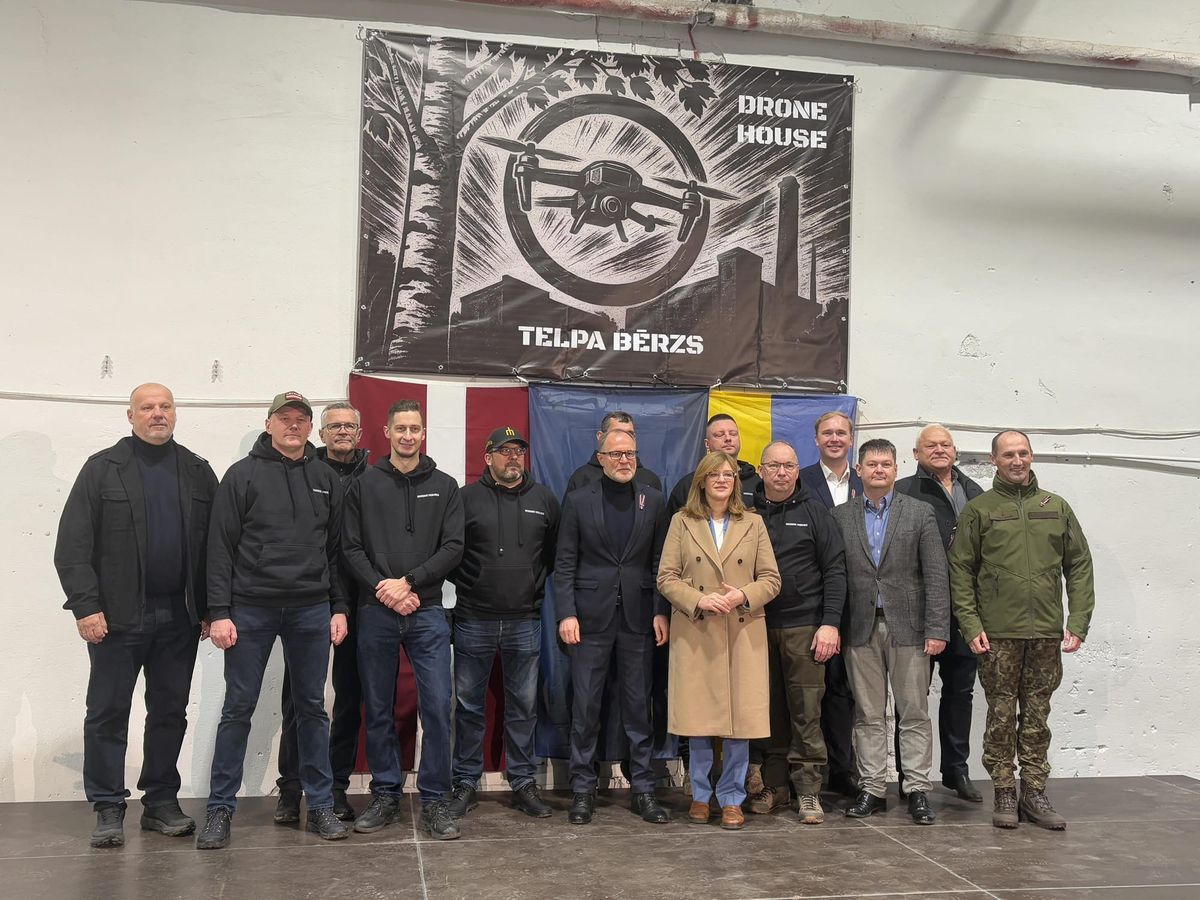
Latvia's armed forces and domestic drone manufacturers are examining ways to accelerate the introduction of unmanned systems into military service, as industry representatives warn that limited production capacity, financing and coordination could slow the country's defense technology ambitions.
The issues were discussed at a defense industry conference on November 6, organized by Drone House, Latvia's State Defense Logistics and Procurement Center (VALIC) and the Autonomous Systems Competence Center.
The event brought together military representatives, procurement officials and technology companies to examine how new unmanned systems can move more efficiently from development and testing into operational deployment.
Although Latvia has made progress integrating drones into its armed forces, military and industry officials say procurement procedures, training and manufacturing capacity must evolve alongside rapidly changing technology.
Latvian Military Wants to Maintain Its Drone Technology Advantage
Lieutenant General Kaspars Pudāns, commander of the Latvian National Armed Forces, emphasized the importance of maintaining the country's ability to adapt to emerging military technologies.
Addressing conference participants, Pudāns warned that early technological advantages can disappear when larger countries invest more resources and expand their own capabilities.
For Latvia, he argued, continuous adaptation and modernization are essential to maintaining a competitive position in unmanned systems.
The country's relatively small defense sector has increasingly focused on technologies that can be developed and improved rapidly, including reconnaissance drones, autonomous platforms and counter-UAS systems.
However, the pace of technological change creates challenges for military organizations accustomed to longer equipment acquisition and certification cycles.
The November 6 discussions focused on how Latvia can shorten those cycles without compromising training, operational requirements or combat readiness.
Drone House Calls for Better Military-Industry Feedback
Viesturs Silenieks, head of Drone House's training center, identified insufficient coordination between manufacturers and military operators as a significant obstacle.
He explained that soldiers frequently discover technical limitations or opportunities for improvement only after equipment has entered operational use.
A structured mechanism is needed to ensure that feedback reaches manufacturers quickly enough to support product development.
That would allow Latvian companies to improve their systems based on operational experience while helping military units receive equipment better suited to their requirements.
Silenieks also pointed to the technical expertise available within Latvia's National Guard.
Many reservists work in civilian technology industries and develop potentially valuable solutions, including software for planning drone operations.
However, existing procedures do not always provide a clear route for testing and introducing these solutions into military service.
Creating a faster evaluation process could allow promising technologies to be assessed without requiring developers to navigate lengthy procurement procedures from the outset.
Production Scaling Remains a Major Challenge
Major Modris Kairišs, head of Latvia's Autonomous Systems Competence Center, said the country has developed an effective model for testing and improving unmanned technologies.
The larger challenge, however, is moving from successful prototypes to industrial production.
Latvian defense technology companies face shortages of qualified specialists and difficulties securing the capital required to manufacture systems in larger quantities.
Kairišs argued that military organizations should define their requirements clearly and provide initial financing at an earlier stage of development.
Several competing solutions could then be evaluated before the most promising technologies receive additional support for development and production.
Such an approach could help manufacturers reduce the financial risks associated with expanding capacity before receiving substantial military orders.
Kairišs also acknowledged that domestically developed products can be more expensive than foreign alternatives.
However, he identified the development of national technological expertise, resilient supply chains and industrial capacity as important long-term benefits of supporting Latvian manufacturers.
Latvia's Growing Counter-Drone Industry
The discussion comes as Latvia develops a growing defense technology sector with an increasing international presence.
Latvian company Origin Robotics has emerged as a supplier of autonomous counter-drone interceptors to European armed forces.
Its BLAZE system has been selected or acquired by several NATO countries, while the company continues expanding its manufacturing and technology partnerships.
The company has also cooperated with Poland's Military Institute of Armament Technology on a new interceptor warhead configuration.
These developments demonstrate the export potential of specialized defense technologies developed by smaller European countries.
Latvia established its Autonomous Systems Competence Center in September 2025 to support military drone deployment, testing, training and industrial cooperation.
The center covers unmanned capabilities operating in the air, on land and at sea, as well as technologies designed to counter hostile unmanned systems.
Moving From Prototypes to Military Production
The November 6 conference did not announce a new procurement contract or a formally approved acquisition reform.
Instead, it identified practical obstacles that must be addressed if Latvia wants to accelerate the adoption of autonomous military technologies.
Those obstacles include providing manufacturers with clearer military requirements, shortening testing cycles, improving communication between operators and developers, and securing financing for industrial expansion.
The challenge is increasingly relevant across NATO's eastern flank, where smaller defense technology companies are developing systems that can be adapted more rapidly than traditional weapons platforms.
For Latvia, the next stage will depend on whether the military, procurement authorities and private manufacturers can establish a more consistent process for turning technological innovation into deployable capabilities at scale.