Romanian Drone Manufacturer AFT Warns of Weak Domestic Orders and Industry Barriers
Romanian drone manufacturer AFT warns that weak domestic military orders and limited industrial support are restricting private UAV production.

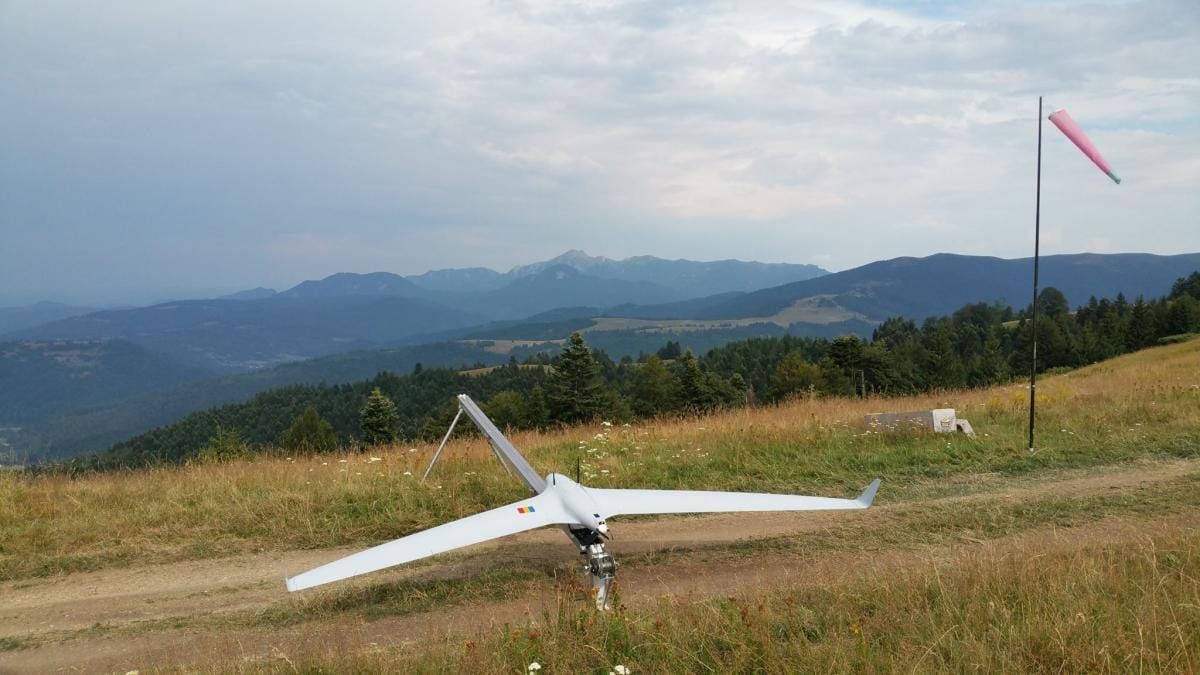
Romanian drone manufacturer Autonomous Flight Technologies (AFT) has raised concerns about the limited number of domestic military orders and the difficulties facing private defense companies, despite growing European demand for unmanned systems.
Emanuel Popp, general manager of AFT, addressed the challenges during the second Vantarc Defense Forum in Bucharest on November 5. His comments, reported by Romanian media on November 6, highlighted the gap between the country's ambitions to expand its defense industry and the commercial conditions facing established local manufacturers.
Popp argued that Romanian companies have demonstrated the technical ability to develop unmanned aircraft but lack the procurement commitments and industrial supply networks required to expand production.
The remarks come as Romania increases defense spending and seeks to develop domestic capabilities in drones, ammunition and other military technologies.
AFT Says Romanian Drone Orders Remain Insignificant
Speaking at the forum, Popp expressed dissatisfaction with the volume of orders placed with Romanian drone manufacturers.
According to Romanian technology publication Go4IT, he described domestic orders as insignificant despite the increasing military relevance of unmanned aircraft.
The problem, he suggested, is not simply an absence of engineering capabilities. Romanian companies can design and integrate complex systems, but scaling production requires sustained demand, reliable suppliers and investment.
Popp also highlighted the difficulty of meeting international quality requirements while competing against significantly lower-priced equipment.
In his assessment, Romanian manufacturers are increasingly expected to offer prices comparable to Chinese suppliers while delivering standards associated with German or American producers.
That combination, he argued, makes it difficult for local companies to build competitive industrial operations without adequate investment and predictable orders.
Private Companies Question State Industry's Role
Popp also raised concerns about the Romanian government's dual position as both an industrial stakeholder and an important defense customer.
Romania maintains a substantial state-owned defense manufacturing sector, including companies operating under the ROMARM group. The Ministry of Economy has responsibilities for parts of this industrial structure while private manufacturers compete for military business.
Speaking in a deliberately humorous tone, Popp suggested that private manufacturers might benefit from a ministry dedicated specifically to the private economy.
His underlying argument was that privately owned defense companies do not receive sufficient representation when their interests compete with those of state-controlled producers.
The criticism reflects a broader debate about how Romania should balance established state-owned manufacturers with smaller private technology companies developing capabilities in unmanned systems, software and advanced electronics.
Romania Has Established Domestic Drone Expertise
AFT is not a recent entrant to the drone market.
Founded in 2004, the company has developed unmanned aircraft and associated technologies for civilian and military applications, including autopilots, target drones and reconnaissance platforms.
Its portfolio includes the electrically powered Hirrus aircraft family, the larger Signus series and the Quarrus aerial target systems used for military training.
AFT also develops supporting components and subsystems, including ground-control equipment, payload integration technologies and other UAV-related electronics.
The company's experience illustrates that Romanian unmanned aircraft development predates the recent acceleration in European military drone procurement.
However, Popp identified the limited availability of specialized suppliers as another obstacle to expanding local production. Some Romanian prototypes can reportedly achieve approximately 75% domestic integration, while critical components such as engines must still be sourced elsewhere.
Romania Faces a Broader Defense Industrial Choice
The debate takes place as Romanian state-owned manufacturers also pursue new unmanned systems partnerships.
In October, ROMARM subsidiary CARFIL announced cooperation with Greece's ALTUS-LSA covering drone-related ammunition, interceptor technology and potential industrial production in Romania. AdriaDefense reported that CARFIL expects initial contracts under the partnership in December.
Such initiatives demonstrate the government's interest in expanding domestic capabilities, but they also raise questions about how procurement opportunities will be distributed between established state-owned companies and independent manufacturers.
For AFT and other private technology developers, the central challenge remains converting engineering expertise into sustainable production supported by repeat customers.
Popp's remarks highlight an important question for Romania's defense industrial strategy: whether growing military expenditure will translate into meaningful opportunities for the country's existing private manufacturers, or whether domestic companies will continue struggling to secure the orders needed to scale.