Lithuania Eyes South Korean Air Defense and Anti-Drone Systems
Lithuania is exploring South Korean air defense and anti-drone systems, with delivery speed and potential local production among its procurement priorities.


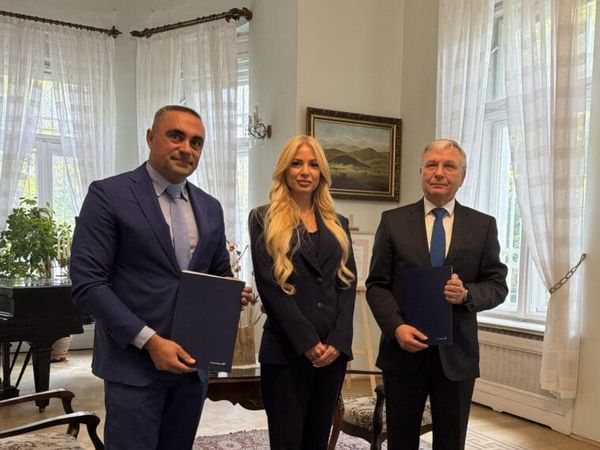
Lithuania is considering South Korean short-range air defense and counter-drone systems as Vilnius seeks additional protection against unmanned aircraft and low-altitude threats. Lithuanian Defense Minister Robertas Kaunas discussed potential procurement and broader industrial cooperation with South Korean Ambassador Choi Yong-jeong, with delivery speed emerging as a key factor alongside performance and price.
No procurement decision has been announced, and Lithuanian officials have not identified a specific South Korean system under consideration. The discussions instead point toward 30 mm to 40 mm anti-aircraft weapons and other short-range capabilities intended to protect critical infrastructure and military sites.
Lithuania prioritizes short-range air defense and rapid delivery
Lithuania is examining options for strengthening the lower tier of its air defense architecture, particularly against drones and other targets operating at low altitude. Kaunas indicated that South Korean manufacturers could offer relevant 30 mm to 40 mm anti-aircraft solutions with relatively rapid delivery.
That delivery requirement is significant for Lithuania because the country is expanding its air defense capabilities while facing Russia and Belarus directly on NATO's northeastern flank. Vilnius is therefore evaluating availability alongside technical performance and acquisition cost rather than treating procurement price as the determining factor.
The requirement appears distinct from Lithuania's medium-range air defense investments. The discussions reported on August 8 specifically concern smaller-scale air defense and counter-UAS capabilities rather than a confirmed Lithuanian evaluation of South Korea's Cheongung-II, also known as KM-SAM Block II.
That distinction matters because South Korea now offers equipment across multiple layers of air and missile defense. Cheongung-II is a medium-range surface-to-air missile system designed to engage aircraft and ballistic missiles, with an interception range of about 40 km and an altitude of about 15 km.
Vilnius and Seoul discuss defense production in Lithuania
The talks extend beyond purchasing finished South Korean equipment. Lithuania and South Korea also discussed industrial cooperation that could involve manufacturing some defense products in Lithuania.
No companies, products, investment figures or production timelines have been identified for such cooperation. The discussions nevertheless fit Lithuania's broader interest in linking major defense purchases with domestic industrial capacity and faster access to equipment.
Kaunas also highlighted similarities between the two countries' security environments. Lithuania borders Russia and Belarus, while South Korea faces the military threat posed by North Korea, providing a basis for closer bilateral defense cooperation, according to the Lithuanian minister.
For Lithuania, local production could offer advantages beyond industrial participation. Manufacturing, assembly or maintenance capacity inside the country could strengthen sustainment and potentially reduce dependence on distant supply chains, although no specific arrangement has yet been announced.
South Korean air defense exports gain international attention
Lithuania's interest comes as South Korea expands its position in the international air defense market. The United Arab Emirates and Saudi Arabia have already purchased the LIG Nex1-developed Cheongung-II medium-range system.
The system gained additional attention in 2026 after its operational use by the United Arab Emirates against Iranian missile and drone attacks. The International Institute for Strategic Studies reported that two Cheongung-II batteries were operational in the UAE by mid-March 2026, marking the system's combat debut.
South Korea is also developing higher-tier missile defense capabilities. Its Defense Acquisition Program Administration launched development of the L-SAM-II high-altitude interceptor in January 2025, with approximately KRW 567.7 billion planned for development through 2028. The agency expects L-SAM-II to provide a defended area roughly three to four times larger than the original L-SAM.
Lithuania's immediate requirement, however, appears focused lower in the air defense spectrum. Countering small unmanned aircraft, low-altitude targets and other relatively inexpensive threats requires systems that can complement missile-based defenses without relying on costly interceptors for every engagement.
That requirement has already shaped Lithuanian procurement. In April 2026, the Lithuanian Ministry of National Defense announced plans to acquire a trial batch of the Merops AS-3 Surveyor counter-UAS system from U.S. company Perennial Autonomy, including training and system deployment work. Lithuania said the trial would evaluate effectiveness and integration with its existing architecture and NATO systems.
The South Korean discussions therefore indicate that Vilnius is continuing to examine additional options for the short-range layer rather than relying on a single counter-drone solution. Any future acquisition would need to integrate with Lithuania's wider NATO-compatible air defense architecture while meeting the country's requirement for rapid fielding.
Questions about Lithuania's South Korean air defense plans
Is Lithuania buying South Korea's Cheongung-II system?
No Cheongung-II procurement has been announced. The August 8 discussions focused on short-range air defense, counter-drone capabilities and 30 mm to 40 mm anti-aircraft systems rather than a confirmed acquisition of South Korea's medium-range Cheongung-II.
Why is Lithuania considering South Korean air defense systems?
Lithuania wants additional capabilities against drones and low-altitude aerial threats. Vilnius is evaluating technical performance and price, but officials have also identified rapid delivery as an important procurement criterion.
Could South Korean defense equipment be produced in Lithuania?
The two countries have discussed industrial cooperation that could include manufacturing some defense products in Lithuania. No specific company, system, investment or production agreement has been announced.
What counter-drone systems is Lithuania already acquiring?
Lithuania announced in April 2026 that it planned to acquire a trial batch of the Merops AS-3 Surveyor system from Perennial Autonomy. The system is intended to detect, track and neutralize drones and aerial balloons.