Poland Expands Order for Domestically Produced TARANTULA Military Robots to 130
Poland has increased its order for locally developed PIAP TARANTULA reconnaissance robots from 96 to 130 units, supporting domestic military robotics production and unmanned ground operations.

Poland's Armament Agency has exercised a contractual option to increase its procurement of domestically developed PIAP TARANTULA military reconnaissance robots from 96 to 130 units, strengthening the Polish Armed Forces' unmanned ground capabilities and providing additional demand for the country's defense technology sector.
The decision was announced on November 18 by the Łukasiewicz Research Network, whose Industrial Research Institute for Automation and Measurements, known as Łukasiewicz-PIAP, develops and produces the robotic systems.
The original contract, signed in March 2025, covered 96 mobile unmanned reconnaissance vehicles with a gross value of approximately PLN 50 million. The latest decision adds 34 robots, bringing the total planned procurement to 130 units. The manufacturer did not disclose the additional financial value associated with exercising the option.
A Lightweight Robot Designed for Dangerous Environments
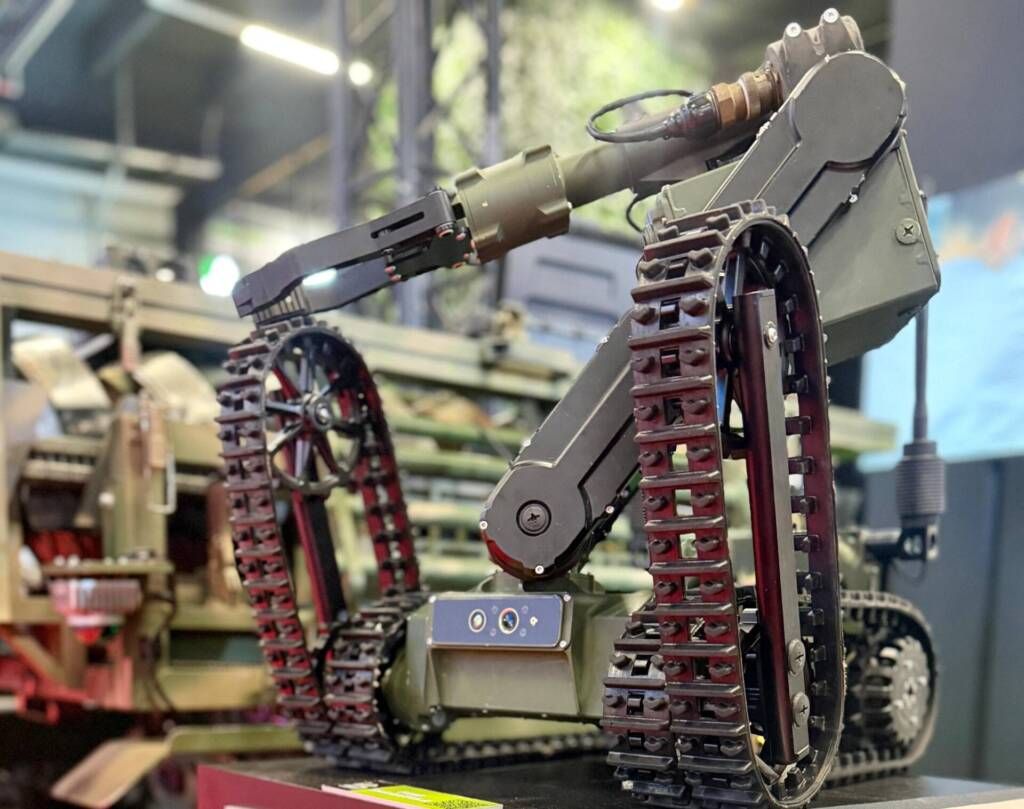
The PIAP TARANTULA is a compact, tracked reconnaissance robot weighing approximately 17 kilograms. Its relatively low weight allows a single soldier to transport and deploy the system, making it suitable for operations in areas that may be inaccessible or too dangerous for personnel.
The robot is equipped with daytime, nighttime and thermal imaging cameras, an observation system and acoustic sensors capable of detecting sound sources at distances of approximately 80 meters.
Its tracked mobility system allows it to negotiate stairs, rubble, trenches, sandy terrain and other obstacles, supporting reconnaissance inside buildings, damaged infrastructure and difficult battlefield environments.
According to technical information previously released by Łukasiewicz-PIAP, the robot can operate for up to five hours and has a control range of approximately one kilometer. It can also be operated using radio communications or a fiber-optic connection, providing an alternative in environments affected by electronic interference.
The manufacturer says deliveries are scheduled during 2026 and 2027.
Domestic Military Robotics Gain Momentum
The additional order comes as Poland increases investment in unmanned military capabilities and seeks to expand domestic production of defense technologies.
Unlike heavier unmanned ground vehicles designed for logistics or direct combat support, the TARANTULA focuses on reconnaissance and reducing the exposure of soldiers to potentially dangerous locations.
The system made its public debut at the MSPO 2026 defense exhibition in Kielce, where it received recognition from Poland's National Security Bureau for its technological development.
For Łukasiewicz-PIAP, the expanded contract strengthens the position of its domestic robotic technology within the Polish Armed Forces. It also demonstrates the growing importance of smaller, portable unmanned ground platforms as European militaries seek practical solutions for reconnaissance, situational awareness and force protection.