Rheinmetall Details Hundreds of Millions in Schakal Orders for Germany and Netherlands
Rheinmetall says its share of a previously announced 69-vehicle Schakal order is worth several hundred million euros, with deliveries scheduled for 2032–2033.

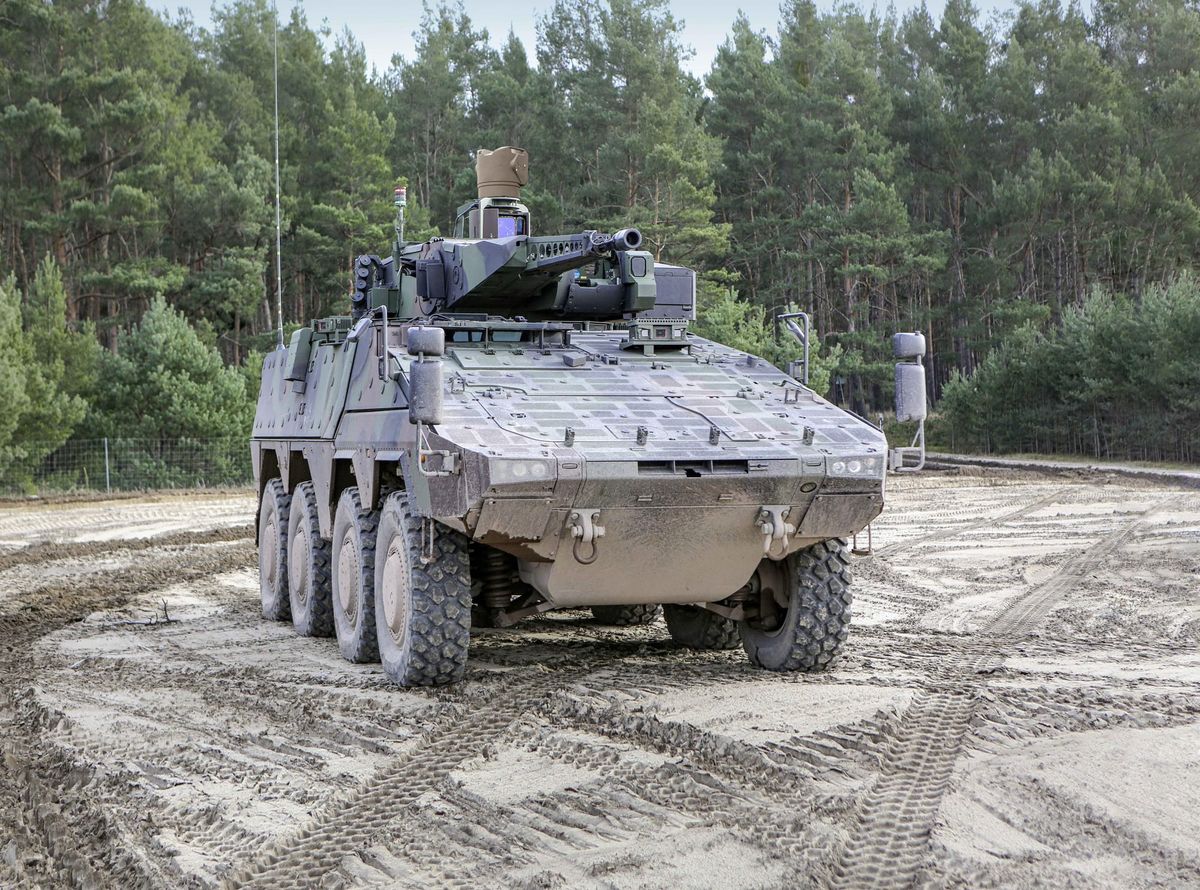
German defense manufacturer Rheinmetall announced on October 29 that its share of a 69-vehicle Schakal infantry fighting vehicle order for Germany and the Netherlands is worth a mid-three-digit million-euro amount. The company also confirmed that deliveries of the additional vehicles are scheduled between May 2032 and November 2033.
The procurement covers 35 vehicles for the German Bundeswehr and 34 for the Royal Netherlands Army. It is being managed by the European procurement organization OCCAR, with Artec GmbH, a joint venture between Rheinmetall and KNDS Deutschland, serving as the prime contractor.
The order was originally announced by KNDS on August 7, following the exercise of options under the initial Schakal contract. Rheinmetall's latest statement provides further details about the financial significance of the procurement for the company and its industrial partners.
Schakal Fleet Expands to 291 Vehicles
The original procurement agreement, awarded in October 2025, covered 222 Boxer RCT30 wheeled infantry fighting vehicles, with options for up to 200 additional units.
Following the exercise of the first 69 options, the combined German-Dutch procurement has increased to 291 vehicles. Germany's planned fleet now stands at 185 Schakal vehicles, while the Netherlands will receive 106.
Rheinmetall said the additional orders represent a combined contract value in the mid-hundreds of millions of euros for its own operations. The company did not disclose the total value of the new vehicles across all participating industrial partners.
The German Bundestag's Budget Committee approved the first option call-off on June 24, 2026.
Dr. Björn Bernhard, head of Rheinmetall's Vehicle Systems Division, said the additional orders strengthen planning certainty for manufacturers and suppliers while supporting the modernization of European land forces.
Boxer Platform Combines Mobility and Firepower
The Schakal combines the established Boxer 8x8 wheeled chassis with the remotely operated turret developed for the Puma tracked infantry fighting vehicle.
Its primary weapon is Rheinmetall's 30 mm MK 30-2/ABM automatic cannon, supported by the MELLS anti-tank guided missile system. The vehicle also features modern fire-control technology, digital networking and protection systems.
According to KNDS, the configuration can engage moving targets while on the move and provides capabilities against certain aerial threats, including drones.
The vehicle accommodates a crew and six dismounted infantry soldiers, making it a central component of Germany's developing medium forces.
The common Boxer platform is also intended to reduce training, maintenance and logistical complexity across different vehicle configurations.
German Defense Industry Secures Long-Term Production Work
The program involves several major German defense manufacturers, including Rheinmetall, KNDS Deutschland, MTU and Hensoldt, alongside a wider network of specialized suppliers.
Major vehicle assemblies and components are manufactured at German industrial facilities, supporting production capacity and skilled employment.
The latest confirmation also comes as Germany considers a substantially larger expansion of its Boxer armored vehicle fleet.
As AdriaDefense previously reported, the proposed Arminius procurement framework could eventually encompass thousands of Boxer vehicles in multiple configurations, including infantry fighting vehicles, artillery systems and support platforms.
However, the prospective Arminius orders remain separate from the 291 Schakal vehicles already contracted by Germany and the Netherlands.
With deliveries from the latest Schakal options extending into 2033, the existing program provides Rheinmetall, KNDS and their suppliers with additional long-term production visibility, while further expansion remains possible under the unexercised contractual options.