Romania, Moldova Deepen Drone Cooperation With Ukraine
Romania and Moldova are turning to Ukraine for drone and counter-drone cooperation as Russian UAV incursions increase security pressure on the Black Sea region.

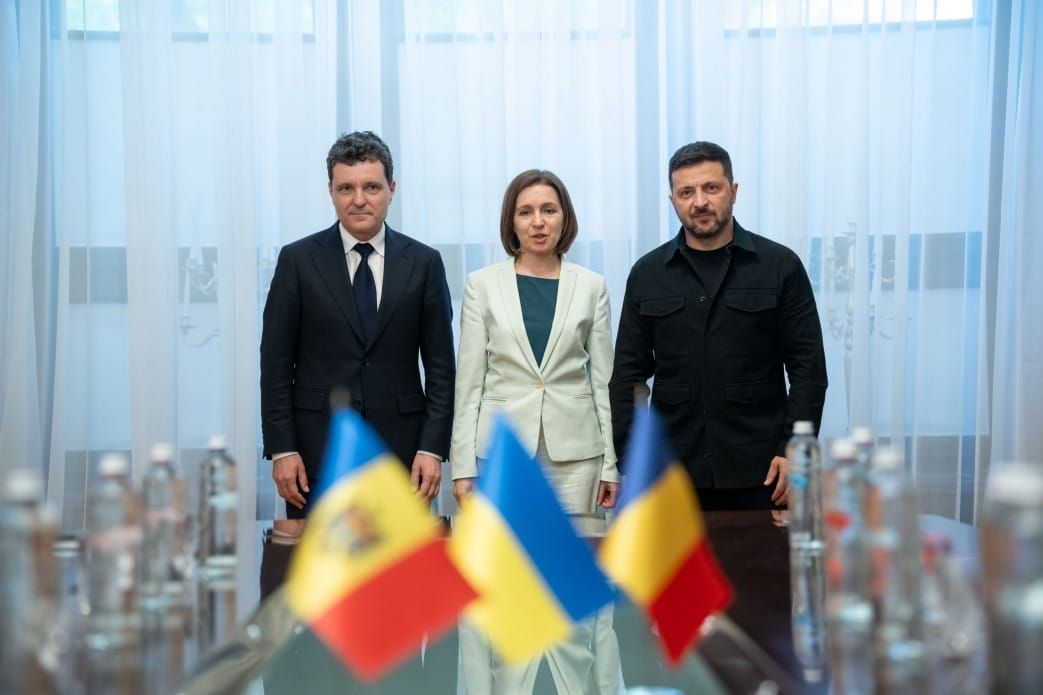
Romania and Moldova are moving toward closer drone and counter-drone cooperation with Ukraine as repeated Russian unmanned aircraft incursions increase pressure on air defenses along NATO's southeastern flank. The three countries are increasingly linking Ukrainian combat experience with plans for local drone production and more effective protection against low-cost aerial threats.
Romanian President Nicușor Dan said on September 3 that Romania and Moldova could cooperate to prevent drone attacks. His statement came after five Russian drones crossed Moldovan airspace and Romania detected a group of drones approaching its own airspace, according to Moldova's state news agency Moldpres.
The emerging cooperation is not limited to responding to individual incursions. Romania is already working with Ukraine on joint drone production, while Moldova is seeking to establish domestic production of interceptor drones and counter-UAS technologies.
Romania and Ukraine move toward joint drone production
Romania and Ukraine have been developing a framework for deeper defense-industrial cooperation centered on unmanned systems.
Officials from the two countries discussed a Drone Agreement in May designed to support joint development and production of drones. The proposed projects could receive funding through the European Union's Security Action for Europe, or SAFE, instrument.
Romanian authorities have since advanced those discussions. Fifteen Ukrainian drone manufacturers have expressed interest in partnerships to produce unmanned systems in Romania, according to Romanian Defense Minister Radu Miruță. The preferred Romanian model would locate production at facilities operated by the Ministry of National Defense.
For Romania, Ukrainian technology offers a route toward lower-cost systems developed around battlefield requirements rather than relying exclusively on conventional air defense missiles and combat aircraft.
That requirement has become more urgent in 2026.
Romania's Ministry of National Defense recorded 133 Russian attacks near its border, 44 unauthorized airspace incursions and four drones destroyed from the start of Russia's full-scale invasion through September 2, 2026. Of those totals, 66 attacks near the border, 25 unauthorized incursions and all four drone shootdowns occurred during 2026.
AdriaDefense coverage of NATO drone interceptions over Romania and Latvia
The increasing frequency has turned the cost of interception into an operational issue for Romania and NATO.
Combat aircraft and conventional surface-to-air missiles can destroy unmanned targets, but repeatedly using expensive interceptors against relatively inexpensive drones creates an unfavorable cost exchange. NATO Secretary General Mark Rutte said in June that the alliance needs interception technologies with costs closer to those of the drones they are designed to defeat.
Moldova seeks its own interceptor drone industry
Moldova faces a different problem because it does not have the air defense architecture available to NATO member Romania.
President Maia Sandu has pushed for legislative changes that would allow private and foreign investment in Moldova's defense industry, including production of interceptor drones and counter-drone systems. Moldova has recorded dozens of unauthorized drone overflights since Russia launched its full-scale invasion of Ukraine in 2022.
Chișinău sees Ukrainian expertise as particularly relevant because Ukraine has developed a large ecosystem of unmanned systems and increasingly uses specialized interceptor drones against Russian long-range UAVs.
Moldova's planned defense-industrial changes could allow foreign technology providers and investors to participate in domestic production. Such a model would give Chișinău another layer of protection while building capabilities that complement conventional air surveillance and air defense systems.
The September 3 incident adds urgency to those plans.
According to Moldpres, five Russian drones crossed Moldovan airspace during the latest attack. Dan said after talks in Chișinău that Romania and Moldova had discussed the drone threat and could work together to prevent similar incidents.
Russian drones put pressure on NATO's Black Sea defenses
The growing Romania-Moldova-Ukraine cooperation reflects a broader shift in the security environment around the western Black Sea.
Romanian Acting Foreign Minister Oana Țoiu told European Union counterparts this week about repeated Russian drone incursions into Romanian national airspace and its exclusive economic zone. She called for stronger protection of NATO's Eastern Flank through complementary EU and NATO measures.
European Council President António Costa reinforced that message during a September 3 visit to Bucharest. Costa identified recent violations of Romanian airspace and incidents involving naval drones as security concerns affecting Europe beyond Romania itself.
Romania now sits at the intersection of several European counter-drone initiatives. It can provide NATO infrastructure, EU funding access and domestic industrial capacity, while Ukraine contributes operational experience and rapidly developed unmanned technologies.
Moldova could form another part of that emerging network despite remaining outside NATO.
For Bucharest and Chișinău, the immediate requirement is increasingly similar: detect small unmanned aircraft early and destroy them without depending on high-cost interceptors for every engagement.
The result could be a regional counter-UAS production and operational ecosystem stretching from Ukrainian manufacturers to Romanian production facilities and Moldovan airspace protection.
Why are Romania, Moldova and Ukraine increasing drone cooperation?
Repeated Russian drone incursions and attacks near their borders have increased demand for cheaper and more numerous counter-UAS systems. Ukraine can contribute battlefield experience and technology, while Romania offers NATO-linked infrastructure and potential industrial production capacity.
Will Romania produce Ukrainian drones?
Romania and Ukraine are working on joint drone development and production projects, including cooperation that could receive financing through the European Union's SAFE instrument. Fifteen Ukrainian manufacturers have expressed interest in producing drones with Romanian partners.
Is Moldova developing interceptor drones?
Moldova wants to establish domestic production of interceptor drones and counter-drone technologies. President Maia Sandu has called for legal changes that would allow private-sector and foreign investment in the country's emerging defense industry.
How many drone incursions has Romania recorded?
Romania's Ministry of National Defense lists 44 unauthorized incursions since the beginning of Russia's full-scale war against Ukraine, including 25 during 2026 through September 2. Romanian forces and NATO allies have destroyed four drones in Romanian airspace during 2026.