Romania Moves Toward State Control of Mangalia Shipyard Amid Strategic Industry Concerns
Romania’s government is advancing plans that could place the Mangalia shipyard under state control by May 2026 following prolonged operational and legal disputes. The move may reshape Romania’s naval industrial base and could reopen future opportunities in military and commercial shipbuilding.

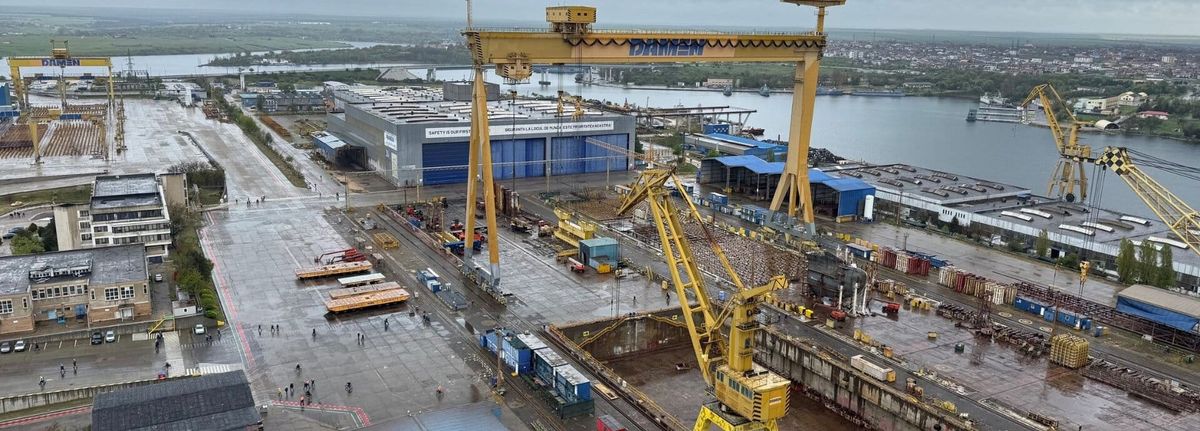
Romania is moving closer to taking control of the Mangalia shipyard as authorities seek to stabilize one of the country’s largest naval and commercial shipbuilding facilities.
According to Romanian government officials and local reporting, the process could be completed by May 2026 following ongoing negotiations and legal procedures involving the yard’s ownership structure and operational future.
The Mangalia facility, located on Romania’s Black Sea coast, has faced prolonged financial and management difficulties in recent years, affecting production activity and workforce stability. The shipyard had previously operated under a partnership structure involving Romanian state interests and international shipbuilding stakeholders.
Romanian authorities have indicated that preserving industrial capacity at Mangalia is considered strategically important for both economic and national security reasons. The yard remains one of the largest shipbuilding and repair facilities in the region, with infrastructure capable of supporting large naval and commercial vessel programs.
The planned state intervention comes as Romania continues expanding defense modernization efforts and increasing military spending in line with NATO commitments. Bucharest has accelerated investments across naval, air, and land domains since the start of the war in Ukraine, with additional focus placed on Black Sea security.
A future restructuring of Mangalia could potentially support domestic naval construction, sustainment programs, and maintenance activity linked to Romania’s maritime modernization plans. The Romanian Navy is expected to require expanded industrial support capacity over the coming decade as procurement requirements increase.
The development may also create future opportunities for European naval manufacturers, defense shipbuilders, and maritime suppliers seeking industrial partnerships or regional production access on NATO’s eastern flank.
Romania has increasingly positioned itself as a strategic logistics and defense-industrial hub in the Black Sea region. Strengthening domestic shipbuilding infrastructure could support broader regional initiatives tied to maritime security, naval sustainment, and allied industrial cooperation.
Industry observers note that restoring full operational capacity at Mangalia would likely require substantial investment, workforce retention measures, and long-term production planning. However, state-backed stabilization could provide a framework for renewed activity in both civilian and defense-related shipbuilding sectors.
The final structure of the takeover and future industrial strategy are expected to become clearer as negotiations continue over the coming months.