Russian Drone Spillover Tests NATO Eastern Flank Defenses
Romania and the Baltic states face rising drone incursions as the Ukraine war increasingly tests NATO air defenses from the Black Sea to the Baltic.

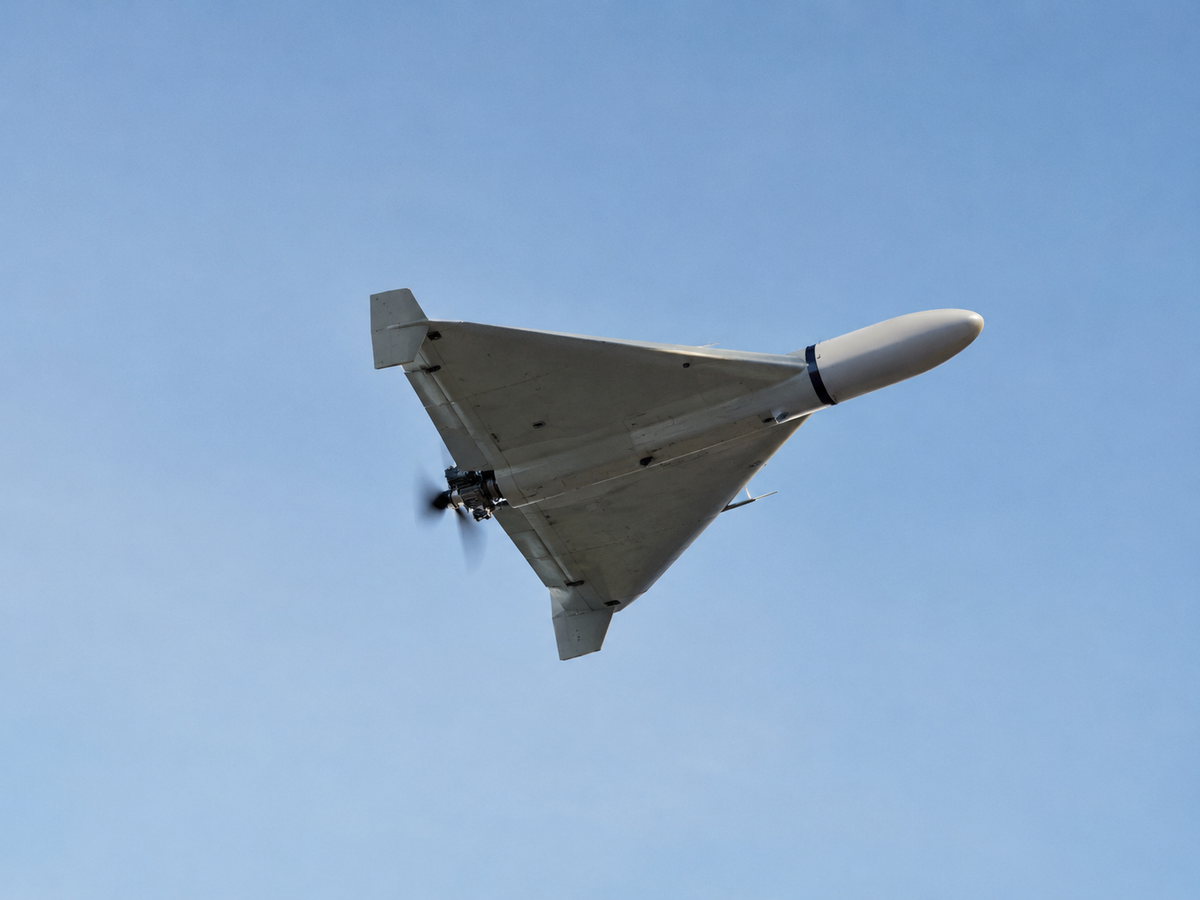
Russian attacks on Ukraine and Ukrainian long-range strikes against Russia are increasingly producing drone incidents inside NATO territory, forcing eastern-flank allies to adapt air defense systems designed for more conventional threats. Romania has recorded 23 Russian drone airspace violations in 2026 through August 17, while Estonia, Latvia and Lithuania are confronting a parallel problem involving drones diverted from the wider Russia-Ukraine conflict.
The incidents stretch from Romania's Danube and Black Sea region to NATO's Baltic frontier. They expose a common problem for the alliance: relatively inexpensive drones can trigger fighter deployments and consume air defense resources costing many times more than the target.
Romania records 23 Russian drone incursions in 2026
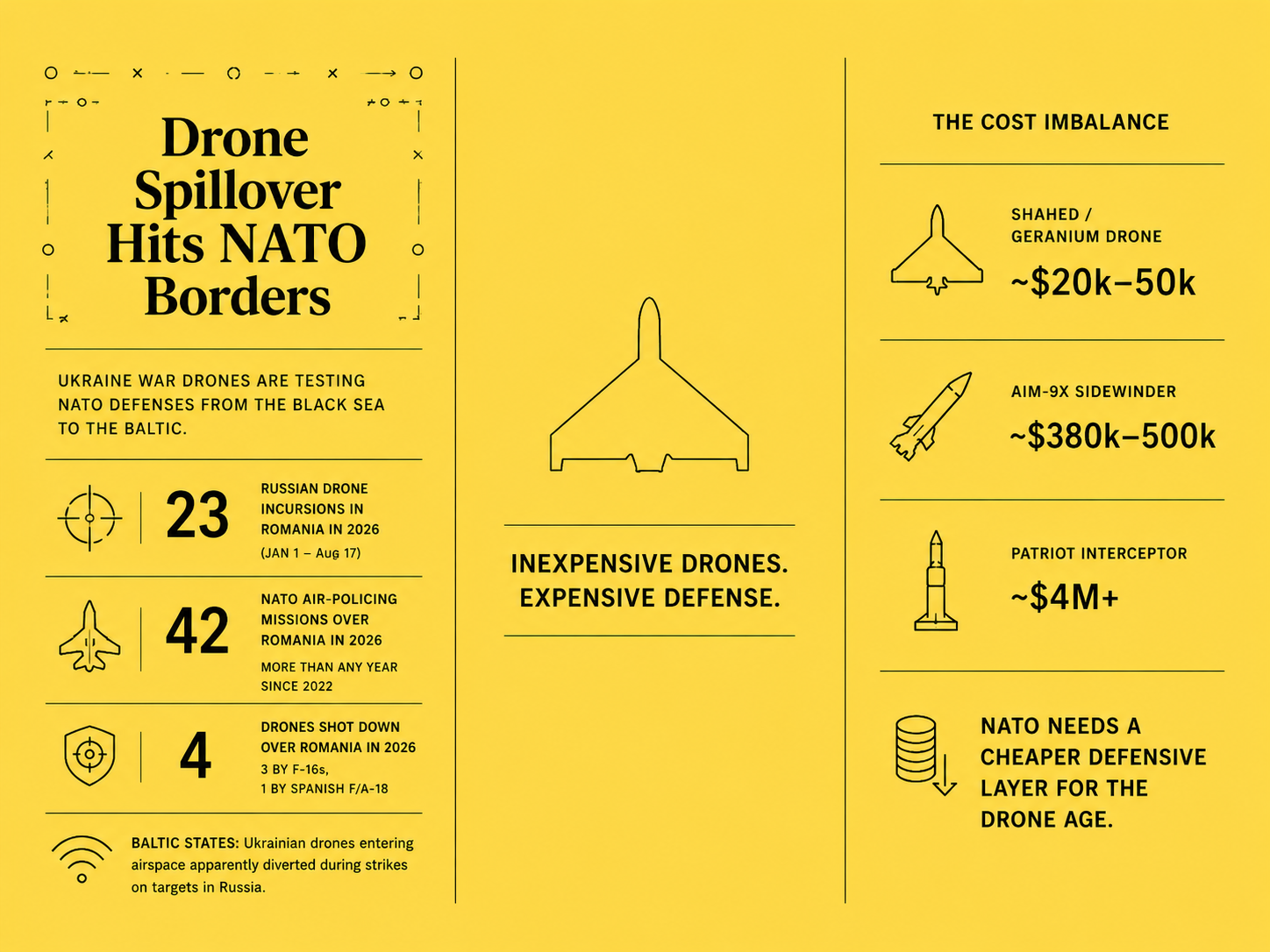
Romania has experienced the sharpest increase in Russian drone activity among NATO members bordering the Black Sea. According to Romanian Defense Ministry data reported by ABC News, Russian drones violated Romanian airspace at least 23 times between January 1 and August 17, 2026.
That already exceeds the 18 violations recorded between 2022 and the end of 2025 combined. Romanian authorities also found drones or drone fragments on national territory 27 times in 2026, compared with 16 discoveries during all of 2025.
The increase corresponds with heavier Russian attacks against Ukrainian infrastructure near the Romanian border. Russia struck targets close to Romanian territory 54 times in 2026 through mid-August, compared with 28 attacks during all of 2025, according to the ministry data.
NATO aircraft have consequently conducted at least 42 air-policing missions over Romania this year. That is more than the combined total for every year since Russia launched its full-scale invasion of Ukraine in February 2022.
Romania has also moved from monitoring incursions to destroying drones. Four suspected Russian drones had been shot down in Romanian airspace by August 17, including three engagements by Romanian F-16s and one by a Spanish F/A-18 operating under NATO air policing.
The consequences are no longer limited to military alerts. A Russian drone carrying explosives crashed into an apartment building in Galați in May, injuring two people, according to Romanian authorities.
Black Sea drones are creating a second infrastructure threat
Romania's challenge also extends beyond national airspace.
On August 20, Romanian forces destroyed an explosive-laden maritime drone near the Neptun Deep offshore gas project in the Black Sea. Romania deployed F-16 fighters during the operation before a vessel confirmed the destruction of the drone.
Neptun Deep adds an energy-security dimension to the drone problem. The offshore project is expected to help make Romania the European Union's largest natural gas producer in 2027, turning protection of Black Sea infrastructure into a broader European security issue.
For Bucharest, this means the spillover from the Ukraine war increasingly crosses several domains simultaneously: national airspace, civilian communities, maritime traffic and critical energy infrastructure.
Baltic states face a different version of the same problem
Estonia, Latvia and Lithuania are confronting a related but operationally different challenge.
Some drones entering Baltic NATO airspace have been Ukrainian systems apparently diverted while conducting long-range strikes against targets in Russia. Reuters reported that military drones straying into Finland, Estonia, Latvia and Lithuania have increased concerns that the conflict is spilling across NATO's northern frontier.
Latvia confirmed that a drone entering its airspace on August 14 was Ukrainian. An Italian fighter deployed to the Baltic region subsequently shot it down. Latvian authorities indicated that Russian electronic warfare may have contributed to the drone being diverted after it entered from Belarus.
Defense News reported earlier in 2026 that Ukrainian drones had reached all three Baltic states. Western officials had not established whether Russian electronic warfare deliberately redirected the aircraft or whether the incidents resulted from the normal operation of Russian electronic defenses against Ukrainian attacks.
The distinction matters politically, but the air defense problem remains similar. NATO must detect, classify and potentially destroy an unmanned aircraft even when its origin, mission and flight path remain unclear.
NATO faces an unfavorable cost equation
The growing number of incidents highlights a structural weakness in NATO's existing air defense architecture: using fighter aircraft and conventional surface-to-air missiles against inexpensive drones creates an unfavorable exchange ratio.
An AIM-9X Sidewinder used by Western fighter aircraft can cost roughly $380,000 to $500,000 depending on the variant, while a Patriot interceptor can cost around $4 million. Russian Shahed-Geranium attack drones are estimated at approximately $20,000 to $50,000, with cheaper Gerbera variants potentially costing around $10,000.
Romania has started addressing that gap with lower-cost counter-unmanned aerial system technology. The Romanian military announced this summer that the US-made Merops interceptor drone had become operational and had been integrated into its air defense network.
US Army Secretary Dan Driscoll said in March that a Merops interceptor costs around $15,000, with large-volume production potentially reducing the unit price to approximately $3,000. That creates a substantially different economic model from scrambling fighters or firing high-value surface-to-air missiles against individual drones.
The Baltic states face the same requirement for a layered response. Fighters remain necessary for air policing and higher-end threats, but persistent low-cost drone incursions require cheaper interceptors, electronic warfare, sensors and faster cross-border information sharing.
Black Sea and Baltic incidents expose one NATO-wide gap
Romania and the Baltic states face different geographic and operational conditions, but the underlying challenge is increasingly common across NATO's eastern flank.
Romania sits directly beside Russian attack routes toward Ukrainian Danube and Black Sea infrastructure. The Baltic states sit near Russian and Belarusian airspace while also bordering flight paths associated with Ukrainian long-range strikes into Russia.
Both regions therefore require systems capable of detecting small targets at low altitude, determining their origin quickly and selecting an interception method proportionate to the threat.
The problem will become more significant if drone operations continue increasing in scale. ACLED recorded more than 80 drone-related events affecting Eastern European states during 2026 through August, with Romania experiencing the largest concentration.
For NATO, the emerging requirement is not simply more air defense. It is a denser and cheaper defensive layer between electronic warfare and conventional missile systems, capable of dealing with drones without exhausting expensive interceptors or keeping fighter fleets continuously engaged.
That requirement now extends geographically from the Black Sea to the Baltic.