Slovenia Joins European Military Drone Training Program Under EDA Agreement
Slovenia becomes the first signatory to the EDA's UAS TREX agreement as European armed forces expand military drone training cooperation.

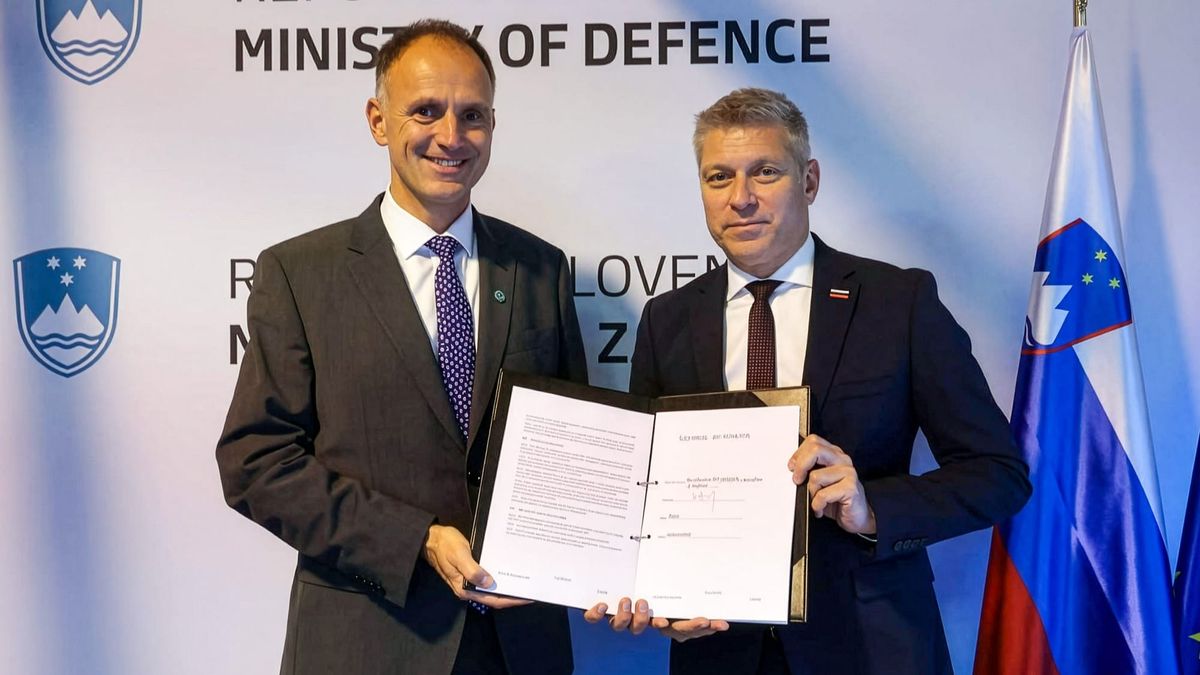
Slovenia has become the first country to sign a European Defence Agency agreement covering military drone training and exercises, marking a new step in its participation in joint European unmanned systems programs.
The agreement, known as Unmanned Aircraft Systems Training and Exercises (UAS TREX), was signed by Slovenian Defense Minister Valentin Hajdinjak and European Defence Agency Chief Executive André Denk during the latter's visit to Slovenia between November 9 and 11.
The EDA confirmed the signing in a statement published on November 12, highlighting Slovenia's growing involvement in European drone capabilities, defense research and multinational military cooperation.
Building Common European Drone Training
UAS TREX establishes a framework for cooperation in the training and exercise activities associated with military unmanned aircraft systems.
The initiative addresses the growing importance of drone operator proficiency, standardized training practices and cooperation between European armed forces as unmanned platforms become central to military operations.
Experience from Ukraine has demonstrated how rapidly drone technology and operational procedures can evolve. Military organizations must adapt not only their equipment but also the way operators are trained, units coordinate missions and new capabilities are introduced.
A multinational training framework could help participating countries exchange operational experience, improve interoperability and develop common approaches to unmanned aircraft operations.
Slovenia's signature represents an initial step in that process. It does not mean that all European countries have joined the arrangement or that a fully integrated training network is already operational.
Slovenia Expands European Defense Cooperation
The agreement is part of a broader Slovenian effort to strengthen cooperation with European defense institutions.
According to the EDA, Slovenia currently participates in 14 agency-supported research and technology projects and programs with a combined value of €71.76 million.
These figures represent the overall value of the participating projects rather than funding allocated exclusively to Slovenian organizations.
Slovenian entities are also involved in 28 projects selected through European Defence Fund calls between 2021 and 2025, including two managed by the EDA on behalf of the European Commission.
The country's areas of cooperation include drones and counter-drone systems, integrated air and missile defense, land capabilities, military mobility, energy resilience and advanced technologies.
Slovenia also serves as a co-lead country in the EDA's Quantum Priority Capability Area and participates in its Drones and Counter-Drone Systems priority area.
Opportunities for Slovenian Defense Companies
The EDA highlighted the participation of Slovenian unmanned aircraft manufacturer C-Astral in its Sentinel Strike Challenge, an innovation initiative focused on emerging drone capabilities.
Slovenia also contributed four independent external experts to the challenge activities held in Portugal during September and October.
During his visit, Denk met representatives of the Slovenian Defence Industry Cluster, known as GOIS, to discuss opportunities for local manufacturers to participate in European defense cooperation.
These activities reflect Slovenia's position as a smaller European defense market with a growing network of companies involved in unmanned systems, sensors, electronics and specialized military technologies.
For Slovenian manufacturers, deeper engagement with European defense programs could provide access to multinational development projects and future industrial partnerships.
Participation in research and training initiatives does not automatically guarantee procurement contracts, but it can help connect national industries with wider European capability requirements.
Drone Training Gains Strategic Importance
European armed forces are expanding their use of reconnaissance drones, loitering munitions and other autonomous platforms, creating additional requirements for trained personnel and coordinated military procedures.
The UAS TREX agreement addresses the training side of that transformation, complementing investments in equipment and industrial production.
For Slovenia, the arrangement strengthens its participation in European defense cooperation while potentially supporting future collaboration between military training organizations and domestic technology companies.
Further details on participating countries, training activities and implementation schedules will determine how the program develops beyond its initial agreement.