STARK Acquires Raydiant RF to Expand Electronic Warfare Tech
Berlin defense startup STARK has acquired Raydiant RF, adding communications and electronic warfare expertise to its autonomous systems portfolio.

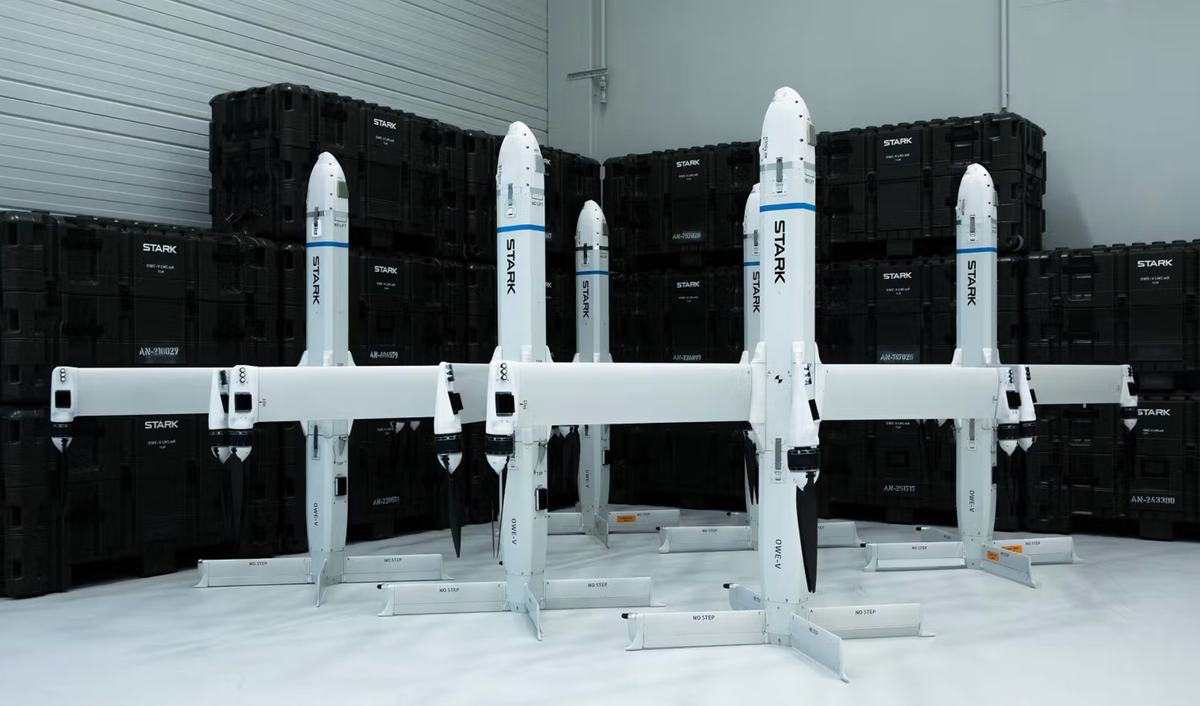
German defense technology company STARK has acquired Berlin-based Raydiant RF, bringing a specialist in radio-frequency communications and electronic warfare technology into its autonomous systems business. Announced on September 3, the acquisition will add Raydiant RF's engineering team and technology to STARK as the company moves more communications and electronic warfare development in-house.
Financial terms were not disclosed. The transaction also points to an emerging phase in Europe's defense technology market, where well-funded startups are beginning to acquire smaller specialist teams rather than developing every subsystem internally.
Raydiant RF technology will feed into STARK unmanned systems
Raydiant RF was founded in Berlin in 2024 and focuses on technology designed to maintain communications in electromagnetic environments affected by jamming and other interference.
STARK plans to integrate Raydiant RF technology into its unmanned systems and Minerva mission management software. The acquired capabilities include antenna design, analog electronics and software-defined radios.
Raydiant RF founder and Chief Executive Officer Dr. Luca Steinweg will join STARK as head of communications and electronic warfare. The company's four-person engineering team will also move to STARK as part of the transaction.
The acquisition complements STARK's existing work on electronic warfare rather than establishing a new business line from scratch.
STARK already develops R-Zero, a capability intended to support reconnaissance and detection of hostile transmitters and radar systems involved in electronic warfare. Raydiant RF adds expertise focused on maintaining communications and operating within contested parts of the electromagnetic spectrum.
Electronic warfare becomes central to drone design
The acquisition reflects a broader shift in unmanned systems development driven in large part by operational experience from Ukraine.
Electronic warfare can disrupt navigation, command links and data transmission. The effectiveness of an unmanned system therefore increasingly depends on its ability to operate when conventional communications or satellite navigation are degraded.
That is pushing electronic warfare resilience and communications technology closer to the core architecture of new unmanned platforms.
STARK says bringing Raydiant RF into the company will allow it to develop more communications and electronic warfare capabilities internally and integrate them more closely with its autonomous systems, mission software and artificial intelligence technology.
For military customers, tighter integration could reduce dependence on separate suppliers for communications, electronic warfare and unmanned platform technologies.
STARK expands after €500 million funding round
The acquisition comes less than three months after STARK raised €500 million from investors.
Handelsblatt reported in June that the financing valued the Berlin company at more than €3.2 billion. STARK said more than 80 percent of the new capital would go toward research, development and manufacturing, including investment in electronic warfare research infrastructure.
The company's growth has also been supported by German military procurement.
Reuters reported earlier in 2026 that Germany approved an initial €540 million procurement involving STARK and Helsing for loitering munitions. The procurement forms part of Germany's broader effort to introduce larger quantities of strike drones into the Bundeswehr.
STARK develops the Virtus loitering munition alongside its Minerva command-and-control architecture and other autonomous defense systems.
Raydiant RF is also not the company's first acquisition.
STARK acquired Pleno in July 2025 to expand its work on swarming capabilities and AeroMass in December 2025 to strengthen manufacturing capacity.
The sequence shows STARK using acquisitions to add specialized technology and industrial capacity alongside internal research and development.
European defense startups begin consolidating
Raydiant RF is a small acquisition compared with STARK's recent financing, but its significance extends beyond the undisclosed purchase price.
Europe's defense technology investment boom has created a group of increasingly well-capitalized companies capable of acquiring smaller engineering teams with specialized intellectual property.
STARK illustrates that transition. The company has moved from an early-stage defense startup into a multibillion-euro business with significant capital available for research, production and acquisitions.
Germany is now home to several rapidly expanding defense technology companies competing for military programs in autonomous systems, drones, artificial intelligence and electronic warfare.
That combination of private investment and government procurement creates conditions for further consolidation.
Rather than requiring military customers to integrate autonomous platforms, communications systems, electronic warfare equipment and mission software from multiple small suppliers, larger defense technology companies have an incentive to bring those capabilities under a common architecture.
The strategy also allows startups to acquire specialized engineering expertise faster than building new teams from the ground up.
For STARK, Raydiant RF fits that model. The company is adding communications and radio-frequency expertise directly to the autonomous systems and mission software it already develops.
The acquisition therefore provides another indication that Europe's best-funded defense startups are beginning to evolve from individual technology developers into consolidators of specialized defense technologies.
Why did STARK acquire Raydiant RF?
STARK is acquiring Raydiant RF to add expertise in antenna design, analog electronics, software-defined radios and communications for contested electromagnetic environments. The technology is expected to support STARK's unmanned systems and Minerva mission management software.
What does Raydiant RF develop?
Raydiant RF is a Berlin-based radio-frequency technology startup focused on communications technology for systems operating in electromagnetically contested environments. Its work is particularly relevant to unmanned platforms operating under jamming and other forms of electronic interference.
How much did STARK pay for Raydiant RF?
Financial terms of the acquisition were not disclosed. Raydiant RF founder Dr. Luca Steinweg and the company's four-person engineering team will join STARK as part of the transaction.
Is Europe's defense startup sector consolidating?
The STARK transaction adds to signs of consolidation in European defense technology. Well-funded companies increasingly have the capital to acquire specialist engineering teams and integrate their technology into broader defense platforms.