Telefónica Showcases Secure Communications Tools During Slovak Military Exercise
Telefónica said it deployed secure communications and information-management systems during a defense exercise held at Slovakia’s Lešť training area in early June.

Telefónica has outlined its role in a multinational military exercise in Slovakia, where it provided communications and command-support technologies aimed at improving interoperability across deployed forces and partner organizations.
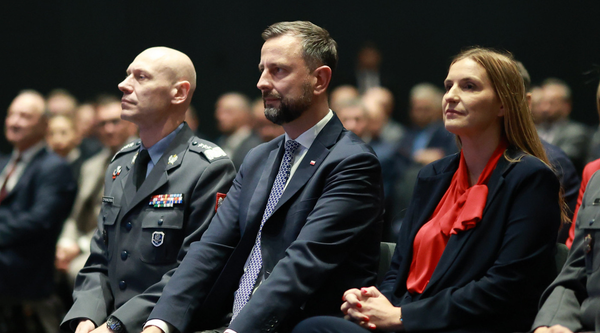
According to the company, the exercise took place at the Lešť military training area between June 1 and 9 under the direction of Spain’s Defence Staff. The event was attended by senior Spanish military leadership and NATO officials, and focused on secure communications, information exchange, and operational coordination in a multi-domain environment.
Telefónica said its contribution centered on two systems: the Secret-T secure communications suite and the ARMESTO WEB information-management platform. The company presented both as tools designed to connect users operating across different networks, devices, and operational domains while maintaining secure access to shared data and communications.
The Secret-T system was used as a multi-connectivity layer intended to bridge tactical private networks, legacy military infrastructure, narrowband radio systems, and public broadband services. Telefónica said the platform supports voice, messaging, geolocation, data exchange, and coordination functions through an architecture that is independent of the underlying network. The stated aim is to preserve communications continuity even when units are operating across mixed infrastructures or in degraded network conditions.
Alongside that capability, Telefónica said it worked with Ravenloop to field ARMESTO WEB, a platform designed to manage users, permissions, applications, and shared operational information. According to the company, the system can be deployed on premises or in the cloud and supports synchronous and asynchronous operation, allowing commanders and deployed personnel to maintain a common operational picture across multiple devices and operating systems.
Telefónica described ARMESTO WEB as a Spanish-developed alternative to systems used by the Ukrainian armed forces for battlefield information management, positioning it as part of a broader push for national and European technological sovereignty in defense software and communications.
The Slovak exercise also reflects a wider trend in Europe’s defense market, where commercial telecom, cybersecurity, and data-management technologies are increasingly being adapted for military use. For industry players, that creates opportunities in tactical networking, secure mobility, and software-defined command-and-control services, particularly as European governments seek to strengthen resilience, reduce dependency on external suppliers, and accelerate digital modernization across the armed forces.
For Telefónica, the exercise serves as a reference case for its defense-facing portfolio at a time when dual-use communications infrastructure is becoming more relevant to European procurement priorities. The company framed the Slovak deployment as an example of how civilian telecom capabilities can be integrated into military operations requiring secure connectivity, interoperability, and rapid information sharing.