Undersea Cable Sabotage: Why the Seabed Is the New Front Line
From the Baltic Sea to the Taiwan Strait, ships keep dragging anchors across the cables carrying 99 percent of the world's data. Here is how the sabotage playbook works, and why almost nobody gets caught.

On August 9, 2026, a Chinese-flagged research vessel was spotted loitering directly above the Pacific Light Cable Network, an 8,000-mile fiber system linking Taiwan, the Philippines, and the United States. It came a day after two separate cables inside the Submarine Cable Protection Zone off Perth, Australia, developed faults within hours of each other, with a vessel reported nearby under circumstances industry analysts called suspicious. Neither incident has been formally attributed to state action. Both fit a pattern that has become disturbingly familiar since 2022.
Nearly all of the internet, roughly 99 percent of intercontinental data traffic according to TeleGeography's 2026 submarine cable map, moves through 694 fiber systems lying on the ocean floor. That network now sits at the center of a low-grade, highly deniable campaign of interference stretching from Northern Europe to the Western Pacific, and the tools to stop it are years behind the tools being used to attack it.
Three Theaters, One Playbook
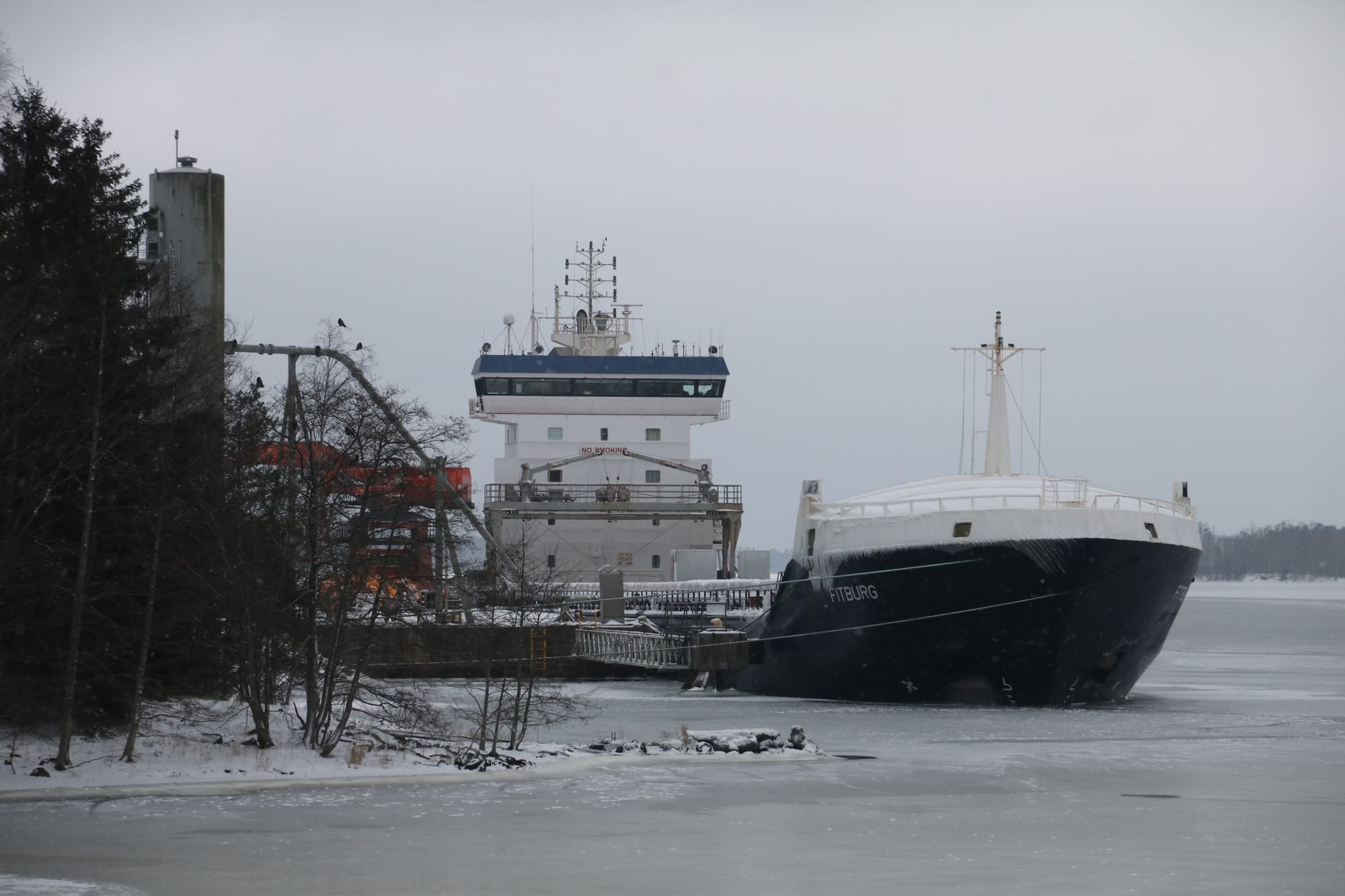
The Baltic Sea has recorded at least eleven suspected cable and pipeline incidents since Russia's 2022 invasion of Ukraine, starting with the September 2022 Nord Stream explosions and continuing through a near-monthly cadence of anchor-drag damage. The Chinese-owned Newnew Polar Bear was linked to the October 2023 rupture of the Balticconnector gas pipeline. The bulk carrier Yi Peng 3 dragged its anchor roughly 300 kilometers across the seabed in November 2024, severing the BCS East-West Interlink and C-Lion1 cables. The Cook Islands-flagged tanker Eagle S, tied to Russia's shadow fleet, cut the EstLink 2 power cable and three data cables between Finland and Estonia on December 25, 2024. On the last day of 2025, Finnish special forces boarded the cargo vessel Fitburg mid-voyage from Russia to Israel after it was caught dragging anchor over an Elisa fiber line; two crew members were later arrested.
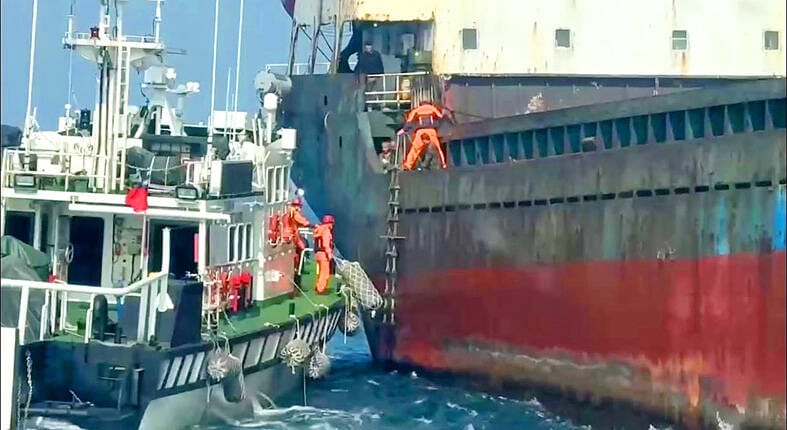
Taiwan has logged a parallel pattern. Two Chinese vessels cut cables serving the Matsu Islands in February 2023. The Hong Kong-linked Shunxin 39 damaged the TPE cable north of Taipei in January 2025. The Togo-flagged, Chinese-crewed Hong Tai 58 was caught loitering within 925 meters of the Taiwan-Penghu No. 3 cable before it was severed in February 2025, prompting Taiwan to charge the ship's captain, a case China later countered by claiming Taiwanese smugglers, not Beijing, had controlled the vessel. Taiwan's coast guard has since built a blacklist of nearly 100 suspicious China-linked ships and logged five cable-damage cases in 2025 alone, up from three each in the two prior years.
The Red Sea adds a third front. The UK-owned Rubymar, struck by a Houthi missile in February 2024, sank with its anchor dragging and severed the AAE-1, EIG, and SEACOM cables, disrupting roughly a quarter of data traffic between Asia, Europe, and the Middle East. A further round of cable damage struck the Bab el-Mandeb Strait in September 2025, again slowing connectivity across the region; the Houthis have denied responsibility both times.
The Deniability Playbook
The method barely varies across all three theaters. A commercial vessel, often flagged in a third country and carrying a mixed-nationality crew, loiters near a known cable route, then drags its anchor across the seabed either while transiting or while pretending to ride out bad weather. Investigators from Insikt Group recorded 44 cable-damage events across 32 locations between 2024 and mid-2025; roughly a quarter involved anchor dragging, some tied to vessels with Russian or Chinese links, while nearly a third had no determined cause at all.
That ambiguity is the entire point. Proving intent under maritime law requires showing deliberate action by a vessel operating in international waters, where jurisdiction defaults to the flag state. China's Taiwan Affairs Office has leaned on this gap directly, telling reporters that cable damage is a routine maritime accident occurring more than a hundred times a year worldwide. Stanford's Sea Light project director Ray Powell has described the underlying logic bluntly: the goal is to be deniable enough that everyone suspects the culprit but nobody can prove it.
NATO's Answer: Ships, Drones, and Fiber-Optic Sonar
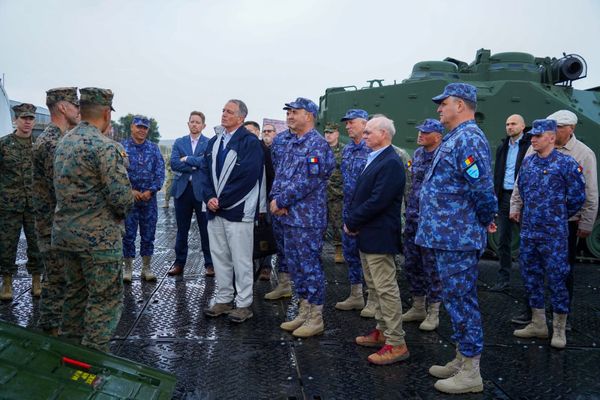
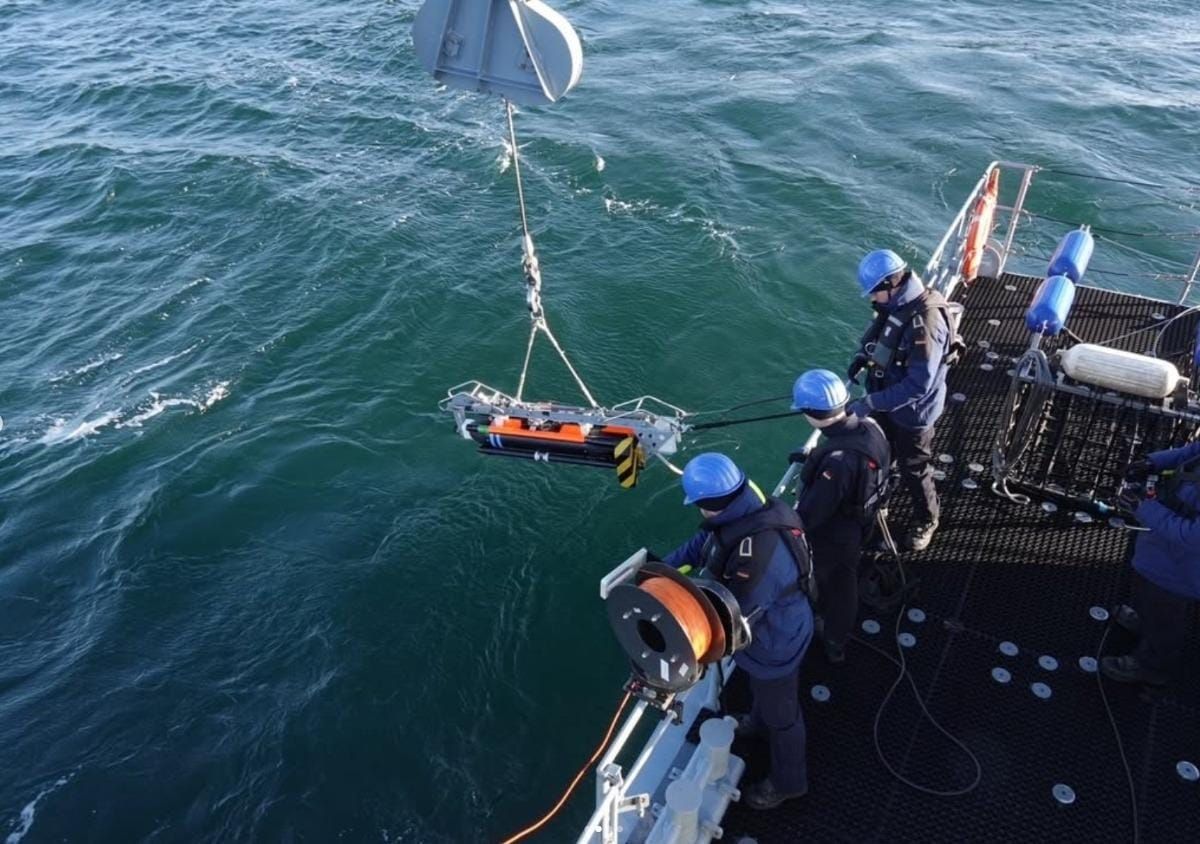
NATO launched Operation Baltic Sentry on January 14, 2025, under Allied Command Operations, pairing frigates and maritime patrol aircraft with a small fleet of naval drones for what Secretary General Mark Rutte called enhanced surveillance and deterrence. The mission runs through Allied Joint Force Command Brunssum alongside a newly created NATO Maritime Centre for Security of Critical Undersea Infrastructure. The European Commission followed in February 2025 with a cable security package built around threat monitoring in the Baltic and Mediterranean, sanctions against hostile actors, and roughly 327 million euros in Connecting Europe Facility funding for more resilient cable routes.
The more interesting shift is technical. Finnish operator Elisa has fitted its cables with Distributed Acoustic Sensing, a technique that fires a pulsed laser through the fiber itself and reads the backscattered light for the faint vibrations caused by ship propellers, dragging anchors, or seismic activity. It effectively converts an ordinary data cable into a continuous acoustic sensor running the length of the seabed, and Elisa's system is now being wired to automatically alert Finland's Border Guard and Navy. The same underlying physics is drawing military interest: the US and European navies are studying how a 750,000-mile web of existing commercial cables could double as a submarine-tracking network, at a fraction of the cost of a dedicated sonar array.
The Bottleneck Nobody Is Fixing
Detection is only half the problem. Repairing a cut cable still depends on a global fleet of roughly 60 specialized cable ships, and by some counts as few as 22 are dedicated primarily to repair work rather than new installation. TeleGeography estimates that close to half of that fleet will reach the end of its operational life by 2040, with replacement vessels running upward of 100 million dollars each and offering thin profit margins that give owners little incentive to build new ones. Insikt Group put the median repair time for a damaged cable at around 40 days in 2025, and that estimate assumes a repair ship is even available: in May 2026, only one dedicated repair vessel was operating in the entire Persian Gulf as Iran floated plans to impose fees on cables transiting the Strait of Hormuz.
That scarcity turns routine sabotage into leverage. A single well-timed anchor drag in a chokepoint with no nearby repair capacity can knock out connectivity for weeks rather than days, and adversaries increasingly appear to understand that the constraint sits not in the cable itself but in the industry's capacity to fix it.
A Legal Framework Built for a Different Century
Much of the international law governing undersea cables still traces back to the 1884 Convention for the Protection of Submarine Telegraph Cables, layered awkwardly onto the UN Convention on the Law of the Sea. Neither anticipated grey-zone tactics designed to exploit flag-state jurisdiction and plausible deniability. Even Beijing's own legal scholars have started calling for reform: a Shanghai Maritime University law professor argued in early August 2026 that China needs a dedicated domestic law to protect its own undersea cables, a tacit admission that the current international regime protects no one particularly well.
Until that changes, the pattern documented across the Baltic, the Taiwan Strait, and the Red Sea will likely keep repeating wherever a chokepoint, a flag of convenience, and an aging repair fleet intersect. Detection technology is finally catching up to the threat. Attribution and repair capacity are not, and the incidents off Perth this month suggest the theater is still widening rather than narrowing.
This article was originally published by Adria Defense (AdriaDefense.com). It may be republished or quoted with clear attribution to Adria Defense and a backlink to the original article.