TOP TS Security Looks to Industrial Protection as Europe’s Risk Landscape Changes
As Europe strengthens the security of critical infrastructure and sensitive industrial sites, Vienna-based TOP TS Security is expanding its focus on integrated facility protection.

Europe's defense buildup is creating an industrial security challenge that receives considerably less attention than the weapons being ordered or the factories being expanded. Governments are pushing manufacturers to increase output, companies are adding production capacity, and facilities that only a few years ago operated in a relatively predictable commercial environment are becoming increasingly important strategic assets. At the same time, concerns over sabotage, espionage and other hybrid threats have moved the physical protection of industrial sites higher up the agenda.
For defense manufacturers and operators of critical infrastructure, this changes the security equation. A factory producing military equipment, components or sensitive technologies cannot be protected in the same way as an ordinary commercial property. Employees, contractors, suppliers and logistics providers require legitimate access, vehicles and materials move continuously through the perimeter, and some areas of a facility may require substantially tighter controls than others. The challenge is therefore not simply to keep unauthorized people outside, but to understand who should be inside, where they should be allowed to go and how unusual activity is identified before it becomes an incident.
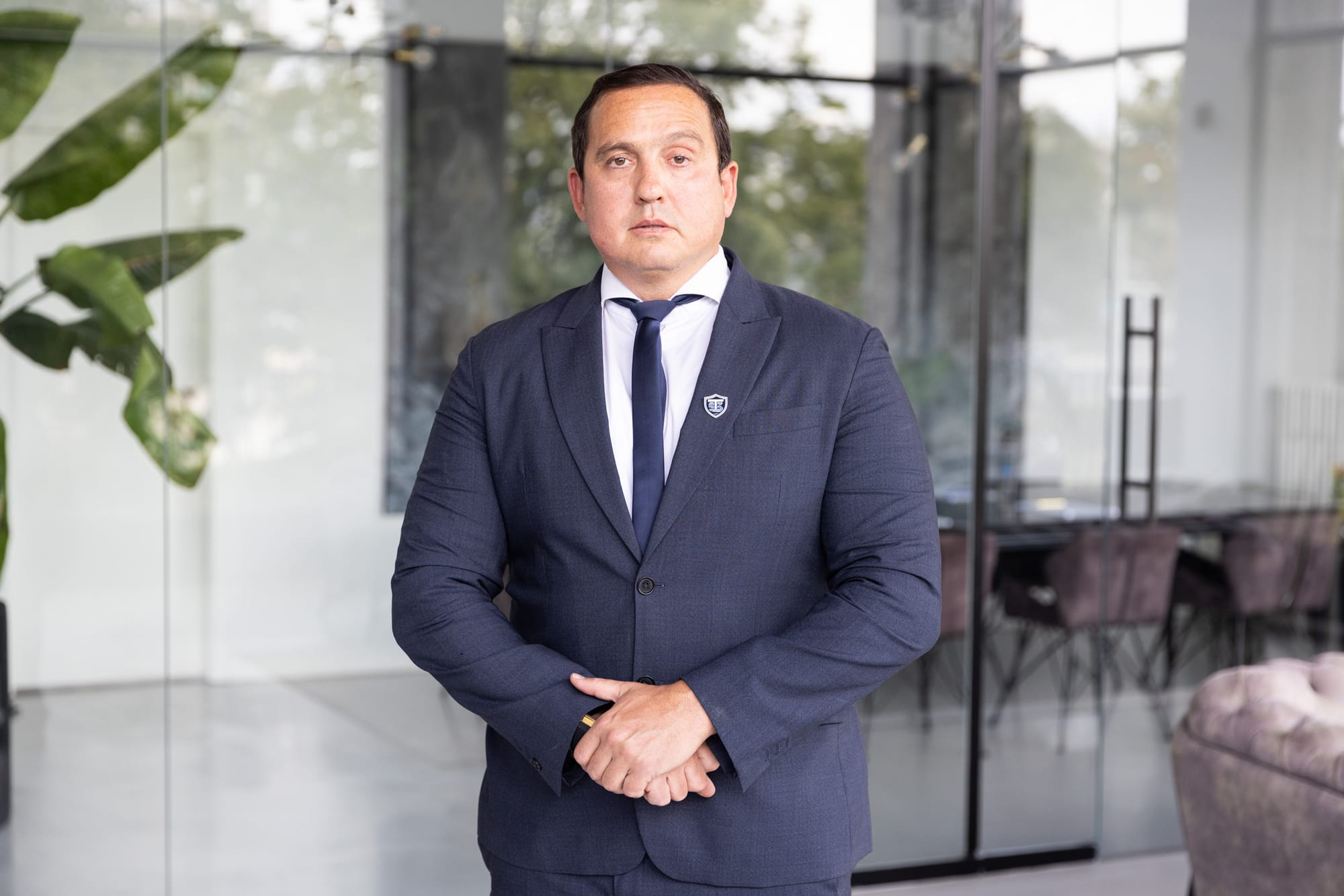
It is against this backdrop that Vienna-based TOP TS Security Service GmbH is broadening its focus. Established in Austria in 2012, the company has developed from traditional physical security and personal protection into a broader security provider whose activities today include facility and infrastructure security planning, CCTV, electronic access control, perimeter protection, AI-supported threat detection, consulting, investigations and intelligence.
For TOP TS, industrial and facility protection represents a natural extension of capabilities developed over more than a decade in security-sensitive environments. The company operates on a different scale from Europe's multinational guarding groups, pointing to a more specialized position in the market: assignments where understanding the specific threat environment and building security around it can matter as much as the number of personnel deployed.
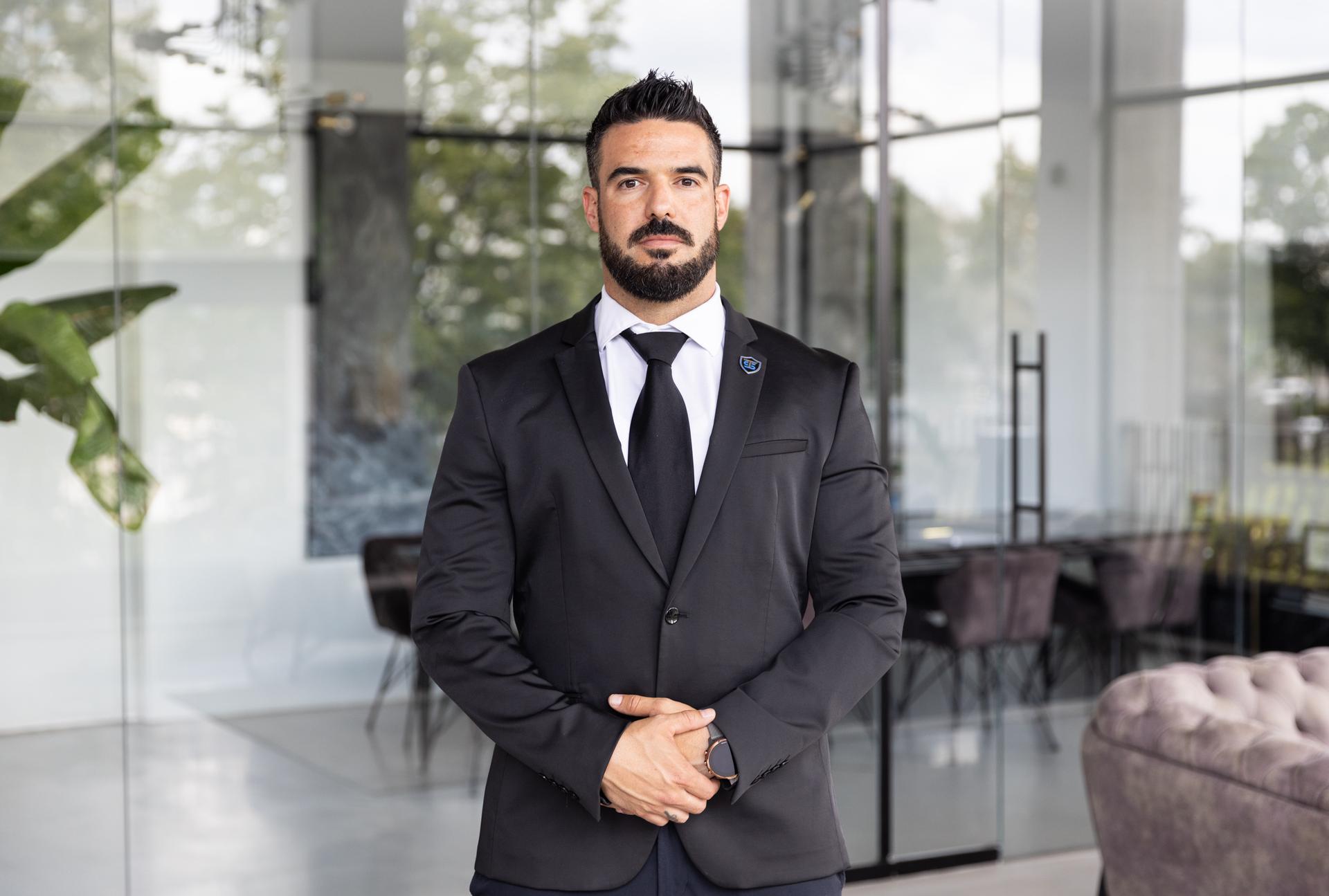
New operational leadership
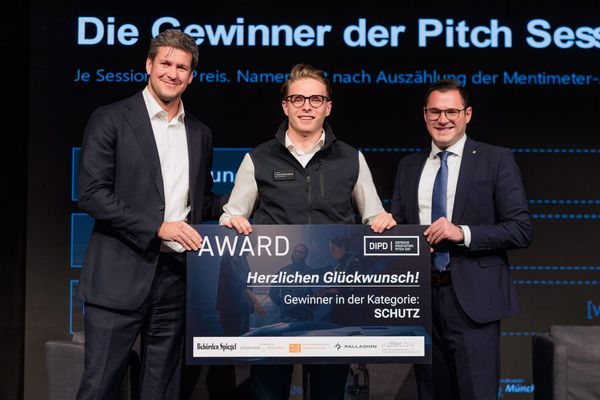
Founded and led by Managing Director Tamir Shalom, TOP TS has spent more than a decade building its presence in Austria's security sector. The company recently strengthened its operational leadership with the appointment of Yogev Ben Naim as General Manager, bringing an experienced security professional with a background spanning military service, advanced security training and international field operations into the role.
Ben Naim spent four years serving in a specialized military unit before qualifying as a Senior Firearms Instructor and subsequently building his career in protective security and international operations. His background is notably operational rather than purely managerial, with experience centered on security readiness, field execution and decision-making in demanding environments.
That experience is particularly relevant as TOP TS moves further into complex facility and industrial security assignments. Protecting sensitive sites requires an understanding not only of personnel and technology, but of how security systems perform under real operational conditions. Ben Naim's appointment adds experienced operational leadership as the company develops its position in the Austrian and wider European security market.
The perimeter is only the first layer
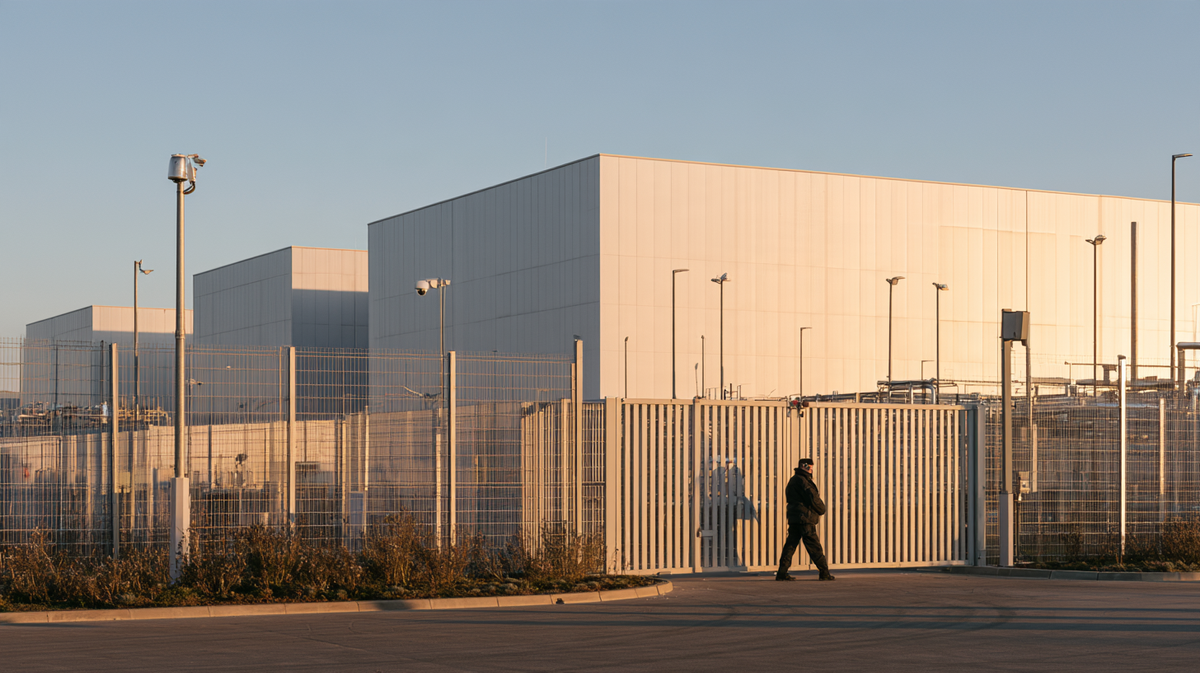
Industrial security has traditionally been highly visible. Fences define the perimeter, cameras monitor it and guards control entrances. Those elements remain necessary, but for sensitive manufacturing facilities they represent only the outer layer of a much larger security system.
The more difficult vulnerabilities are often created by normal business operations. A large factory may have hundreds or thousands of employees, external contractors performing maintenance, suppliers making deliveries and visitors entering for meetings or inspections. Different groups require different levels of access, sometimes across several buildings or restricted production areas. A person does not necessarily have to breach a fence if legitimate access has been obtained to the wrong part of the facility.
This is why electronic access control has become increasingly important to industrial security. Properly designed systems allow operators to determine not only who can enter a site but which areas an individual can access and under what conditions. Combined with CCTV and physical security personnel, they can provide a record of activity around sensitive locations and help identify behavior that would otherwise be difficult to detect.
TOP TS lists access control, CCTV and perimeter systems among the technologies it provides for critical sites, alongside facility and infrastructure security planning. The important issue is not the individual equipment, much of which is widely available, but how it is configured around the risks of a particular facility. A security architecture designed for an office building will not necessarily address the vulnerabilities of an ammunition plant, electronics manufacturer, energy installation or defense technology company.
Europe's new threat environment
The urgency surrounding industrial protection has increased sharply since Russia's full-scale invasion of Ukraine. European governments and security services have repeatedly warned that hostile activity on the continent is not confined to cyberspace, while sabotage, espionage and interference with critical infrastructure have become part of the wider European security debate.
Defense companies occupy an increasingly sensitive position within that environment. As production grows, so does the strategic importance of the facilities producing ammunition, vehicles, electronics, drones and other military equipment. A disruption at one factory can affect production schedules and supply chains far beyond the site itself, particularly in sectors where Europe has limited manufacturing capacity or relies on a relatively small number of specialized suppliers.
This requires companies to think differently about what constitutes a security incident. Repeated observation of a facility, unusual interest in employees, unauthorized photography, attempts to access restricted areas or suspicious behavior by a contractor may each appear relatively minor when viewed separately. Determining whether apparently unrelated events form part of a wider pattern is where traditional physical security begins to overlap with intelligence.
TOP TS has expanded into this area through corporate investigations, surveillance and strategic threat intelligence. The development reflects a broader change in the role of private security providers. Guards and cameras are primarily designed to detect or respond to activity; intelligence can provide context around that activity and help organizations understand what they may need to protect themselves against.
Technology can see more, but context still matters
The rapid development of surveillance technology is changing how large industrial sites can be protected. Modern CCTV networks can monitor areas that would require significant manpower to observe continuously, while perimeter sensors and electronic access systems generate an increasingly detailed picture of movement around and within a facility. Artificial intelligence adds another layer by helping security teams identify anomalies across large volumes of data.
TOP TS includes AI-supported threat detection within its technology offering, alongside CCTV, access-control and perimeter systems. But the limitations of automation are as important as its capabilities. A system may detect a vehicle repeatedly stopping near a perimeter or identify movement in a restricted area, but it cannot always determine why that activity matters. An employee entering an unusual location may represent a security problem or simply a procedural exception.
For industrial operators, the objective is therefore not simply to replace personnel with technology. Surveillance, access control and perimeter detection provide information; procedures determine how alerts are handled; trained personnel make decisions; and intelligence provides the wider context in which those decisions are made. The effectiveness of the system depends on whether those layers actually work together.
Protecting the operation, not only the building
There is another weakness in treating industrial security purely as a question of securing buildings: the company does not stop operating when someone leaves the factory gate.
Senior engineers and executives travel, sensitive components move between suppliers, finished products are transported to customers, and employees attend exhibitions, demonstrations and negotiations. Defense companies in particular operate through international supply chains that can extend across several countries. Protecting the production facility while ignoring those movements can leave vulnerabilities elsewhere in the organization.
This is where TOP TS's established background in personal protection and secure transportation intersects with its facility-security activities. Executive protection is not the central requirement for most industrial organizations, but it can become relevant when senior personnel have access to strategically important information, when companies operate in higher-risk environments or when particular individuals become exposed because of their position.
The broader principle is that the security perimeter of a modern industrial company is no longer necessarily identical to the fence surrounding its factory. People, information, components and products move beyond it every day.
Vienna as a base for Central Europe
TOP TS's Vienna base places the company close to one of the most active areas of Europe's current defense industrial expansion. Austria sits alongside the Czech Republic, Slovakia, Hungary and Slovenia, while Croatia, Poland, Romania and the Western Balkans form part of a wider Central and Eastern European industrial landscape that includes established ammunition manufacturers, vehicle producers, electronics companies and a growing number of defense technology businesses.
Providing security across that market is not straightforward. European companies may operate across borders, but private security remains subject to national licensing requirements, different regulatory environments and the need for reliable personnel with local knowledge.
TOP TS says it coordinates operations through more than 20 operational points and vetted partners across Europe. For industrial groups with facilities or senior personnel in multiple countries, such a model can provide continuity while retaining local capabilities where they are required.
The issue is particularly relevant as European defense supply chains become increasingly interconnected. A manufacturer may have its headquarters in one country, production facilities in another, critical suppliers elsewhere and personnel moving between all three. Security standards therefore increasingly need to travel across borders even when the regulatory environment does not.
A market moving toward specialization
TOP TS does not have the scale of Europe's largest multinational security providers, and its model is fundamentally different from companies built around large-volume guarding contracts. For sensitive industrial sites, that distinction may matter.
The security requirements of a warehouse, shopping center and defense production facility are not interchangeable. As the strategic value of European industrial assets increases, certain customers are likely to demand more specialized security concepts built around their particular facilities, personnel and threat environments.
For TOP TS, moving further into industrial and facility protection places the company in a market where its physical security background can be combined with technology, consulting and intelligence. Its challenge will be ensuring that those capabilities are genuinely integrated rather than simply offered alongside one another.
Installing security technology, running physical protection operations and producing useful intelligence require different expertise. Offering all three does not automatically create an integrated security capability. The providers that succeed in this market will be those capable of turning those disciplines into a coherent security architecture around the customer.
Physical security returns to the strategic agenda
For years, many European companies could treat physical security as a relatively stable operating function. The geopolitical environment is making that assumption increasingly difficult for organizations involved in defense, energy, transportation, telecommunications and other strategically important sectors.
Europe is investing heavily in rebuilding military capability, but new production lines and larger ammunition stocks are only one part of that effort. The factories, technologies, supply chains and people behind that production also need to be protected.
For private security providers, this creates a market that extends well beyond traditional guarding. For TOP TS Security, it creates an opportunity to apply more than a decade of operational experience to a European industrial environment in which physical protection, technology and intelligence are becoming increasingly interconnected.
For defense manufacturers, the question is ultimately more fundamental: as Europe's industrial base becomes more strategically important, is the security surrounding it evolving at the same pace?
Editorial note: This Industry Spotlight was independently produced by AdriaDefense and is not sponsored or paid content.