Ukraine Identifies Foreign Components in Russia's New Gerbera-2 Drone
Ukrainian intelligence identifies foreign electronics in Russia's enlarged Gerbera-2 drone, which has a reported range of up to 1,200 km.

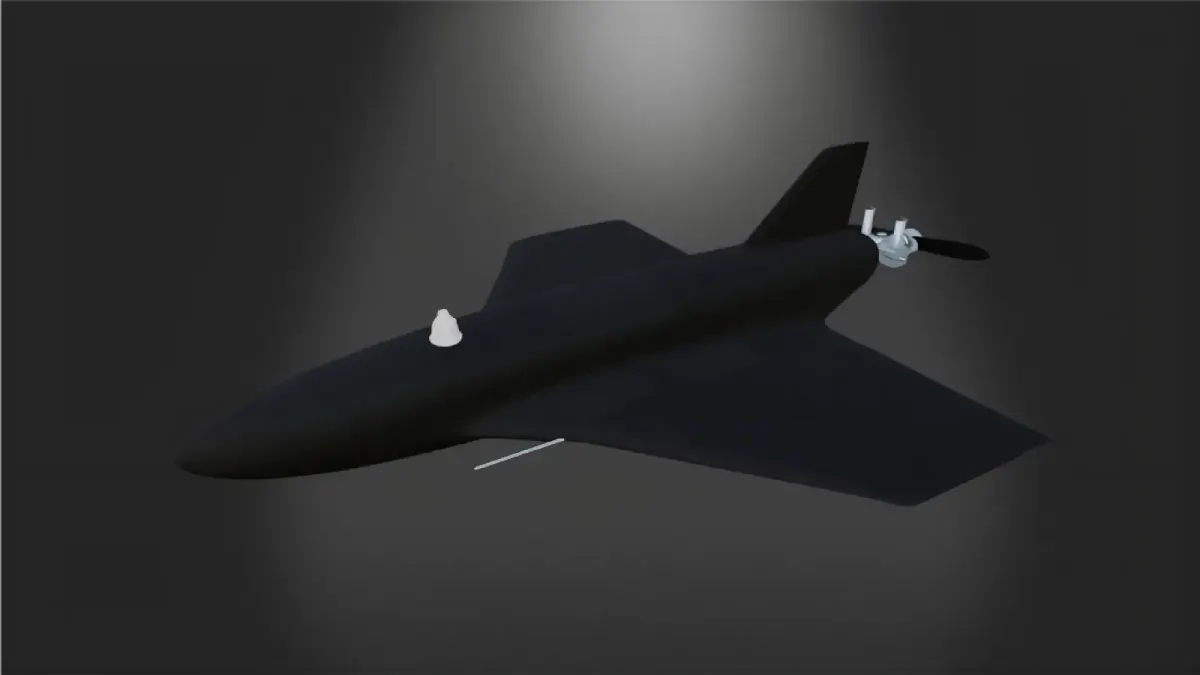
Ukraine's military intelligence agency has released a technical assessment of Russia's Gerbera-2 unmanned aircraft, identifying foreign electronic components and reporting a range of up to 1,200 kilometers for the enlarged version of the drone.
The Defense Intelligence of Ukraine (DIU) published the findings on November 2 through its War & Sanctions database, including a three-dimensional model and information on the aircraft's internal systems.
According to the agency, the Gerbera-2 represents a significant development from earlier Gerbera variants, which were originally intended as inexpensive decoys to overwhelm Ukrainian air defense systems.
The new version has a wingspan of three meters, a fuselage length of 2.6 meters and a 63-liter fuel tank. Ukrainian intelligence says the enlarged fuel capacity enables a range of up to 1,200 kilometers.
The examined aircraft carried a 10-kilogram high-explosive incendiary warhead, while Russian specifications cited by the agency indicate a maximum potential warhead capacity of 25 kilograms. Ukraine has not publicly demonstrated that the examined aircraft carried the maximum claimed payload.
Electronic Components From Six Foreign Markets
The new intelligence findings identify 22 foreign components associated with Gerbera-2, with the country of origin established for 20 of them.
Eight components were traced to manufacturers in China, four to the United States, three to Ireland, three to Switzerland, one to Taiwan and one to the Netherlands. The origin of two additional components had not been established at the time of publication.
Identifying the manufacturing origin of components does not establish that the companies concerned knowingly supplied Russian weapons manufacturers. The public findings do not determine the routes through which the parts entered Russia.
The drone incorporates an updated flight controller, a 12-channel Kometa navigation system and a mesh communications modem manufactured by China's Shenzhen Sinosun Technology Co., Ltd.
Ukraine also identified a video processing module built around a Chinese Coke Pi microcomputer and a dual IP camera intended to detect approaching interceptor drones. The agency reported additional configurations with forward-facing cameras and stabilized camera systems.
These changes suggest that Russia is developing the Gerbera family beyond its original decoy role, adding navigation, communications and defensive features associated with more sophisticated attack drones.
Gerbera-2 Linked to Incident in Poland
Ukrainian intelligence reported that a Gerbera-2 equipped with a warhead was found on Poland's Baltic coast in mid-September 2026.
The agency cited that discovery as evidence that the aircraft's operational reach has implications beyond Ukraine, although the circumstances of the Polish incident require separate examination.
The latest findings also raise questions about the supply chains supporting Russian drone manufacturing. Commercially available electronics can move through multiple intermediaries and jurisdictions, complicating export-control enforcement.
The issue has already attracted attention in Poland, where AdriaDefense previously reported on Polish SIM cards recovered from Russian drones during the investigation into the September 2025 airspace incursions.
The DIU's latest disclosure provides additional technical information for governments, suppliers and compliance teams assessing the movement of dual-use electronics into Russian military systems.
Source: Defense Intelligence of Ukraine, War & Sanctions, November 2, 2026.