Ukraine’s DEMZ to Build Ammunition Plant in Lithuania
Ukraine’s DEMZ plans to invest in ammunition production in Lithuania, adding another Ukrainian manufacturer to the Baltic state’s expanding defense industry.

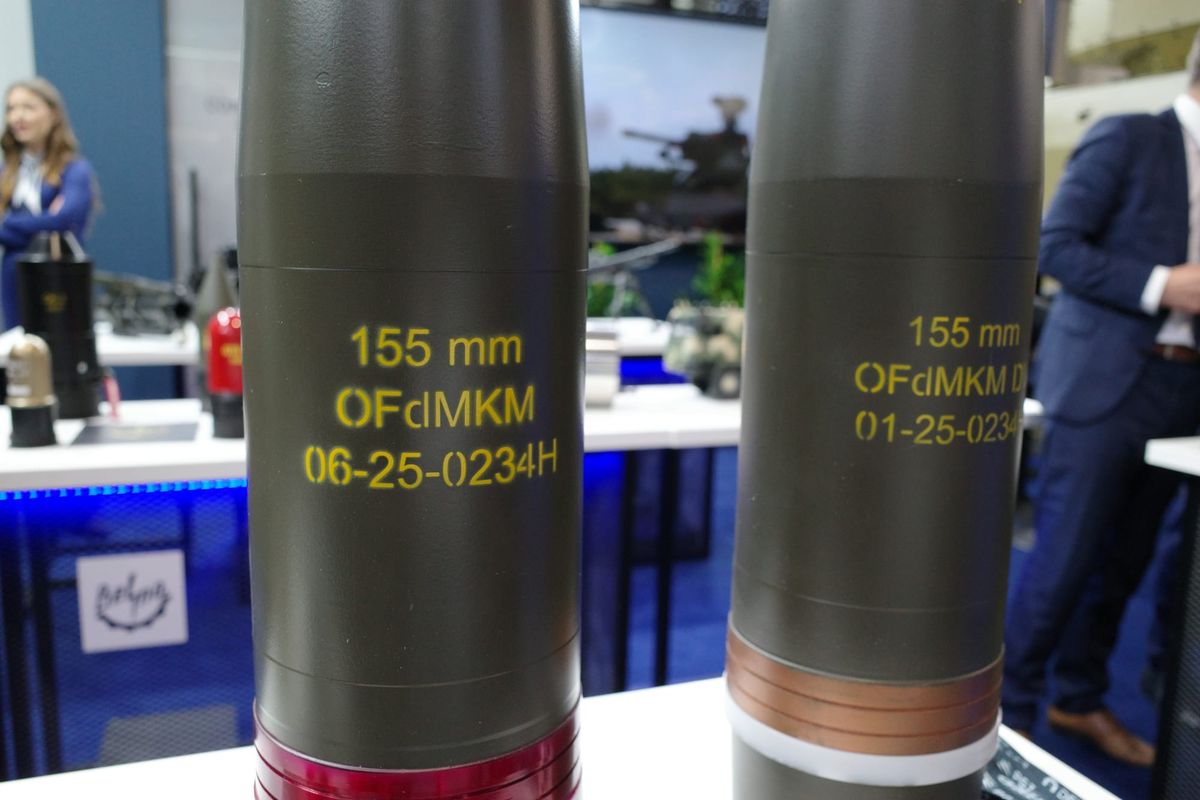
Ukrainian defense company DEMZ plans to invest in an ammunition production facility in Lithuania, extending the Baltic state’s push to establish domestic manufacturing capacity for critical munitions. The project would also deepen industrial cooperation between Lithuania and Ukraine as Vilnius seeks more resilient ammunition and explosives supply chains.
The planned investment comes as Lithuania builds an increasingly diverse ammunition manufacturing base involving Lithuanian, German, US and Ukrainian industry. The country has identified large- and medium-caliber ammunition, military-grade explosives and mines as strategic areas for domestic defense production.
DEMZ adds Ukrainian production to Lithuania’s ammunition buildup
The DEMZ project represents another step in Lithuania’s effort to attract foreign defense manufacturers and move more production onto Lithuanian territory.
Lithuania and Ukraine established a formal framework for such cooperation in November 2024. Their governments agreed to support joint arms and ammunition projects, including production capacity for ammunition, projectiles and explosives in both countries.
The agreement also covered unmanned aerial vehicles, ground and naval systems, electronic warfare and other defense technologies. For Lithuania, the framework provides a route to integrate Ukrainian manufacturers and wartime industrial experience into its growing domestic defense sector.
The DEMZ investment fits that policy by moving Ukrainian defense manufacturing capacity inside a European Union and NATO member state. It also expands the relationship beyond Lithuania financing or procuring equipment produced in Ukraine.
Lithuania has already applied its bilateral Lithuanian Model to finance Ukrainian defense production. According to the Lithuanian Ministry of National Defence, Vilnius had committed USD 38 million to Ukrainian long-range drone production and planned another USD 12 million in 2026, alongside USD 24 million earmarked for long-range strike and maritime drones connected with localization of Ukrainian defense industry in Lithuania.
Lithuania is developing multiple ammunition production lines
DEMZ will enter a Lithuanian defense-industrial environment that is already undergoing substantial expansion.
The largest project is the Rheinmetall Defence Lietuva ammunition plant at Baisogala. The facility covers around 340 hectares and is designed to manufacture and fill 155 mm artillery ammunition, with capacity planned in the tens of thousands of projectiles annually. Direct investment is expected to reach up to €300 million and create at least 150 jobs.
Construction of the Baisogala plant was about 20% complete in May 2026, although work was slightly behind schedule after winter conditions affected construction. Production was then expected to begin in mid-2027.
Rheinmetall is not the only foreign manufacturer attracted by Lithuania’s policy. Defense News reported in December 2024 that at least five other companies had expressed interest in using Lithuania’s accelerated regulatory framework for defense manufacturing. The report identified Northrop Grumman cooperation on 30 mm ammunition and an unspecified Ukrainian company interested in an explosives production plant.
Vilnius targets ammunition and explosives supply security
Lithuania’s Ministry of National Defence has formally identified ammunition and explosives as a strategic industrial direction. The policy covers 155 mm, 120 mm and 30/35 mm ammunition, military-grade explosives including TNT and RDX, and anti-tank and anti-personnel mines.
That industrial policy accompanies rapidly rising Lithuanian military expenditure. Lithuania approved a €4.79 billion defense budget for 2026, equivalent to 5.38% of gross domestic product, with funding allocated for larger ammunition stocks alongside major weapons procurement programs.
The combination of Rheinmetall’s large-caliber production, other foreign investment and Ukrainian manufacturing projects points toward a broader Lithuanian ammunition ecosystem rather than dependence on a single factory.
For Ukrainian companies, production in Lithuania can also establish manufacturing capacity inside the EU and NATO industrial area while maintaining industrial links with Ukraine. Lithuania, meanwhile, gains access to another pool of manufacturers shaped by more than four years of high-intensity war and sustained demand for ammunition.
Why is DEMZ investing in ammunition production in Lithuania?
DEMZ plans to establish ammunition production in Lithuania as the country expands its domestic defense-industrial base and encourages cooperation with Ukrainian manufacturers. Lithuania has designated ammunition and explosives as strategic production priorities.
What ammunition is Lithuania planning to manufacture domestically?
Lithuania’s defense-industrial strategy covers 155 mm, 120 mm and 30/35 mm ammunition as well as military explosives and mines. Rheinmetall Defence Lietuva is separately developing a 155 mm artillery ammunition plant at Baisogala.
How does the DEMZ project fit Lithuania-Ukraine defense cooperation?
Lithuania and Ukraine signed a defense-industry cooperation agreement in November 2024 covering ammunition, explosives, projectiles, drones, electronic warfare and other systems. The DEMZ investment advances that cooperation through production capacity located in Lithuania.
Is Lithuania becoming a regional ammunition production hub?
Lithuania is assembling several elements required for a regional ammunition manufacturing base, including large-caliber production, planned medium-caliber capacity, explosives, foreign investment and government financing. Whether it develops into a larger regional supply hub will depend on individual projects reaching production and securing sustained orders.