XTEND selected among top performers in $1 billion U.S. Drone Dominance Program
XTEND has been selected among the top performers in Gauntlet II of the U.S. Drone Dominance Program after delivering and demonstrating 120 STRIKER systems during military testing at Fort Carson.

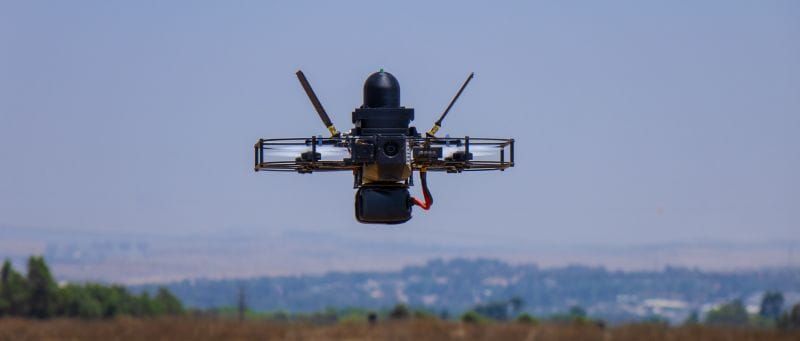
The company competed in the Close Quarter Battle segment of Gauntlet II, the second major competition under the U.S. government’s $1 billion program to rapidly acquire large numbers of low-cost lethal drones.
XTEND said its STRIKER systems were tested in operationally realistic scenarios by U.S. military personnel during the competition.
The official Drone Dominance Program website now says 10 companies were selected following Gauntlet II. The competition began with 49 companies invited to the Phase II qualifier at Camp Grayling, Michigan, before 19 advanced to the Fort Carson event.
120 STRIKER systems delivered for testing
XTEND’s STRIKER is designed for tactical missions in confined and complex environments, including operations where satellite navigation signals are degraded or unavailable.
The platform runs on XTEND’s proprietary XOS operating system, which is intended to reduce the amount of direct piloting required from the operator and support autonomous mission functions.
XTEND said it successfully delivered and demonstrated 120 STRIKER systems during Gauntlet II.
The delivery requirement itself was part of the competition. All 19 companies invited to Gauntlet II were required to fulfill an order for 120 drones equipped with lethality payloads within roughly five weeks before moving into the operational evaluation phase.
The systems were then assessed across three broad areas: performance during the Gauntlet missions, evaluations by military operators and the companies’ production and supply-chain capabilities.
The government’s evaluation criteria placed particular emphasis on the ability to find, identify and engage targets in contested electromagnetic environments, as well as strike accuracy, mission tempo and operator workload.
U.S. plans drone procurement at scale
The Drone Dominance Program is designed to create a larger U.S.-based industrial base for inexpensive, expendable unmanned strike systems.
It is jointly administered by the Test Resource Management Center and the Defense Innovation Unit, while Naval Surface Warfare Center Crane holds contracting authority and issues prototype delivery orders based on Gauntlet results.
The U.S. government says the program intends to purchase more than 200,000 lethal drones by 2027 through a series of competitive rounds.
Following Gauntlet II, the government previously said it planned to place orders for 60,000 drones from the top-performing companies.
Selection as a top performer does not by itself guarantee XTEND a final prototype contract or a specific order volume.
XTEND said the result strengthens its position in U.S. defense programs after the company expanded its American manufacturing and corporate presence. Founded in Tel Aviv and now headquartered in Tampa, Florida, XTEND says more than 12,500 of its systems have been deployed across more than 30 countries.
“The achievement demonstrates the strength of our technology,” XTEND co-founder and CEO Aviv Shapira said following the Gauntlet II result.
The Drone Dominance Program is expected to continue with Gauntlet 2.5, focused on a bomber-platform mission, followed by additional Gauntlet competitions as the United States moves toward larger-scale procurement of small unmanned strike systems.