12 Companies Compete for Lithuania’s €5 Million Integrated Drone Detection System
Twelve companies and consortia are competing to develop Lithuania's €5 million AI-powered drone detection network, with a prototype expected in early 2027.

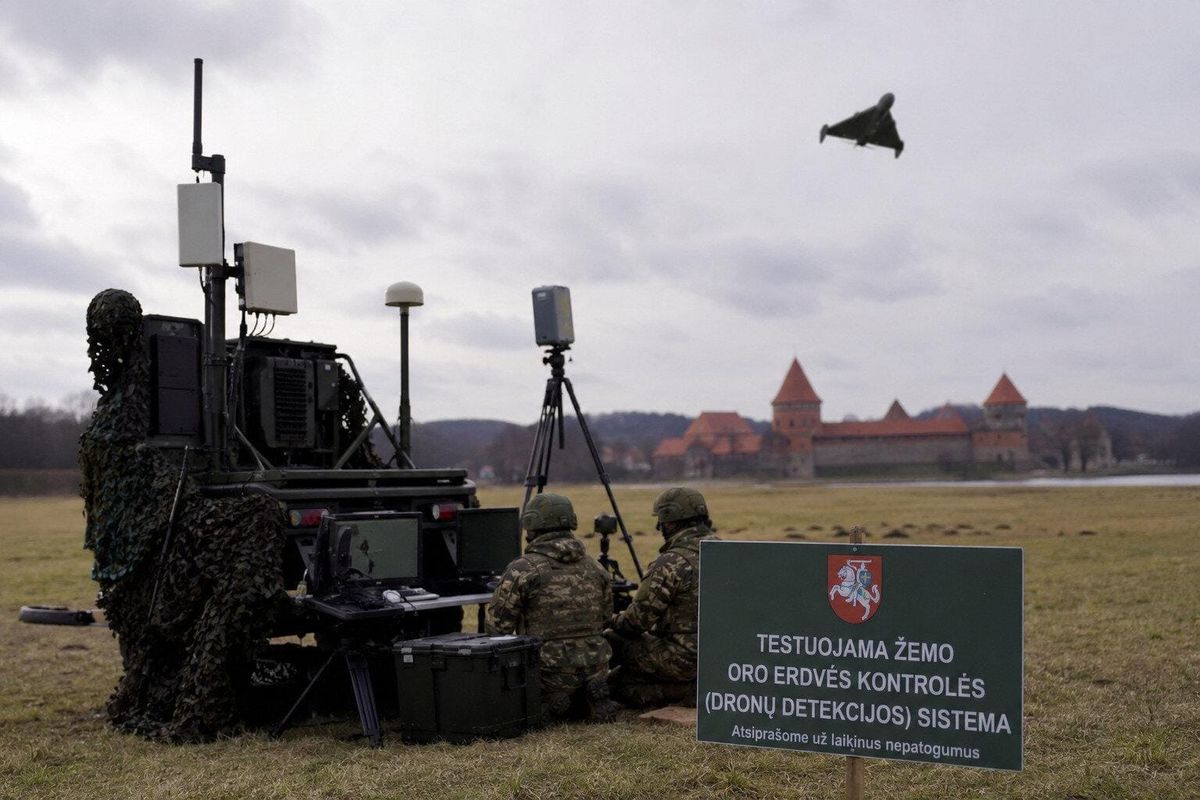
Twelve companies and consortia have submitted preliminary proposals to develop Lithuania's new integrated airspace surveillance and drone detection system, as the Baltic country moves to connect military sensors, air defense equipment and civilian infrastructure into a single national monitoring network.
The Lithuanian Ministry of National Defense announced on October 28 that the project has an estimated budget of €5 million, with contracts expected to be signed in December 2026. Participants include Lithuanian technology companies and consortia involving both domestic and foreign partners.
The competition initially attracted 19 applications, of which 12 participants proceeded to submit preliminary proposals. Following the evaluation of final bids, up to three candidates will be selected for the first development stage, while only the highest-ranked participant will continue into the second and third stages.
The ministry has not disclosed the names of the competing companies.
AI-Powered Network to Connect Drone Detection Sensors
The planned system will integrate data from existing military and civilian surveillance equipment, including radars, sensors and air defense assets. Using artificial intelligence and automated data processing, Lithuania intends to establish a shared national air picture that can improve the identification and tracking of drones and other airborne threats.
Rather than relying on a single detection technology, the project will connect different sensors and institutions, allowing information about a detected object to be shared automatically in real time.
When a suspicious object moves between regions, its tracking information should be transferred continuously to the relevant military commanders, government services and critical infrastructure operators.
The system is also intended to support earlier public warnings and more coordinated responses to potential airspace violations.
Defense Minister Robertas Kaunas said Lithuania wants to involve the country's engineers, software developers and private companies directly in developing new air defense capabilities.
The initiative forms part of Lithuania's wider effort to build a national low-altitude air defense architecture capable of responding to small unmanned aircraft and other difficult-to-detect aerial threats.
First Prototype Expected in Early 2027
The development program will be implemented in three stages, beginning with a working prototype expected in early 2027.
During 2027, the system is intended to connect participating sensors and air defense equipment into a common operational picture. The following year, Lithuania plans to integrate the technology with the Lithuanian Armed Forces' existing airspace surveillance and control system and data-sharing platforms used by allied forces.
The project's initial €5 million allocation is intended to finance the development of the integrated system rather than a nationwide purchase of new radars or interceptor weapons.
The approach could create opportunities for Lithuanian software developers, sensor manufacturers, communications specialists and defense technology companies working on command-and-control systems and data integration.
Lithuania Expands Its Counter-Drone Capabilities
The competition comes as Lithuania accelerates investment in multiple layers of air defense.
In September, AdriaDefense reported that Lithuania was fast-tracking the procurement of interceptor drones and short-range and passive radars. The government has also been evaluating different technologies developed and tested in Ukraine.
Earlier in October, Lithuania began deploying Lockheed Martin AN/TPS-77 mobile surveillance radars, expanding its ability to monitor national airspace and exchange surveillance information with NATO's integrated air defense network.
Lithuania is separately testing the Ukrainian-developed SkyFortress system, which uses acoustic and electromagnetic signatures to detect and classify low-flying drones. The technology is being evaluated under Lithuanian operating conditions.
These initiatives address different parts of the air defense challenge. While radar and acoustic systems provide the means to detect threats, the new integrated platform is intended to bring their information together and make it available to military and civilian decision-makers.
For Lithuania's defense technology industry, the €5 million competition represents an opportunity to develop a nationally controlled surveillance capability with potential applications beyond the initial government contract.
The next milestone will be the selection of development partners and the anticipated contract signing in December.
Source: Lithuanian Ministry of National Defense, October 28, 2026. Official announcement.