BAE Weighs Bid for €2B Dutch Counter-Drone Firm Robin Radar
BAE Systems is reportedly exploring a potential bid for Dutch counter-drone specialist Robin Radar Systems, which could be valued at about €2 billion.

BAE Systems is among several potential bidders exploring an acquisition of Dutch counter-drone specialist Robin Radar Systems, according to Reuters, in a possible transaction that could value the company at about €2 billion. The process remains at an early stage, with no confirmed BAE offer, agreement or sale.
Reuters reported on October 1 that private equity groups CVC, Blackstone, Advent and EQT have also shown interest in the Delft-based radar company. Robin Radar owner Parcom is working with JPMorgan on a formal sale process expected to begin later in 2026.
CVC and Blackstone previously explored an offer during the summer, but that approach was rejected ahead of the planned sale process, according to Reuters sources. Parcom reportedly prefers a European strategic or financial buyer that would keep development of the technology focused on Europe.
BAE Systems said it does not comment on rumor or speculation. Robin Radar also declined to discuss the shareholder process, while Parcom did not comment to Reuters.
Robin Radar has become a key European counter-UAS sensor supplier
Founded in 2010, Robin Radar Systems initially developed radar technology for detecting birds around airports before expanding into drone detection and counter-uncrewed aerial system applications.
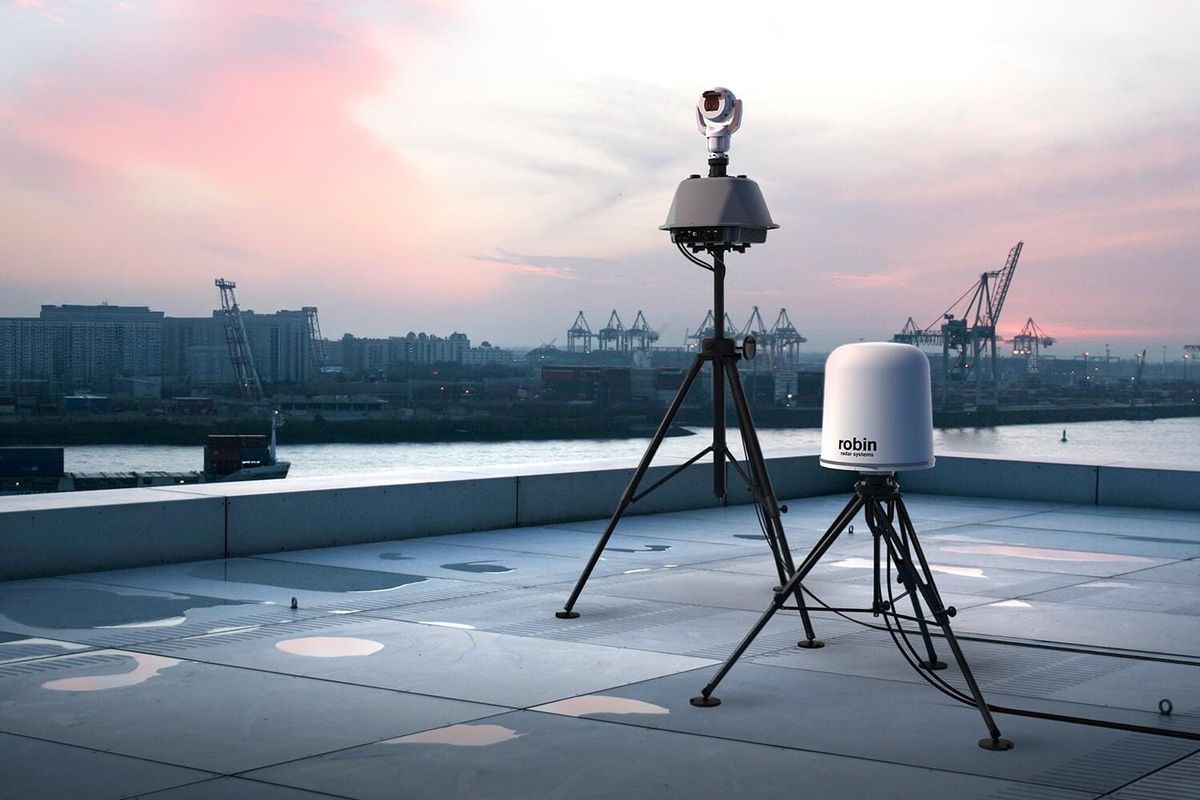
Its IRIS radar is designed to detect, track and classify drones with 360-degree three-dimensional coverage. The system uses micro-Doppler classification and neural-network-based processing, while its standard configuration has a 5 km instrumented range and can be integrated with command-and-control systems and counter-UAS effectors. Robin Radar also offers a long-range mode with an instrumented range of up to 12 km for selected targets.
The Dutch Ministry of Defence ordered 100 IRIS early-warning radars, according to Reuters, while Robin Radar systems have also been deployed for security missions including the Paris 2024 Olympics and the 2026 FIFA World Cup.
Robin Radar has also been expanding its counter-UAS integration network. In March 2026, the company announced an integration partnership with DroneShield, while its IRIS radar has been integrated on Defenture tactical vehicle platforms for mobile drone detection.
BAE is expanding its own counter-drone portfolio
A potential acquisition would come as BAE Systems is accelerating development of its own counter-UAS capabilities.
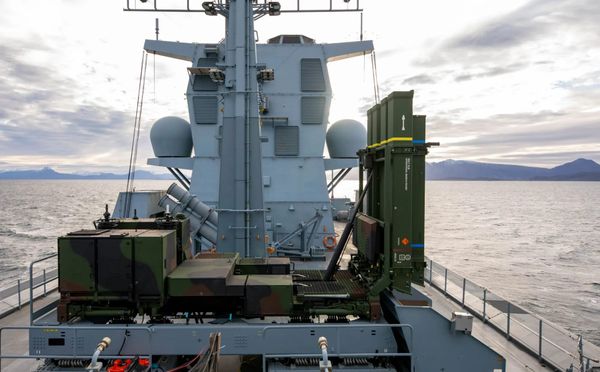
On October 1, the same day Reuters first reported BAE's interest in Robin Radar, BAE announced the completion of live trials of its BAE Systems Anti Threat System, or BATS, in Scotland. The trials demonstrated an integrated detect, track, identify and defeat chain using multiple sensors and effectors connected through a common command-and-control architecture.
BAE describes BATS as a modular, software-driven counter-UAS system designed to combine data from different sensors and coordinate responses against uncrewed threats.
There is no public evidence linking the BATS trials to the potential Robin Radar transaction. However, Robin Radar's specialized small-drone detection technology could complement BAE's existing sensor fusion, electronic warfare and counter-UAS capabilities.
UBS analysts cited by Reuters similarly said an acquisition could add specialized small-drone detection to BAE's counter-drone portfolio and create potential links with its electronic warfare business.
European counter-drone consolidation is accelerating
A potential transaction at around €2 billion would underline how quickly counter-UAS technology has moved from a specialized defense niche toward a strategically significant segment of the European defense market.
Demand for smaller drone-detection radars has increased as armed forces seek systems capable of identifying low-cost unmanned aircraft without relying exclusively on larger conventional air-defense radars. Defense News reported in July that suppliers including Robin Radar, Echodyne and Blighter were benefiting from rapidly expanding counter-drone demand.
For European governments, ownership of companies controlling radar, sensor, software and electronic warfare technology is also becoming a strategic consideration. Reuters reported that Parcom would prefer a European buyer, against a broader backdrop of increasing scrutiny of foreign acquisitions involving sensitive European technology.
For now, Robin Radar remains owned by Parcom and no transaction has been announced. The expected formal sale process later in 2026 will determine whether BAE Systems proceeds with an offer and which of the other interested parties ultimately enters the bidding.
Frequently asked questions
Is BAE Systems buying Robin Radar?
No transaction has been announced. Reuters reported that BAE Systems is in the early stages of exploring a possible offer.
How much could Robin Radar be worth?
Sources cited by Reuters said the planned sale process could value Robin Radar Systems at approximately €2 billion, equivalent to about $2.26 billion at the exchange rate used in the report.
Who else is interested in Robin Radar?
Reuters identified CVC, Blackstone, Advent and EQT as other potential bidders. CVC and Blackstone reportedly made an earlier approach that was rejected before the formal sale process.
What does Robin Radar produce?
Robin Radar develops specialized radar systems for detecting and classifying drones. Its IRIS platform is designed for integration into broader counter-UAS networks combining sensors, command-and-control software and effectors.