Bosnia’s Pobjeda-Rudet Moves Ahead With New Initiating Compositions Plant
Turkish-owned Pobjeda-Rudet has entered the permitting stage for a new initiating compositions facility in Goražde as Bosnia expands its domestic defense-industrial supply chain.

Bosnia and Herzegovina’s Pobjeda-Rudet is moving ahead with plans for a new production facility for initiating compositions at its industrial complex in Goražde, providing the clearest indication yet of the company’s latest capacity expansion.
The Federal Ministry of Spatial Planning published a public notice on September 25 for the conceptual design of a facility identified internally as A73/2. The project is part of the procedure for obtaining urban planning consent and lists Pobjeda-Rudet d.d. Goražde as the investor and Sarajevo-based Argentaria d.o.o. as the designer.
The planned facility is located inside the Pobjeda industrial zone on Višegradska Street in Goražde, on cadastral plots 3523/1 and 3519/1 in the Podhranjen cadastral municipality. Interested parties have been given a formal period to inspect and comment on the project documentation.
Importantly, publication of the notice means the project has entered the planning and permitting process; it does not mean construction has already received final approval.
New capacity for initiation materials
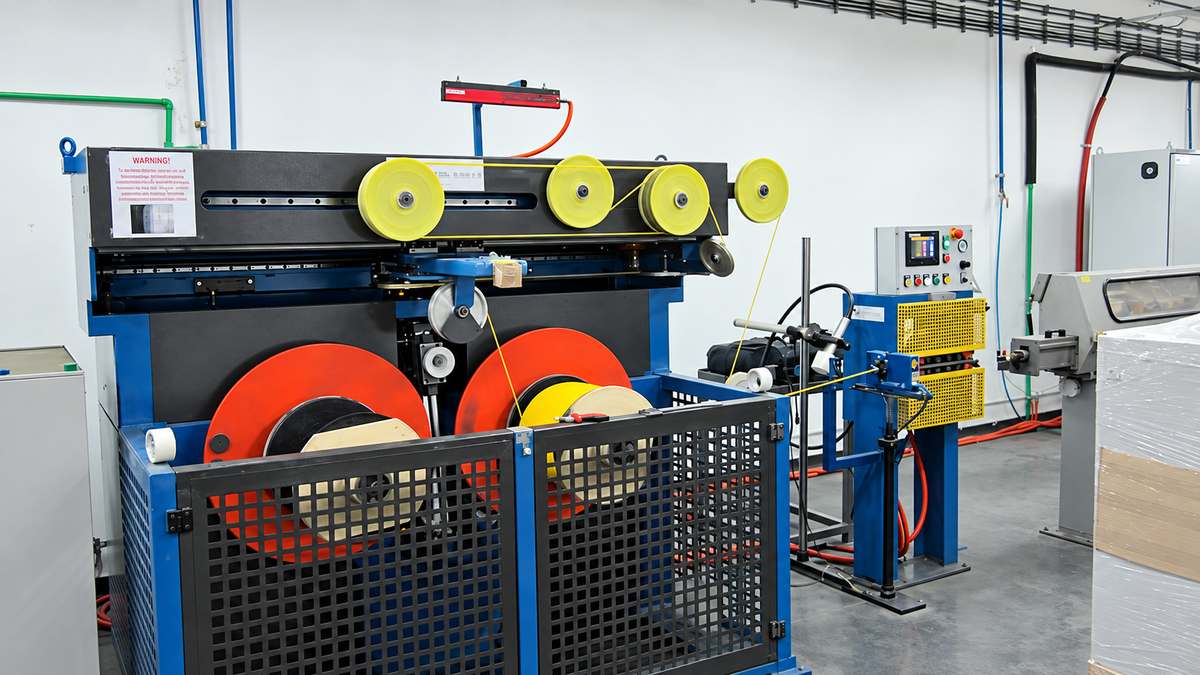
The facility is described officially as an “object for the production of initiating compositions.” Such compositions form part of the production chain for initiation systems and detonators, an area in which Pobjeda-Rudet already has established manufacturing capabilities.
The company currently produces electric and non-electric detonators, blasting caps, shock tube and other initiation-system components at its Goražde operation. Parent company Kırlıoğlu describes the Bosnia facility as one of its core production sites for complete initiation systems.
The exact chemical composition that would be manufactured in A73/2, its planned annual capacity, investment value and commissioning date have not been publicly disclosed.
Turkish ownership of Pobjeda-Rudet
Pobjeda-Rudet is fully owned by Turkish explosives producer Kırlıoğlu Kimya Sanayi ve Ticaret A.Ş.
Kırlıoğlu began acquiring Pobjeda-Rudet in 2015 and completed its takeover in 2023. The Federation of Bosnia and Herzegovina’s securities register currently records Kırlıoğlu as the holder of 100% of voting rights in Pobjeda-Rudet.
The Turkish group, headquartered in Afyonkarahisar, manufactures commercial explosives and initiation systems and operates production and storage facilities across Türkiye and Bosnia and Herzegovina. Kırlıoğlu says its acquisition of Pobjeda-Rudet established its principal foreign industrial operation and gave the group integrated production of the components required for blasting systems.
The current supervisory board of Pobjeda-Rudet is chaired by Hakan Kırlıoğlu. Other board members include Hülya Kırlıoğlu, Mehmet Siner, Süleyman Kırlıoğlu and Feride Kırlıoğlu, according to the Federation securities regulator.
In Bosnia, the company is led by director Muhamed Hubanić, with Almir Dragolj responsible for production and development, Enver Ćurovac heading commercial affairs and Alem Mujković responsible for economic, HR and legal affairs.
Part of a broader Bosnian supply-chain expansion
The latest permitting step follows a broader push by Pobjeda-Rudet to increase its role in Bosnia and Herzegovina’s defense-industrial supply chain.
As AdriaDefense reported earlier in September, Pobjeda-Rudet has been preparing additional capacity for a strategic material required by other Bosnian defense manufacturers. The company has been working with UNIS Ginex, Pretis and Binas on domestic production and supply of materials currently sourced from abroad.
The Federal Ministry of Energy, Mining and Industry confirmed on August 31 that representatives of the four companies had agreed on further steps toward strategic cooperation covering the production and supply of raw materials and materials required by Bosnia’s defense industry.
However, available official documentation does not yet establish that the A73/2 initiating-compositions facility is the same project as the previously announced strategic-material production line. The two developments should therefore be treated separately unless Pobjeda-Rudet confirms a direct connection.