Central and Eastern Europe Gains Strategic Role in Europe’s Defense Industrial Expansion, KPMG Says


Central and Eastern Europe is increasingly positioning itself as one of the key growth areas for Europe’s defense industrial base, driven by higher military spending, expanding production requirements, and the long-term security consequences of the war in Ukraine.
According to a recent KPMG study, countries across the region are moving beyond their traditional role as manufacturing subcontractors and are becoming strategic locations for defense production, logistics networks, and industrial partnerships supporting NATO and European Union requirements.
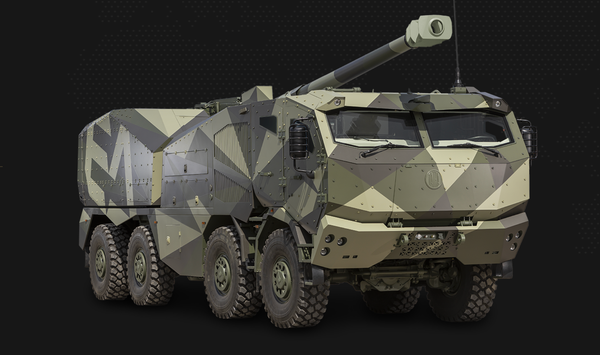
The report identifies Poland, Romania, the Czech Republic, Slovakia, and Hungary as some of the main beneficiaries of Europe’s ongoing defense buildup. Rising procurement budgets and efforts to replenish military stockpiles have created demand for additional production capacity, particularly in ammunition, armored systems, electronics, software, and dual-use technologies.
KPMG argues that the region’s combination of lower production costs, established industrial infrastructure, engineering talent, and geographic proximity to NATO’s eastern flank has shifted investment attention toward Central and Eastern Europe. The study describes the area as an increasingly important operational corridor connecting the Baltic and Black Sea regions while supporting military mobility and logistics requirements.
The Black Sea region is expected to play a particularly significant role in future defense planning. Romania’s port of Constanța is highlighted as a potential maritime security and logistics hub, while investments in rail networks, ports, and transport infrastructure along the Danube corridor are expected to strengthen both military mobility and future reconstruction routes linked to Ukraine.
The findings come as several governments in the region continue to expand defense budgets and seek larger roles in European industrial cooperation programs. Poland remains one of NATO’s highest defense spenders, while Romania, the Czech Republic, Slovakia, and Hungary are pursuing modernization initiatives designed to increase local industrial participation and reduce dependence on external supply chains.
KPMG also notes that European defense policy is increasingly shifting from short-term procurement cycles toward sustained industrial production, maintenance, and stockpile replenishment. This trend is creating opportunities for regional manufacturers to integrate more deeply into multinational defense programs and NATO supply networks.
Despite growing opportunities, the report identifies several challenges that could affect future expansion. Infrastructure bottlenecks, workforce shortages in specialized sectors, regulatory complexity, and export control requirements remain constraints for companies seeking to scale production. At the same time, governments across the region face pressure to accelerate procurement processes while balancing industrial development goals with operational requirements.
As Europe increases defense spending and seeks to strengthen industrial resilience, Central and Eastern Europe is expected to remain a focal point for new manufacturing investments, cross-border partnerships, and defense-related infrastructure projects over the coming years.