Commercial Ships Hit by Drones Near Romania as Bucharest Seeks NATO Support
Three commercial ships were struck by drones near Romania's Sulina Canal, prompting Bucharest to seek additional allied surveillance and counter-UAS equipment.

Three commercial vessels were struck by drones near Romania's Black Sea coast over the weekend, prompting Bucharest to call for additional allied surveillance and counter-drone capabilities as security risks grow around the strategically important Sulina shipping route.
The attacks occurred on the evening of November 14 near the mouth of the Danube, according to Romanian authorities. The vessels were identified as the Greek-flagged tanker Evia Petrol V and two Saint Kitts and Nevis-flagged ships, Marsoland Ali Najafov.
Romanian Defense Minister Ștefan-Radu Oprea confirmed the incidents on Sunday, November 15, saying that fires broke out aboard the vessels but were brought under control by their crews. No casualties were reported.
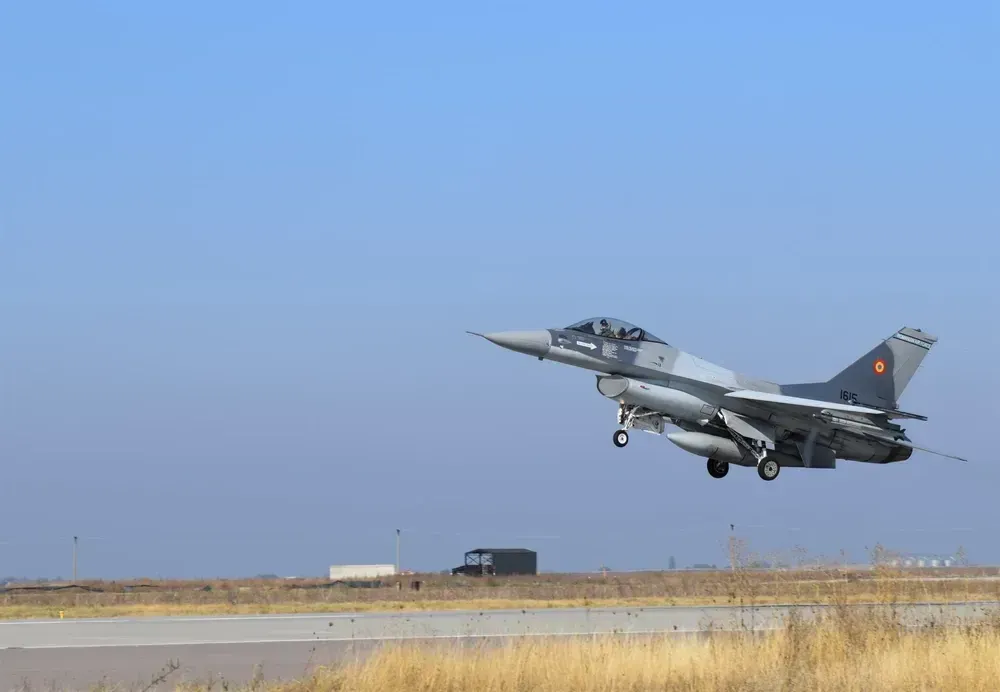
Romanian Air Force F-16 fighter jets were scrambled during the incidents, while coastal authorities maintained contact with the affected ships.
Drone Attacks Inside Romanian Territorial Waters
According to the Romanian Ministry of National Defence, Evia Petrol V was struck at approximately 9:10 p.m. local time, around four nautical miles southeast of the Sulina Canal. The bulk carrier Marsol was hit approximately 35 minutes later, about five nautical miles from the canal.
Both incidents occurred inside Romanian territorial waters, according to Reuters.
A third vessel, Ali Najafov, also reported a drone strike and an onboard fire. The attacks followed a separate incident on November 13 involving the cargo vessel Larissa 1, highlighting the growing risks facing commercial shipping in the northwestern Black Sea.
Romanian authorities have not publicly identified the operators responsible for the three November 14 strikes. Officials have nevertheless linked the deteriorating security environment to Russia's continuing war against Ukraine.
The Sulina Canal connects the Danube to the Black Sea and serves as an important maritime corridor for Ukrainian exports. Disruptions near the canal can therefore affect commercial traffic beyond Romania's own ports.
Romania Requests More Surveillance and Counter-Drone Equipment
Defense Minister Oprea said he would raise the Black Sea security situation during meetings with European counterparts in Brussels on November 17 and 18.
Romania is seeking additional allied support, particularly maritime and aerial surveillance capabilities and equipment designed to detect and counter drones.
France has already temporarily deployed an Atlantique 2 maritime patrol aircraft to Romania following a request for reinforcement.
Oprea also disclosed discussions with French defense technology company Thales concerning the accelerated delivery of Gap Filler radar systems.
The equipment is intended to strengthen Romania's surveillance coverage, although the ministry did not provide a revised delivery schedule or confirm additional radar orders.
The latest incidents underline the operational challenge of protecting commercial shipping from relatively small unmanned aircraft. Fighter jets provide an important response capability, but continuous surveillance and dedicated counter-unmanned aircraft systems are increasingly relevant to maritime security.
Growing Pressure on NATO's Black Sea Flank
Romania has faced a sustained increase in drone-related incidents since Russia's full-scale invasion of Ukraine.
As AdriaDefense previously reported, Romanian military data updated on August 31 recorded 43 unauthorized drone incursions since the war began, including 25 during 2026.
Those incidents have repeatedly forced Romanian authorities to scramble aircraft and issue warnings to communities near the Ukrainian border.
The latest maritime strikes introduce another dimension to the security challenge. Romania must protect not only its national airspace and border communities but also international commercial vessels operating near strategically important waterways.
The situation could increase demand for integrated coastal surveillance, advanced radar coverage and counter-UAS technology capable of detecting and tracking low-flying threats.
Romania is simultaneously expanding its domestic defense manufacturing base, with international companies investing in air defense, military vehicles and other capabilities. The wider industrial developments were examined in AdriaDefense's analysis of Romania's emerging defense manufacturing sector.
For NATO, the immediate question is how to strengthen deterrence and protect maritime traffic without allowing incidents near the Ukrainian coast to develop into a broader confrontation.