CSG Launches MAIA Platform to Expand Digital Airspace Management
CSG has launched the MAIA digital airspace management platform through Czech subsidiary UpVision, expanding its aerospace software portfolio as Europe accelerates U-space implementation for drone traffic management.

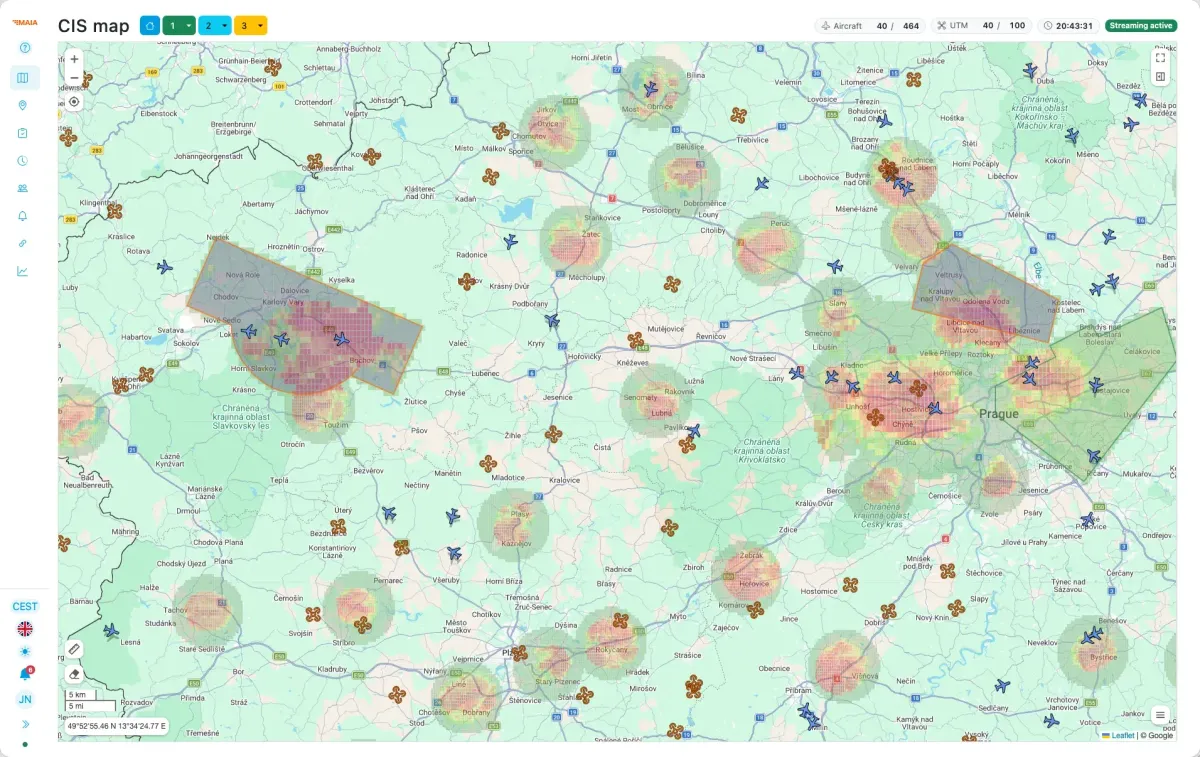
SG has expanded its aerospace software portfolio with the launch of the MAIA digital airspace management platform, developed by Czech subsidiary UpVision. The system is designed to support the safe coordination of drones by connecting operators, air navigation service providers, regulators, emergency services, and other authorized stakeholders through a shared digital environment. The launch reflects CSG's broader strategy to strengthen its position across Europe's evolving digital airspace ecosystem as implementation of the European Union's U-space framework accelerates.
Rather than introducing another drone platform, CSG is targeting the digital infrastructure required to manage increasingly congested airspace. As unmanned aircraft become more common across defense, emergency response, critical infrastructure inspection, and commercial operations, software capable of coordinating multiple users in real time is becoming as important as the aircraft themselves.
MAIA targets Europe's growing U-space ecosystem
MAIA functions as a digital airspace management platform connecting drone operators with Common Information Service Providers, air navigation service providers, security organizations, airports, and regulatory authorities. According to CSG, the platform incorporates artificial intelligence to identify operational risks and increase automation while supporting compliance with the European Union's U-space regulatory framework established under Regulation (EU) 2021/664.
The platform's primary customers include national aviation authorities, U-space service providers, airports, critical infrastructure operators, and organizations responsible for coordinating unmanned aircraft operations. Its role extends beyond flight planning by enabling real-time information exchange between multiple users sharing the same airspace.
Expanding CSG's integrated aerospace portfolio
The MAIA launch builds on CSG's growing aerospace and defense electronics portfolio, which already includes radar manufacturer Eldis, defense electronics specialist Retia, air traffic management developer CS Soft, and software company Atrak. Together, these companies provide capabilities ranging from radar surveillance and air traffic management to software integration and digital coordination. MAIA adds the software layer that links these capabilities into a broader operational ecosystem.
For CSG, the move also reflects an increasing emphasis on software-defined capabilities alongside its traditional defense manufacturing business. The group has recently expanded investments across artificial intelligence, aerospace electronics, and digital technologies while continuing growth in ammunition, land systems, and defense industrial partnerships.
Regional significance for Central and Eastern Europe
The launch comes as the Czech Republic advances deployment of its national Common Information Service, also supplied by UpVision, with implementation expected during 2026 before broader U-space deployment in 2027. That project positions the country among the first European Union members building the digital infrastructure required for large-scale drone traffic management.
For Central and Eastern Europe, digital airspace management is becoming increasingly relevant as governments expand military drone fleets, public safety drone operations, and critical infrastructure monitoring. While radar systems and counter-UAS technologies have received significant investment since Russia's invasion of Ukraine, digital traffic management remains a less visible but equally important capability for integrating growing numbers of unmanned aircraft into shared airspace.
Future procurement may increasingly include software platforms that enable secure data exchange and operational coordination alongside traditional sensors and air traffic management systems. This creates opportunities for regional technology companies specializing in U-space services, command software, and airspace integration.