Czech Narwhal Cruise Missile Adds 200 kg Warhead Variant
Czech LPP Holding is expanding its Narwhal cruise missile family with 100 kg and 200 kg warhead variants designed for strikes at around 640 km.

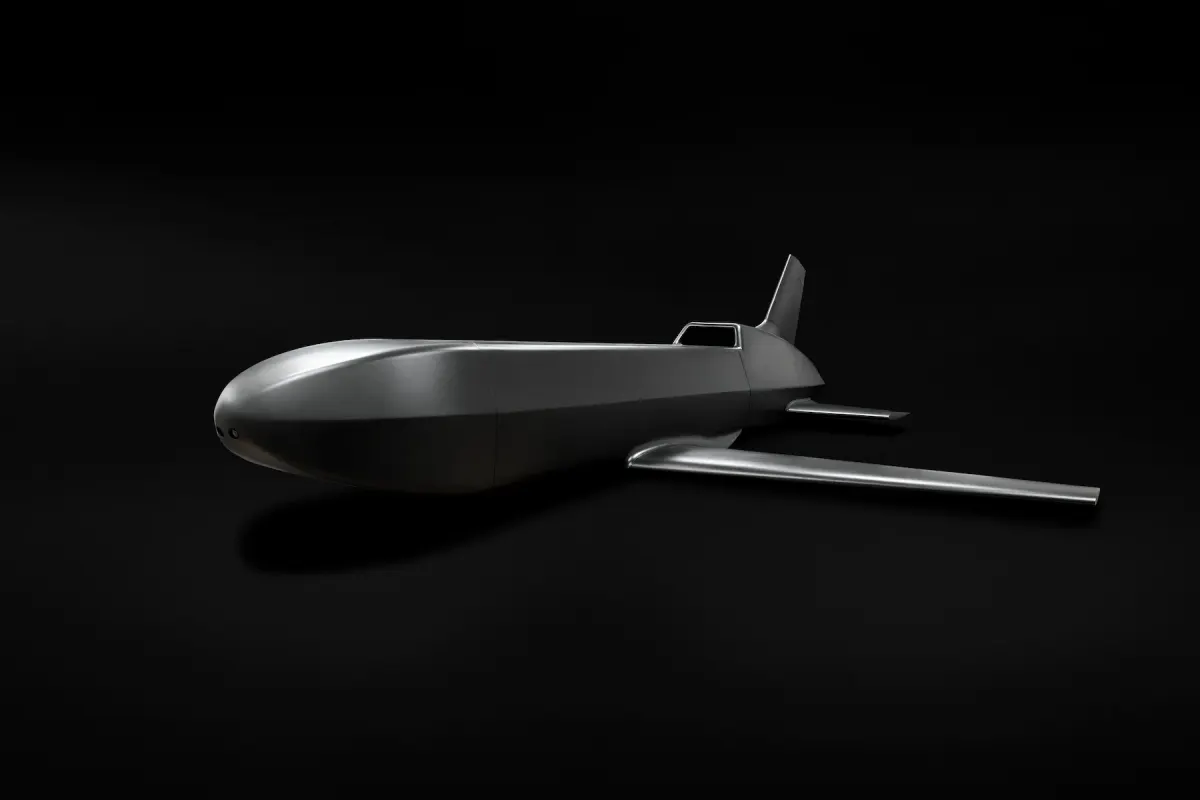
Czech defense technology company LPP Holding is expanding its Narwhal cruise missile into a three-variant family, adding versions with 100 kg and 200 kg warheads. The heavier missiles are intended to retain a range of about 640 km and a maximum speed of approximately 750 km/h, extending the Czech-developed system into a broader set of long-range strike missions.
The development follows testing of the smaller Narwhal 140 and marks another step in the Czech Republic's effort to establish a domestically controlled ground-launched cruise missile capability. LPP Holding publicly presented the Narwhal family after unveiling the original missile at the Dubai Airshow in November 2025.
Narwhal family expands from 40 kg to 200 kg warheads
The current Narwhal family covers three payload classes. The smaller Narwhal 140 carries a 40 kg warhead, an intermediate version is being developed with a 100 kg warhead, and the larger Narwhal 540 is designed to carry up to 200 kg.
The Narwhal 540 has a maximum takeoff weight of 540 kg, a length of 4.9 meters and a wingspan of 3.4 meters. The heavier missile represents a substantial increase over the earlier Narwhal configuration, which measured about 4 meters long with a 2.6-meter wingspan and a maximum takeoff weight of 260 kg.
LPP previously disclosed configurations pairing a 40 kg warhead with a range of 730 km and a 120 kg warhead with a range of 680 km. The new 100 kg and 200 kg variants are expected to operate at roughly 640 km while retaining speeds of up to 750 km/h.
The shift indicates that LPP is developing Narwhal as a scalable weapon family rather than a single missile configuration. Different payload classes could allow operators to match missile size and warhead weight more closely to individual target sets while retaining common elements across the family.
LPP retains navigation designed for GNSS-denied operations
Narwhal draws on technology developed for LPP's Modular Tactical System unmanned aircraft ecosystem. The company lists visual navigation, autonomous flight control and mission planning among the technologies developed for operations where satellite navigation is unavailable or disrupted.
LPP says its visual navigation combines onboard sensing and map matching to support flight in Global Navigation Satellite System-denied environments. The company is carrying that architecture into the Narwhal missile family, reducing dependence on continuous satellite navigation or radio communication.
Electronic warfare resistance has become a central requirement for European long-range weapons as the war in Ukraine demonstrates the operational impact of navigation and communications jamming. A missile capable of continuing its mission when individual navigation sources become unavailable addresses a requirement increasingly relevant to NATO's eastern members.
Czech industry moves deeper into European long-range strike market
The Narwhal program places LPP Holding within a growing European effort to develop sovereign or predominantly European long-range precision-strike weapons.
At Eurosatory 2026, Rheinmetall and Destinus outlined their own European strike portfolio, including the Ruta Block 3 cruise missile with a stated range above 2,000 km and a warhead of up to 250 kg. That weapon occupies a longer-range category than Narwhal, but both programs illustrate increasing European investment in ground-launched cruise missiles and industrial control over their supply chains.
Narwhal's approximately 640 km reach also gives it a different role from tactical artillery rockets and shorter-range one-way attack systems. Ground launch allows operators to field long-range precision strike without depending on combat aircraft or naval vertical launch systems.
LPP said in November 2025 that it was preparing an initial production commitment involving a few hundred Narwhal missiles for an undisclosed customer. The company did not publicly identify that customer.
The manufacturer has not publicly confirmed that the Narwhal has entered combat service in Ukraine. Reports have previously linked potential operational testing to Ukraine, but no publicly verified evidence establishes Ukrainian deployment or combat use of the missile.
That distinction remains important as the program moves from testing toward production. The next indicators will be confirmed deliveries, customer identification, production volumes and evidence that the heavier 100 kg and 200 kg configurations have completed their own flight-test programs.