Estonia Resumes Tender for 600 Military Bunkers After Supreme Court Rejects Appeal
Estonia resumes procurement of up to 600 concrete military bunkers after the Supreme Court declines a Swedish company's appeal. Contract signing is targeted for March 2027.

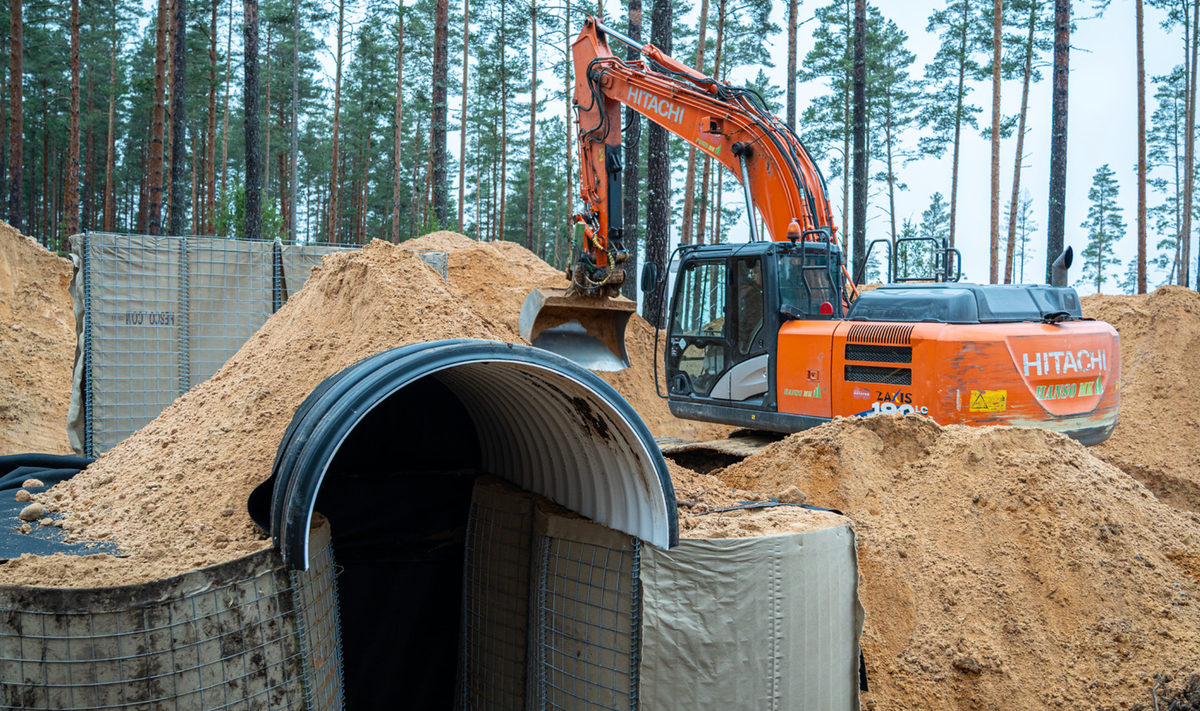
Estonia is moving forward with a major procurement of up to 600 reinforced concrete military bunkers along its eastern border after the country's Supreme Court declined to hear an appeal filed by Swedish defense company Nordic Shield Group AB.
The decision, issued on October 26, 2026, allows the Estonian Centre for Defence Investments (RKIK) to resume the competitive procurement process, with a contract potentially being signed as early as March 2027. The bunkers form a central component of the Baltic Defence Line, a joint initiative by Estonia, Latvia and Lithuania to strengthen military defenses along NATO's eastern frontier.
Estonia aims to complete the installation of approximately 600 bunkers by the end of 2027. The value of the procurement and the companies expected to receive production contracts have not yet been announced.
Swedish Company's Challenge Focused on ISO Certification
The procurement had been delayed by a legal dispute involving Nordic Shield Group AB, which submitted a joint application with Estonian concrete manufacturer AS Muuga Betoonelement.
The companies challenged their exclusion from the qualification stage of the tender after RKIK determined that Nordic Shield Group had not provided the documentation required to demonstrate compliance with production quality and environmental management standards.
The requirements included ISO 9001 and ISO 14001 certification or equivalent evidence from an independent auditor or accredited certification organization.
Nordic Shield Group argued that its group-wide management system and certifications held by affiliated companies demonstrated compliance with the requirements. However, Estonian procurement authorities and lower courts concluded that the submitted documentation did not adequately establish the applicant's eligibility at the relevant stage of the process.
The dispute reached Estonia's Supreme Court, which declined to consider the company's final appeal on October 26, leaving the earlier court decisions in place.
RKIK Baltic Defence Line project manager Armin Siilivask told Estonian public broadcaster ERR that the agency now intends to continue the procurement according to its planned schedule.
The remaining steps include bidding rounds, negotiations, compliance checks and evaluations before a contract can be awarded.
Concrete Bunkers Designed to Protect Infantry Units
The bunkers are designed to provide protected positions for Estonian military personnel in the event of an attack along the country's eastern border.
According to RKIK, the standard structures will have an internal area of approximately 35 square meters and accommodate around 10 soldiers with their equipment.
Estonia has tested several concrete bunker designs to evaluate their durability, manufacturing requirements and suitability for transport and installation. The country's defense authorities have emphasized protection against artillery fire, including 152 mm ammunition commonly used by Russian forces.
Modular construction is an important consideration because prefabricated concrete elements can be transported and assembled more efficiently than complete structures.
The military aims to balance protection with practical requirements for moving and installing heavy components in forested and remote border areas.
The project also includes anti-tank ditches, concrete obstacles, barbed wire and other counter-mobility measures intended to slow an attacking force and support defensive operations.
Estonia began installing its first bunkers in southeastern Estonia in December 2025. An initial phase covers 28 structures, while the larger procurement will support the rollout of the remaining defensive positions.
Latvia Has Also Expressed Interest in Joint Procurement
The procurement has implications beyond Estonia.
In February 2026, RKIK announced that Latvia had expressed interest in participating in the bunker acquisition program, potentially allowing the neighboring countries to coordinate orders and reduce manufacturing costs through larger production volumes.
The proposed arrangement involves companies capable of manufacturing significant quantities of reinforced concrete structures and delivering them to designated storage locations.
Any Latvian participation remains dependent on the final procurement arrangements.
The wider Baltic Defence Line was agreed upon by Estonia, Latvia and Lithuania in January 2024. Each country is responsible for developing its own fortifications in accordance with national defense plans, while coordinating requirements with regional partners.
Estonia's program is concentrated in the northeastern and southeastern parts of the country, where defensive positions are being developed alongside natural obstacles and existing military infrastructure.
In October, AdriaDefense reported on Estonia's cooperation with Ukraine, including discussions on applying Ukrainian battlefield experience to defensive fortifications.
Estonia is also strengthening its permanent military presence near the border. As AdriaDefense reported in June, authorities are preparing a new military town in Narva to support troop deployment and military infrastructure in the eastern border region.
Contract Award Targeted for March 2027
With the legal challenge no longer preventing the procurement from proceeding, RKIK intends to complete the remaining tender procedures and select a supplier.
The agency has identified March 2027 as a possible contract signing date, although that remains dependent on negotiations and the evaluation of eligible bids.
For concrete manufacturers and companies specializing in prefabricated military infrastructure, the procurement represents a significant production opportunity within the Baltic region's expanding defense construction sector.
The next major milestone will be the conclusion of negotiations and the selection of the companies responsible for producing the bunkers.
Sources: Estonian Centre for Defence Investments; Estonian public broadcaster ERR, October 26–27, 2026; Tallinn Circuit Court procurement ruling, September 25, 2026.