EU Approves Five Defense Projects, Opens €325M Funding Path
The EU Council approved five joint defense projects covering drones, air defense, maritime security, space and the eastern flank. A €325 million funding pool is available under EDIP.

The Council of the European Union approved five European Defence Projects of Common Interest on September 28, clearing a path to EU funding for joint work on drones, maritime security, space, air and missile defense, and the eastern flank. The European Commission has set aside €325 million under the European Defence Industry Programme, or EDIP, to help establish and deploy projects in this category. The Council’s decision identifies the projects and makes them eligible for funding; it does not award €325 million in contracts to defense companies.
Five projects cover drones, sea, space and air defense
The Council’s approved list includes Drone and Counter-Drone European Resolve, known as DECODER, and Eastern Flank Watch. It also includes Integrated Maritime and Seabed Defence, a project called SPACE, and EU Federated Integrated Air and Missile Defence including Early Warning. These are collaborative programs for participating countries, rather than five purchases of specified equipment.
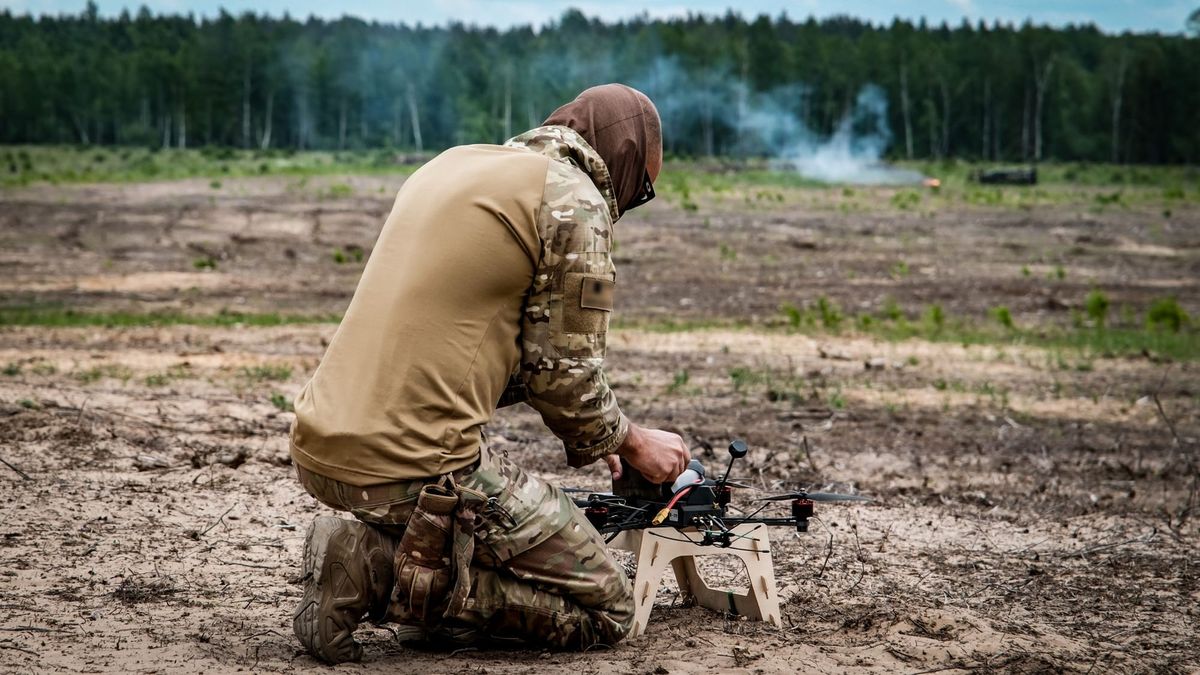
DECODER aims to coordinate the development, expansion of production and deployment of drone and counter-drone capabilities. The Commission’s project annex also envisages joint procurement and a European network of drone technology hubs for testing. Its participation list includes 26 EU member states, among them Bulgaria, Croatia, Czechia, Estonia, Poland and Romania, as well as Norway and Ukraine.
The maritime project covers surveillance, naval and underwater capabilities, including protection of seabed infrastructure. SPACE addresses capabilities such as missile-launch warning, satellite communications and intelligence gathering. The air and missile defense project seeks to connect national sensors, weapons and command systems through a shared architecture. Each still requires implementation work before the planned capabilities can be delivered.
Eastern Flank Watch includes six initial capability areas
Eastern Flank Watch is the most geographically focused project for Central and Eastern Europe. The Commission’s annex lists Estonia, Latvia, Lithuania, Poland, Romania, Czechia and Slovakia among its participating EU countries, alongside other member states, Norway and Ukraine. Participation identifies countries in the project; it does not establish where contracts or production work will go.
The annex sets out six initial capability areas: ground combat, drone defense, command and surveillance systems, measures that restrict enemy movement, military mobility, and air and missile defense. It envisages common procurement, expansion of production capacity, and testing and training. This gives Eastern Flank Watch a broader scope than a border surveillance system alone.
The €325 million is an initial EU funding allocation
EDIP is a €1.5 billion EU program, with €325 million allocated to support the establishment and deployment of European Defence Projects of Common Interest. The Commission proposed these five projects in July after member states submitted nine proposals. Monday’s Council decision completes their formal identification and allows them to seek support through the program’s funding procedure.
The planned scale of the projects is much larger than this initial EU allocation. For example, the Commission’s annex estimates the overall financial size of Eastern Flank Watch at €60 billion to €100 billion by 2036. That figure is a project estimate, not an approved EU grant or a signed procurement total. As AdriaDefense’s guide to European defense funding explains, EDIP grants operate differently from loans under the separate SAFE instrument.
The next test is implementation: participating countries must turn the broad capability plans into funded work, industrial partnerships and procurement decisions. The Council announcement does not name winning manufacturers or provide delivery schedules for the five projects.