F-35 Fever: Why 13 European Air Forces Bought the Same Jet
Thirteen European air forces have ordered the F-35, from Poland to a Portuguese withdrawal. A look at why the stealth fighter became NATO's default choice, and why Europe's own sixth-generation alternative just collapsed.

Quick facts
- At least 13 European air forces have ordered the F-35, totaling close to 700 aircraft
- Portugal shelved its planned purchase in 2025; Spain shelved its own indefinitely in August 2025
- Europe's flagship sixth-generation alternative, FCAS, formally collapsed in June 2026
- The rival GCAP program (United Kingdom, Italy, Japan) targets service entry in 2035, leaving a capability gap through the early 2030s
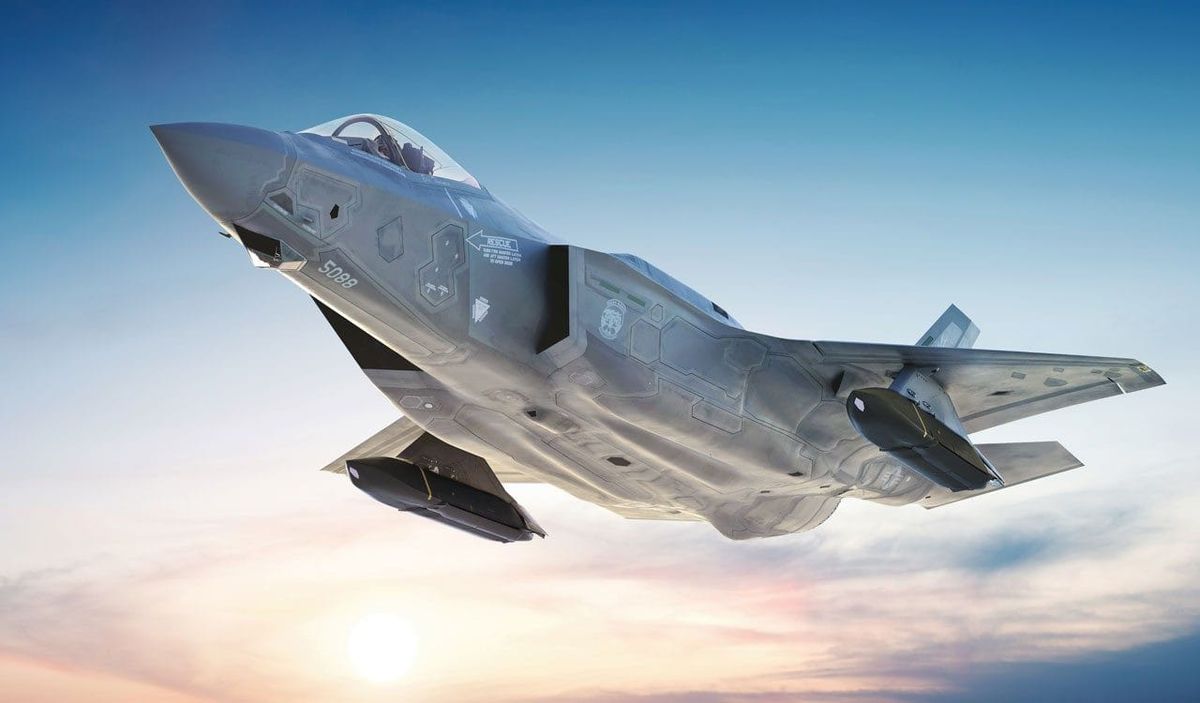
When Poland marked Armed Forces Day on August 15 with the largest military parade in its history, more than 60 aircraft flew over Warsaw. Among them were F-35 Lightning II stealth fighters, the newest addition to a Polish Air Force building toward 32 total jets by 2032. Poland is not an outlier. It is one of at least 13 European air forces that have committed to the same American-built fighter, collectively ordering close to 700 aircraft across a continent that, on paper, prizes strategic autonomy above almost everything else.
How Many European Countries Fly the F-35?
The list reads like a roll call of NATO's eastern and northern flank: the United Kingdom (138), Italy (115), the Netherlands (57), Finland (64), Norway (52), Denmark (27 growing to 43), Belgium (34 growing to 45), Switzerland (up to 36), Germany (35), Poland (32), Romania (32), the Czech Republic (24), and Greece (20 ordered, with plans to expand toward 40). Add Israel, Japan, South Korea, and Singapore outside Europe, and the F-35 program now spans 20 countries, making it the most widely adopted fighter jet program since the F-16.
Why the F-35 Won by Default
The F-35's dominance reflects what is not available more than what it offers. It is the only fifth-generation stealth fighter in full-rate production and open to European export customers. The Eurofighter Typhoon and Saab Gripen E are capable 4.5-generation aircraft, but neither carries the low-observable airframe and sensor-fusion architecture that European air staffs increasingly treat as a baseline requirement.
The Eurofighter has lost F-35 tenders in Belgium, Finland, Switzerland, and the Czech Republic in succession. Gripen fared little better: Sweden's own jet found only a handful of export customers even as its manufacturer, Saab, made an aggressive final pitch in the Czech Republic, offering Prague a free extension of its leased Gripen C/D fleet if the government also ordered new Gripen Es. The Czech Ministry of Defense went with the F-35 anyway, and its own published figures explain why: procuring 24 Gripen Es would have cost 128 billion koruna against 106 billion for the F-35, even before accounting for the capability difference.
Is There Really a "Kill Switch"?
The F-35's stealth performance depends on classified Mission Data Files, built and controlled by the United States, that calibrate the aircraft's sensors against specific threat signatures. Software updates, spare parts logistics, and much of the maintenance ecosystem flow through the same US-controlled channels, even for aircraft assembled on European soil.
That dependency became a live political issue in 2025, when online claims of a remote "kill switch," supposedly letting Washington disable allied jets, spread widely enough that the F-35 Joint Program Office issued a formal denial: "There is no kill switch." Lockheed Martin and the Pentagon have repeated that position consistently since. The specific technical claim was almost certainly false. The anxiety behind it, that European air power runs on American software, American parts, and American goodwill, was not.
Why Did Portugal and Spain Say No?
Most European buyers absorbed that anxiety and kept ordering. Two governments did not. Portugal's defense ministry shelved its planned F-35 purchase in 2025, with then-Defense Minister Nuno Melo citing the "reliability of allies" directly and pointing the country's air force toward European alternatives instead. Spain went further, shelving its own F-35 ambitions indefinitely in August 2025 over what its government described as unacceptable dependency on US oversight of the aircraft's code and parts supply.
Canada has taken a middle path. It remains contractually committed to at least 16 F-35As for pilot training at Luke Air Force Base while formally reviewing the remainder of its planned 88-jet order, and in July 2026 became the first observer nation admitted to a rival sixth-generation fighter program.
What Happened to Europe's Own Stealth Fighter?
That rival program, the UK-Italy-Japan Global Combat Air Programme (GCAP), is now the only serious non-American path to a next-generation stealth fighter still standing. Its Franco-German-Spanish counterpart, the roughly €100 billion Future Combat Air System (FCAS), formally collapsed in June 2026 after nine years and an estimated €4 billion in joint spending.
The proximate cause was an industrial dispute between France's Dassault Aviation and Germany's Airbus over who would lead development of the aircraft itself. The underlying rift ran deeper: France wanted a nuclear-capable, carrier-launched aircraft built around Dassault's own design philosophy, while Germany and Spain favored a more collaborative, NATO-integrated program closer to the Eurofighter model. Mediation efforts broke down in April 2026, and German Chancellor Friedrich Merz confirmed the program's termination at the ILA Berlin air show two months later.
GCAP, by contrast, has kept moving. The UK committed £8.6 billion to the program in its 2026 Defence Investment Plan, Italy's parliament approved €8.8 billion of its own, and the three founding partners are targeting a demonstrator flight in 2027 and service entry by 2035. That timeline still leaves roughly a decade in which any European air force wanting a genuine stealth fighter has exactly one supplier.
What It Means for CEE Air Forces
For Poland, the Czech Republic, Romania, and other CEE states now flying or awaiting F-35s, the sovereignty debate is largely academic in the near term. None of them are party to GCAP or FCAS, and none has the industrial base to build a credible national alternative on its own. The calculus has been straightforward: Russia's war against Ukraine created an urgent capability gap, the F-35 is the only fifth-generation jet actually available for delivery this decade, and the reputational cost of buying American has so far been outweighed by the operational cost of not fielding stealth aircraft at all.
That calculus could shift. If GCAP produces a credible export version by the mid-2030s, or if a successor to FCAS emerges from the wreckage of the Dassault-Airbus dispute, CEE air forces facing their next fleet decision, replacing aging MiG-29s, early-block F-16s, or first-generation F-35s, will have an alternative that Portugal and Spain currently lack. Until then, the F-35 remains what it has been since Belgium's original 2018 selection: not necessarily the aircraft every European government wants, but the only one most of them can actually buy.