Germany Names Christian Freuding Next Bundeswehr Chief
Germany appoints Christian Freuding as the next Bundeswehr chief, bringing a Ukraine-focused commander to the top military post in February 2027.


Germany has selected Lieutenant General Christian Freuding as the next Inspector General of the Bundeswehr, placing an officer closely associated with military assistance to Ukraine and the modernization of German ground forces on course to become the country's highest-ranking soldier.
Defense Minister Boris Pistorius announced the appointment on November 5. Freuding, currently Inspector of the German Army, will succeed General Carsten Breuer in February 2027, ahead of Breuer's move to become chairman of NATO's Military Committee later that year.
The appointment comes as Germany reorganizes its armed forces around territorial defense, NATO commitments and lessons drawn from Russia's war against Ukraine.
From Ukraine military assistance to Germany's top military post
Freuding became Inspector of the Army in October 2025 after holding senior positions in the German Defense Ministry.
Following Russia's full-scale invasion of Ukraine in 2022, he led the ministry's Ukraine special task force, coordinating Germany's military assistance to Kyiv and overseeing work connected to the transfer of weapons and equipment.
He subsequently headed the ministry's planning and command staff, a position that placed him close to Germany's military modernization priorities.
His experience with Ukraine has become an important part of his professional profile. German officials have repeatedly emphasized the need to incorporate lessons from the battlefield, particularly the growing importance of unmanned systems, electronic warfare, precision weapons and faster technological adaptation.
Pistorius pointed to Freuding's ability to translate those developments into concrete changes within the Bundeswehr.
Drone warfare and long-range weapons shape his agenda
Since taking command of the Army, Freuding has supported the introduction of new capabilities intended to make German ground forces more effective in a high-intensity conflict.
Among the initiatives highlighted by Pistorius is the establishment of the Army's first dedicated drone regiment, reflecting the growing role of unmanned aircraft in reconnaissance, targeting and battlefield operations.
Freuding has also advocated expanding Germany's long-range strike capabilities.
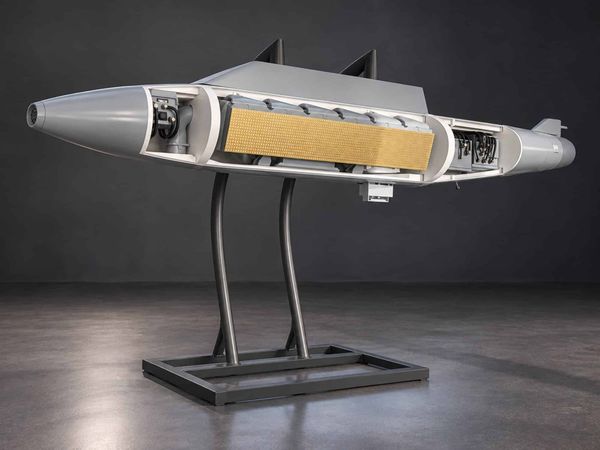
As AdriaDefense reported in October, the German Army is evaluating commercially available, lower-cost cruise missiles with ranges of approximately 1,500 kilometers. The proposed procurement would complement Germany's existing and planned precision-strike weapons.
No final supplier selection or procurement quantity has been announced for that program.
Freuding's appointment does not automatically determine the outcome of those acquisitions, but his previous role in advancing them provides an indication of the operational capabilities he considers important.
Leadership change as Germany expands its NATO role
Freuding will take over from Breuer as the Bundeswehr faces pressure to increase readiness, strengthen personnel numbers and develop the military capabilities required for collective defense.
Breuer, who has led Germany's armed forces since 2023, has been selected to chair NATO's Military Committee, the alliance's highest military authority.
The transition will therefore place German officers in two influential positions: Freuding at the head of the Bundeswehr and Breuer at the top of NATO's military advisory structure.
Freuding will inherit a force undergoing structural transformation, with major questions concerning recruitment, equipment availability, industrial production and the speed of procurement.
His appointment signals continuity in Berlin's effort to apply lessons from Ukraine to Germany's military planning.
The more consequential test will come after February 2027, when Freuding becomes responsible for coordinating modernization across the entire Bundeswehr rather than the Army alone.