How Defense Is Pulling Workers From Tech and Auto in 2026
From laid-off German autoworkers to Silicon Valley engineers chasing Anduril paychecks, the defense industry is pulling talent from every direction in 2026. AD looks at what's driving the shift and what it means for CEE/SEE.


Rheinmetall received 257,000 job applications globally last year, up from 180,000 in 2023. It is on pace to clear 275,000 by the end of 2026. Meanwhile, one voivodeship over from where AdriaDefense covered WZL-2's Barracuda hiring wave, Anduril is filling roughly 2,090 open roles worldwide, with 736 of them posted in the last month alone. The defense industry is not just growing in 2026. It is actively pulling workers away from other sectors, and the pattern looks different depending on which side of the Atlantic you are watching.
The Auto Industry's Loss Is Defense's Gain
Nowhere is the shift more visible than in Germany. The country's automotive sector employed around 725,000 people by the end of 2025, a 6.2 percent drop from the year before and the lowest figure in fourteen years. Since 2019, the industry has lost roughly one in seven jobs, and the German Association of the Automotive Industry now projects up to 225,000 more positions could disappear by 2035.
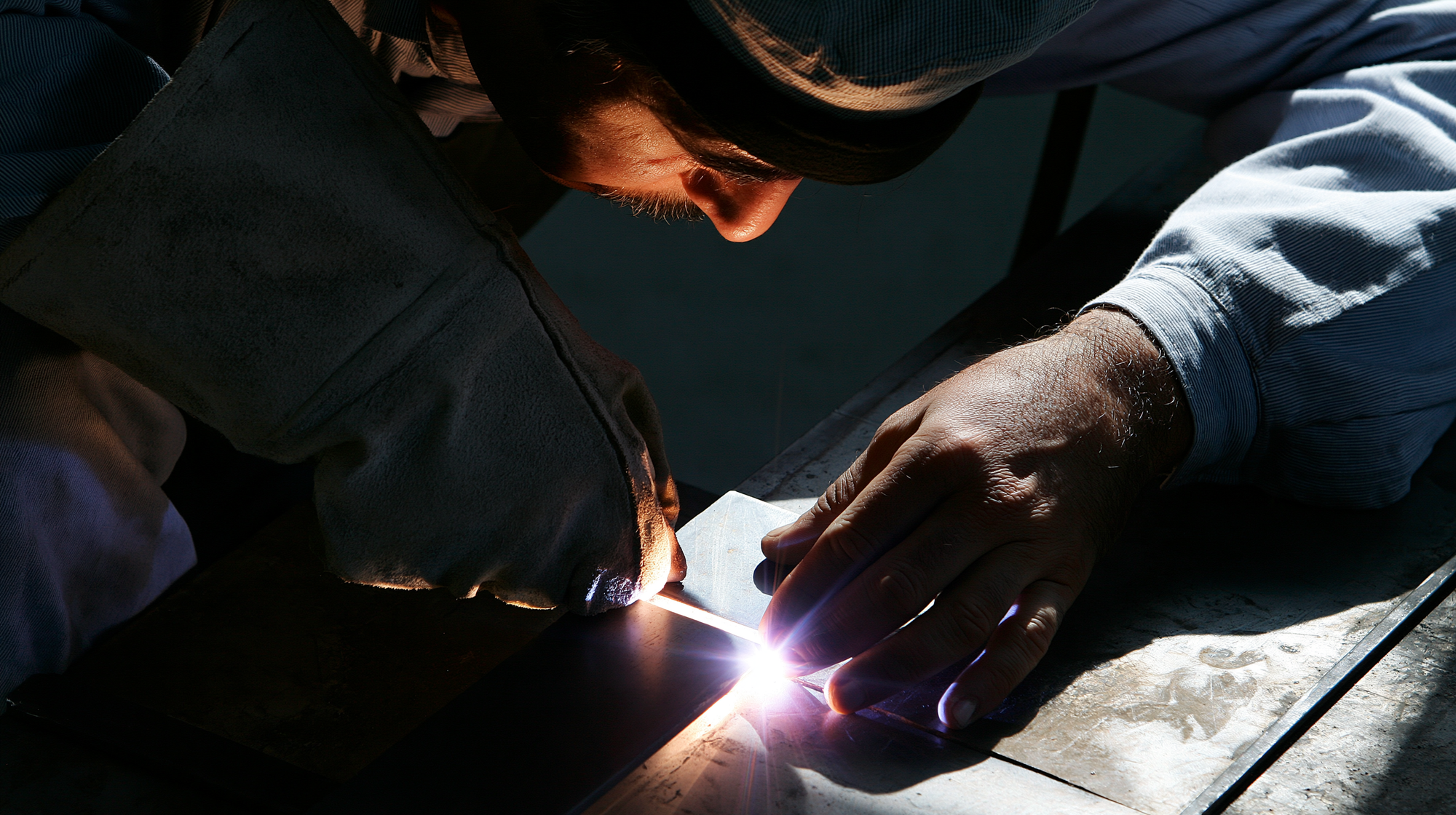
Rheinmetall is absorbing a meaningful share of that displaced workforce directly. The company's head of global human resources operations, Monica Wertheim, said Rheinmetall is now actively drawing from the pool of workers laid off by carmakers and other large employers to staff its expansion. The company plans to advertise roughly 8,000 jobs in 2026, about 8 percent more than last year, with half of those newly created rather than backfilled. It is hiring electrical and mechanical engineers, software developers, and project managers, alongside skilled blue-collar roles such as machine operators, welding technicians, and aircraft mechanics, many of the same job families the automotive sector is shedding.
The conversions are sometimes literal. Rheinmetall transformed Pierburg GmbH, a longtime automotive supplier in Berlin-Wedding, into Rheinmetall Waffe Munition GmbH, phasing out car parts production in favor of machining artillery shell casings, a transition completed by mid-2026. Volkswagen has held talks with Israel's Rafael to produce support components for Iron Dome, including transport trucks, launch units, and power generators, at its Osnabrück plant as the T-Roc Cabriolet nears the end of its production run. Elsewhere, Hensoldt plans to hire up to 3,000 people over the next twelve months, Munich-based drone maker Helsing is adding roughly 50 staff a month, and Quantum Systems intends to bring on more than 200 specialists in 2026, explicitly including candidates from the automotive industry.
Silicon Valley Discovers Defense
In the United States, the pull is coming from a different direction entirely. Defense tech firms including Anduril, Shield AI, Saronic, and Chaos Industries have collectively raised billions in fresh funding, with manufacturing-focused defense investment reaching 4.7 billion dollars across 39 deals in 2025. Anduril alone carries a valuation of 30.5 billion dollars, and its total compensation packages reach as high as 340,000 dollars for senior engineering roles.
Recruiters describe the effect as "prime-poaching," engineers leaving established contractors such as Lockheed Martin for faster-moving startups. Defense hardware companies now post about 50 percent more unique roles per company than software startups, a reflection of how much more staffing a physical product line requires beyond code, including embedded firmware engineers, mechanical engineers, and forward-deployed engineers who work directly alongside military end users. One notable advantage these firms hold over traditional primes: most open roles do not require an active security clearance on day one, with sponsorship happening after hire, a workaround for processing times that now stretch to roughly nine months for a Top Secret clearance.
Why Now
Several forces are converging at once. The war in Ukraine reshaped public perception of defense work in a way few industries have experienced this quickly. Wertheim noted that Rheinmetall's reputation shifted from a company some job seekers questioned to one they now actively pursue, a direct consequence of the company's role supplying Ukraine.
Capital markets have followed the same path. The European Union's Defence Readiness Omnibus, formalized through a June 2025 Commission Notice, clarified that defense activities can now qualify for ESG-linked financing provided they exclude prohibited weapons and meet transparency requirements, reversing years of exclusion from sustainable finance frameworks. That shift matters for hiring too. Younger workers who once avoided defense on ethical grounds now weigh it against a labor market where, according to Deloitte's 2026 Gen Z and Millennial survey, stability and skills development rank above fast-paced growth as top priorities, criteria defense manufacturers with multi-year order backlogs are well positioned to offer.
The CEE Version of the Same Story
The pattern showing up in Germany's auto sector has a direct parallel in Poland. As AD reported, WZL-2 in Bydgoszcz is retooling from aircraft maintenance toward Barracuda-500M missile assembly under its agreement with PGZ and Anduril, and its current job listings already show the transition taking shape, from CNC operators to a designer-programmer role specifically seeking unmanned aerial vehicle autopilot experience. [previous AD coverage of WZL-2 Bydgoszcz hiring]
The regional dynamics differ from Germany's in one important way. CEE labor markets are tighter and smaller, and EU-wide salary transparency directives are pushing companies to post clear wage ranges earlier in the hiring process, a shift already visible in Croatian and Polish job postings this year. For CEE defense manufacturers competing against Western European primes offering German-scale compensation, transparent pay bands and the promise of multi-year contracted work may end up being the more persuasive pitch than raw salary numbers alone.
What Comes Next
Whether the source is a shuttered auto plant in Osnabrück or a laptop in Palo Alto, the direction of travel is the same. Defense manufacturers are no longer just competing with each other for talent. They are competing with, and increasingly winning against, entire industries that used to consider themselves unrelated. For CEE/SEE companies watching WZL-2's job postings fill in over the coming months, the German and American experience suggests the hiring wave, once it starts, tends to accelerate rather than plateau.