Hungary After Orbán: What Magyar's Election Victory Means for the Defense Industry and Ukraine
Viktor Orbán has conceded defeat after 16 years in power. For Hungary's defense industry, the Rheinmetall partnerships and Zrínyi 2026 procurements will survive, and may accelerate under a more Brussels-compatible government. For Ukraine, the blocked €90 billion EU loan should now move.

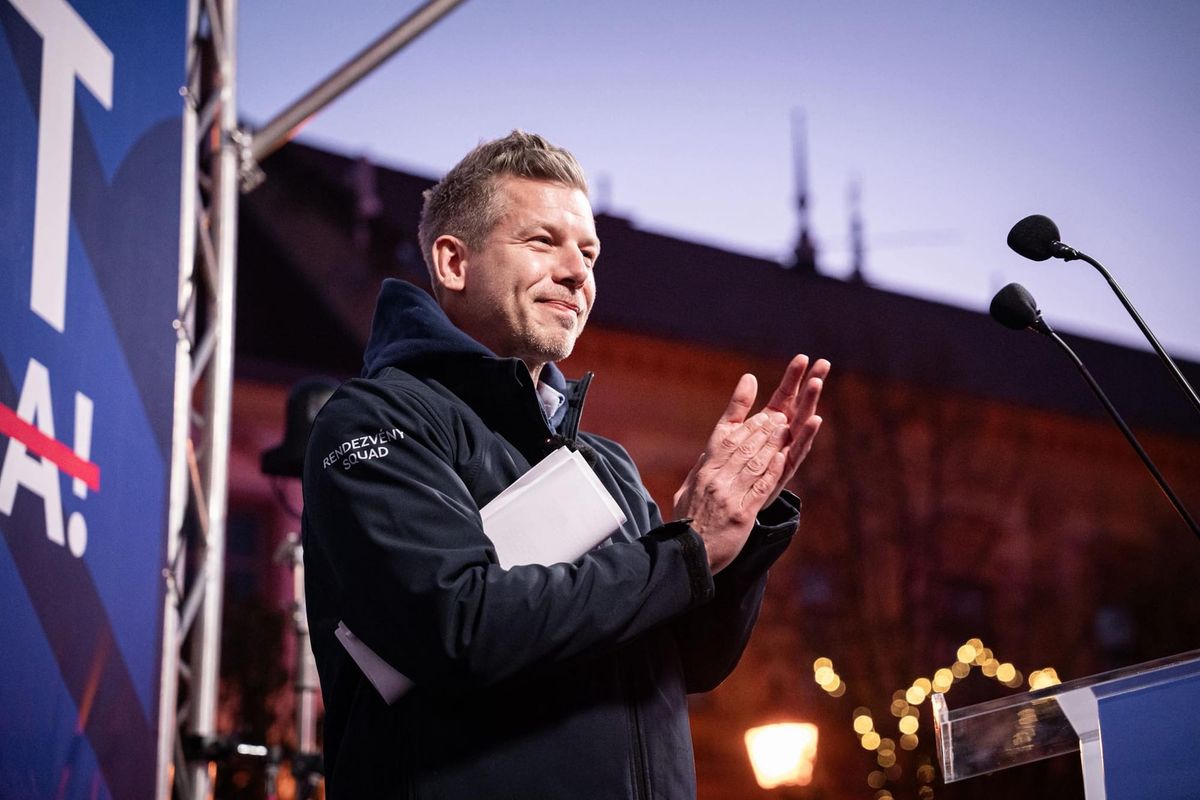
In a seismic shift that will reverberate far beyond Budapest, Viktor Orbán has conceded defeat in Hungary's parliamentary election after 16 uninterrupted years in power. Opposition leader Péter Magyar and his centre-right Tisza party secured a landslide victory on April 12, with partial results showing Tisza at over 52 percent of the vote to Fidesz's 38 percent and a projected supermajority of more than 130 seats in the 199-seat National Assembly.
It is the most consequential election in Central European security politics in more than a decade. For the defense sector, for Hungary's position within NATO, and for the trajectory of the Ukraine war, the implications are immediate and far-reaching.
The End of Orbán's Defense Paradox
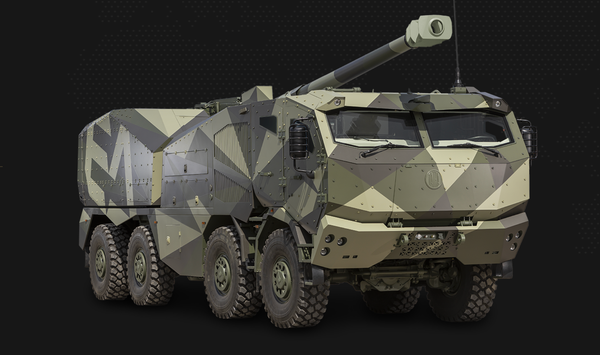
Orbán's legacy on defense was deeply contradictory. On one hand, his government launched the most ambitious Hungarian rearmament programme since the Cold War, the Zrínyi 2026 initiative, transforming a military that had fallen below one percent of GDP in spending to a force now approaching NATO's two-percent benchmark. His government signed a landmark contract for 218 Rheinmetall Lynx KF41 infantry fighting vehicles, with 176 units to be produced domestically at the Zalaegerszeg joint venture. Hungary acquired Leopard 2A7+ tanks, PzH 2000 self-propelled howitzers, NASAMS air defense systems, Airbus H145M and H225M military helicopters, and domestically manufactured CZ BREN 2 rifles. Rheinmetall established Hungary as a key production hub, opening a major hybrid civil-defense plant in Szeged in December 2025. Swiss ammunition firm Saltech followed.
The ambition was explicit: as recently as 2021, then-Minister of Innovation László Palkovics declared Hungary would become "a major regional player" in defense industry by 2030, with the government targeting the status of Central Europe's leading defense manufacturing and R&D hub.
On the other hand, Orbán systematically blocked Ukraine support at the EU level. Hungary vetoed a €90 billion EU loan to Kyiv, repeatedly obstructed financial aid packages, opposed Ukraine's fast-track EU accession, and according to leaked diplomatic transcripts published just days before the vote, allegedly allowed senior officials to share EU deliberation contents with Moscow. For Orbán, a booming domestic defense sector and a pro-Kremlin foreign policy coexisted without apparent contradiction. The business was good; the geopolitics served a separate agenda.
Magyar's victory breaks that equation.
What Tisza Has Actually Promised and What It Hasn't
Reading Tisza's defense and foreign policy platform soberly is essential. Magyar is not a hawk on Ukraine, and his party has been careful, strategically so, not to hand Orbán the narrative that a Tisza government would drag Hungary into the war.
Key Tisza commitments and constraints:
- No arms to Ukraine. Tisza has explicitly ruled out sending Hungarian weapons or soldiers to Ukraine. This is a firm red line, maintained throughout the campaign.
- No conscription. Despite Fidesz-amplified (and Russian disinformation-linked) claims to the contrary, Tisza's manifesto explicitly rules out reinstating mandatory military service.
- Pro-NATO and pro-EU realignment. Magyar has pledged to rebuild trust with NATO and EU allies, a marked shift from Orbán's eastward tilt. Tisza has committed to eurozone accession by 2030.
- Ukraine's EU accession: cautious, not blocking. Unlike Orbán, Magyar has not said he opposes Ukraine's membership altogether, but his party proposes a binding national referendum on the question, and has voted against fast-tracking accession in the European Parliament.
- Russian energy: gradual decoupling. Magyar has committed to reducing Hungary's dependence on Russian fossil fuel imports, but his proposed timeline stretches to 2035, well behind the EU's 2027 target. Hungary's energy exposure to Moscow remains a fundamental constraint on any government's room for manoeuvre.
The picture is one of cautious pro-Western reorientation rather than a clean break. Analysts at the German Marshall Fund describe the likely shift as a change in tone and diplomatic posture, less confrontational, more cooperative, rather than a wholesale foreign policy transformation. The European Policy Centre notes that on Ukraine, Tisza's manifesto is "notably thin," and that expectations should be "calibrated accordingly."
The Strategic Defense Industry Question: Continuity or Disruption?
Here, the prognosis is more clearly positive. The structural investments made under Zrínyi 2026 are embedded in long-term industrial partnerships with Rheinmetall, Airbus, KNDS/KMW, and others. These are not politically reversible. The Lynx production line in Zalaegerszeg is operational. The Szeged electronics plant is open. The joint venture structure, formalised through the 4iG-controlled N7 Holding, which consolidates nine Hungarian defense firms, is now being partially privatised, with Rheinmetall itself holding a 25.12 percent stake in 4iG.
A Magyar government is unlikely to, and has no incentive to, unwind these investments. In fact, a more cooperative posture within the EU and NATO could accelerate Hungary's access to European defense funding mechanisms, including the ReArm Europe programme and the European Defense Fund. Under Orbán, Hungary's rule-of-law violations saw €18 billion in EU cohesion funds frozen. A Magyar government that unlocks those funds, and is seen as a credible partner in Brussels, may find greater access to EU co-financing for defense R&D and production capacity.
The critical variable is the N7 Holding privatisation process, expected to be finalised by September 2026. The political transition may cause some short-term uncertainty in the completion of this transaction, but the underlying industrial logic, a public-private partnership model with Rheinmetall as anchor investor, is sound and likely to survive the change of government intact.
Implications for Ukraine and the Broader CEE Security Architecture
For Kyiv, a Magyar government represents a meaningful but measured improvement. The most immediate and concrete impact: Hungary will likely drop its veto on the blocked €90 billion EU loan to Ukraine. Orbán had conditioned the veto, in part, on the resumption of Druzhba pipeline oil deliveries, a leverage play that a Tisza government has no interest in replicating.
Beyond the immediate financial unblocking, a Hungary no longer acting as Moscow's institutional proxy in Brussels removes a structural obstruction from EU foreign and security policy. Decisions requiring unanimity, from sanctions packages to security assistance, will become meaningfully easier to pass. As the Council on Foreign Relations noted, Hungary's willingness to weaponise EU veto power had already exposed deep vulnerabilities in the bloc's institutional architecture.
For the Western Balkans and Southeast Europe, AdriaDefense's core coverage area, Hungary's reorientation matters in specific ways. Budapest has historically been a swing actor in Western Balkans EU integration dynamics. Under Orbán, Hungarian positions frequently aligned with Serbian and other Eurosceptic agendas in ways that complicated the accession trajectories of North Macedonia, Bosnia-Herzegovina, and others. A more genuinely pro-EU Budapest may create modestly better conditions for the region's integration path.
Risk Factors and Open Questions
Several uncertainties remain that the defense and security community should watch closely:
1. Can Tisza govern effectively? Even with a projected supermajority, Magyar inherits a state apparatus deeply embedded with Fidesz loyalists, a media environment dominated by pro-Orbán outlets, and an economic elite built around the outgoing government's patronage networks. Governing will be harder than winning.
2. The energy leverage constraint. Hungary's dependence on Russian gas and oil via the Druzhba pipeline is not solved by a change of government. Until alternative supply routes are established, a process that takes years, any Hungarian government's ability to take maximally tough positions on Russia will be limited.
3. Domestic pushback on Ukraine policy. Russian disinformation operations, extensively documented in the campaign period, have seeded genuine public anxiety about Hungary being drawn into the war. A Magyar government will face domestic political costs if it is perceived as moving too quickly toward Ukraine support.
4. The defense spending trajectory. With NATO allies now seriously discussing moving toward 5 percent of GDP in defense spending, a figure flagged at the upcoming Hague summit, Hungary will face pressure to increase its military budget. Magyar has not yet articulated a clear position on this target.
Bottom Line
Viktor Orbán's departure from power closes one of the most disruptive chapters in European security politics. For Hungary's defense industry, the underlying infrastructure, the Rheinmetall partnerships, the Zrínyi 2026 procurements, the N7 Holding structure, will almost certainly continue and may even benefit from improved EU funding access under a more Brussels-compatible government.
For Ukraine, the change is real but bounded. Expect the blocked EU loan to move. Expect Hungary to cease its institutional obstruction role within the EU. Do not expect Hungarian weapons deliveries to Kyiv or a rapid pivot away from Russian energy.
For the CEE security architecture more broadly, this is a net positive: Hungary returns to the Western orbit as a functioning partner rather than a structural spoiler. The defense industry investment logic, built on Western platforms, Western partnerships, and Western capital, has been validated. The geopolitical alignment of the government that hosts it is now, finally, consistent with that investment.
AdriaDefense covers defense, security, and geopolitics across the Western Balkans, CEE, and SEE. For media partnerships, analyst contributions, or sponsorship enquiries, contact us at info@adriadefense.com