Latvia Launches Operation Werewolf on Eastern Border
Latvia launched Operation Werewolf through August to reinforce its eastern border with more personnel, drones and interagency security coordination.


Latvia launched Operation Vilkatis, or Operation Werewolf, on August 11 to reinforce security along its eastern border amid increased irregular migration from Belarus. The operation will run through the end of August and combines border guards, police, intelligence services and the National Armed Forces in a coordinated effort against illegal crossings and the networks supporting them.
Riga is treating the pressure as more than an immigration enforcement problem. The Latvian government has linked irregular migration from Belarus to a wider hybrid security challenge affecting the external borders of both NATO and the European Union.
Latvia brings military and intelligence assets into border operation
Operation Werewolf expands coordination between the State Border Guard, State Police, National Armed Forces and Latvian security and intelligence agencies.
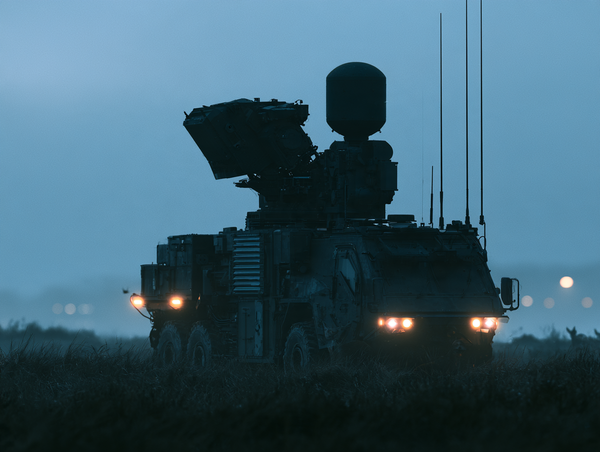
The operation includes additional personnel and more intensive surveillance of Latvia’s eastern frontier. Authorities plan to increase the use of unmanned aerial vehicles while strengthening checks on roads and other routes that could support movement away from the border area.
The Latvian government is also targeting the logistics behind irregular migration. Authorities want to identify organizers, transportation networks and support points inside Latvia rather than concentrating exclusively on individuals crossing the physical border.
That approach gives Operation Werewolf a wider geographic scope than conventional frontier patrols. Security services can use information collected at the border to identify networks operating farther inside Latvian territory.
The operation is scheduled to continue until the end of August. Latvian authorities have not presented it as a permanent replacement for existing border-security arrangements.
Underground tunnel highlights pressure on Belarus frontier
The operation began as Latvian authorities investigated an underground tunnel crossing the border with Belarus.
Latvian border guards discovered the tunnel after 15 people used it to enter the country. Reuters reported that the discovery intensified government concerns about organized networks facilitating crossings and prompted authorities to emphasize stronger coordination among the Border Guard, police, military and security services.
Lithuania has also encountered a tunnel associated with migrant crossings from Belarus, adding a cross-border dimension to the methods being used against Baltic frontier controls.
Latvia plans to coordinate its response with Estonia, Lithuania and Poland. The objective includes addressing both crossings of the EU external border and subsequent movement toward other European countries.
The regional element matters because Latvia cannot address secondary migration solely at its frontier with Belarus. Once individuals enter Schengen territory, the security challenge can extend into neighboring states.
Eastern Latvia already has an expanding military presence
Operation Werewolf comes as Latvia separately increases military capabilities along its eastern frontier in response to unmanned aircraft incidents and broader concerns about Russia.
The National Armed Forces began deploying mobile drone-interceptor teams toward the Russian border earlier this year. The units use 4x4 vehicles and interceptor drones, including systems supplied by Latvian manufacturers Origin Robotics and Eraser.
Latvia has also been developing plans for more persistent counter-drone coverage. Prime Minister Andris Kulbergs said in June that counter-drone systems would begin operating along Latvia’s borders with Russia and Belarus during July and August.
The requirement became more visible after repeated drone incidents. On June 8, a French Rafale operating under NATO Baltic Air Policing shot down an unidentified drone after it entered Latvian airspace from Russia.
Latvia’s eastern border with Russia and Belarus extends nearly 400 kilometers, creating a significant surveillance and personnel requirement for a country with a population of less than two million. Defense News reported in May that achieving dense drone protection along the entire frontier would require substantial personnel and equipment.
Border security is converging with territorial defense
Operation Werewolf does not place Latvia’s eastern border under military control. Border guards and civilian law-enforcement organizations remain responsible for the core mission, while the armed forces provide additional personnel, surveillance and operational support.
The significance lies in how Riga is combining capabilities traditionally divided between border control, policing, intelligence and territorial defense.
Latvia now faces several distinct security problems along the same eastern frontier: organized irregular migration from Belarus, suspected hybrid activity, smuggling networks and unmanned aircraft entering from the direction of Russia.
At the same time, NATO is strengthening its conventional posture in Latvia. The Canada-led multinational brigade has moved beyond its earlier tripwire role toward a force designed to conduct a credible defense of Latvian territory, including training and establishing positions closer to the eastern border.
Operation Werewolf therefore represents one part of a wider layered approach. Latvia is combining physical border infrastructure and law enforcement with intelligence sharing, drones, counter-drone systems, national military forces and NATO capabilities.
The immediate test will come before Operation Werewolf concludes at the end of August. Latvian authorities will need to determine whether the temporary concentration of personnel and surveillance assets disrupts both illegal crossings and the networks facilitating movement from the Belarusian frontier into the European Union.
What is Latvia’s Operation Werewolf?
Operation Werewolf, officially Operation Vilkatis, is a Latvian security operation launched on August 11, 2026. It coordinates border guards, police, intelligence services and the National Armed Forces to counter irregular migration and associated networks.
How long will Operation Werewolf last?
The operation is scheduled to continue through the end of August 2026. Latvian authorities could adjust their response afterward depending on conditions along the eastern border.
Why is Latvia reinforcing its Belarus border?
Latvia has recorded increased irregular migration from Belarus and considers the pressure part of a wider hybrid security challenge. The discovery of an underground border tunnel has also highlighted the methods available to networks organizing illegal crossings.
How does Operation Werewolf involve Latvia’s military?
The National Armed Forces are supporting civilian border and security agencies with personnel and surveillance capabilities. The operation comes alongside a separate expansion of Latvian counter-drone defenses on the borders with Russia and Belarus.