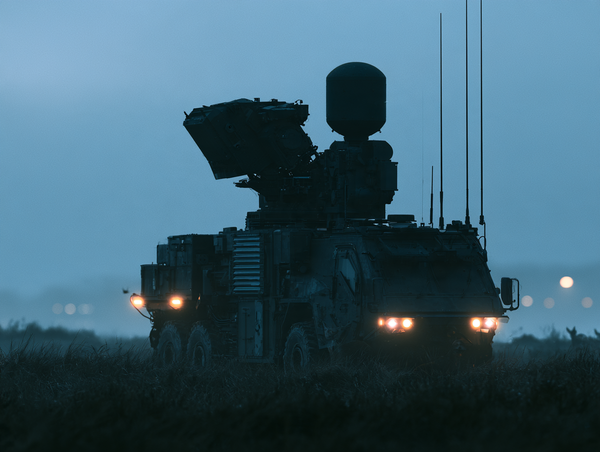
Latvia to Deploy More Air Defense Systems on Eastern Border
Latvia plans additional air defense systems, radars and interceptors along its eastern border as Riga strengthens protection against drone incursions.


Latvia plans to deploy additional air defense systems along its eastern border as the country strengthens protection against drones and other aerial threats. Defense Minister Raivis Melnis said solutions had been identified for near-term deployments, with Riga also seeking additional radars and interception systems.
The decision follows heightened concern over unauthorized aircraft and unmanned aerial vehicles entering Latvian airspace from the east. On June 8, NATO Baltic Air Policing fighters shot down a foreign drone over Latvia's eastern Latgale region after Latvian authorities said Russian electronic warfare had caused the aircraft to enter the country's airspace.
Latvian President Edgars Rinkēvičs has identified air defense as the country's most important current defense capability priority. The government is combining new weapon systems with improved surveillance, command arrangements and civil protection procedures in municipalities near the borders with Russia and Belarus.
Latvia seeks more radars and interceptors for eastern border
The latest plans emerged after a June 25 Military Council meeting and discussions with municipal leaders from Latvia's eastern border region. The National Armed Forces briefed local officials on existing and planned measures for strengthening national defense.
Melnis indicated that the Ministry of Defence is working on additional radar and interception capacity. He acknowledged that Latvia cannot completely eliminate the possibility of another drone crossing its border and identified procurement timelines as one of the constraints on expanding coverage.
The ministry has not publicly identified the additional air defense systems involved in the near-term deployment or disclosed their number. That distinction is important because Latvia is simultaneously developing several layers of ground-based air defense.
Latvia's National Armed Forces Development Plan for 2025-2036 calls for a layered air defense architecture. The initial phase carries an allocation of €650 million, while the government also committed an additional €200 million annually from 2023 through 2027 for strengthening air defense capabilities.
IRIS-T SLM will add Latvia's medium-range layer
Latvia is separately preparing infrastructure and personnel for the introduction of the German-made IRIS-T SLM medium-range air defense system. The Latvian Ministry of Defence signed a €600 million contract with Diehl Defence for IRIS-T SLM in November 2023, with first deliveries scheduled for 2026.
IRIS-T SLM provides an engagement range of up to 40 kilometers, adding a medium-range layer that Latvia previously lacked. Latvia and Estonia pursued the system through a joint Baltic procurement framework, an effort initially presented as a way to strengthen integrated air defense across both countries.
Estonia received its first IRIS-T SLM systems in June 2026, while Latvia is also scheduled to begin receiving its systems this year. Diehl Defence expects production of up to 10 IRIS-T firing units during 2026 and is working toward capacity of as many as 16 units annually within two years, reflecting wider European demand for ground-based air defense.
Latvia also plans to procure RBS 70 NG short-range man-portable air defense systems while upgrading airspace surveillance and supporting domestic counter-unmanned aircraft system development. Together, these programs indicate that Riga is building complementary short-range, medium-range, sensor and counter-drone layers rather than relying on a single interceptor family.
Drone incursions are changing Latvia's border defense priorities
The June 8 drone incident demonstrated why Latvia's eastern airspace has become an immediate operational concern rather than only a long-term procurement issue. NATO fighters had to respond to the aircraft over Latgale while Latvian air defense units were already reinforcing the eastern border.
Riga is consequently addressing both detection and interception. Additional radars can expand situational awareness, while ground-based interceptors provide another response option alongside NATO combat aircraft.
The government is also addressing the command and civil protection side of an air defense incident. Municipalities have been instructed to establish alternative communications that do not depend exclusively on cellular networks, while officials are developing procedures for warnings and coordination during airspace threats.
Ukraine is contributing operational experience to this process. Latvia and Ukraine signed a 10-year defense cooperation agreement on June 9 that includes incorporating lessons from Ukraine into Latvian defense planning, particularly for protecting national airspace and the border.
The immediate deployment of additional systems will therefore precede and complement Latvia's broader IRIS-T SLM buildup. The next significant indicators will be the type and number of systems assigned to the eastern border, the arrival of Latvia's first IRIS-T SLM equipment and the extent to which new sensors and interceptors are integrated into a common air defense network.
Latvia air defense: key questions
What additional air defense systems will Latvia deploy?
Latvia has confirmed plans for additional air defense systems, radars and interception capabilities, but officials have not publicly identified the specific systems or quantities involved in the near-term eastern border deployment.
When will Latvia receive IRIS-T SLM?
Latvia's first IRIS-T SLM systems are scheduled for delivery in 2026. The country has been preparing infrastructure and personnel ahead of their introduction into the National Armed Forces.
Why is Latvia strengthening air defense on its eastern border?
Latvia borders Russia and Belarus and has faced the risk of drones crossing into its airspace during Russia's war against Ukraine. On June 8, 2026, NATO fighters shot down a foreign drone over Latvia's Latgale region after authorities attributed its entry into Latvian airspace to Russian electronic warfare.
How much is Latvia investing in air defense?
Latvia allocated €650 million to the initial phase of layered air defense development. The government also committed an additional €200 million annually from 2023 through 2027 to strengthen air defense capabilities.