NATO Tests Counter-Drone Systems From 20 Defense Companies in Bulgaria
NATO-led special operations exercise BOLD ADRA 26 brought together 20 defense companies and military units from 15 countries to test drone detection, electronic warfare, and counter-UAS capabilities in Bulgaria.

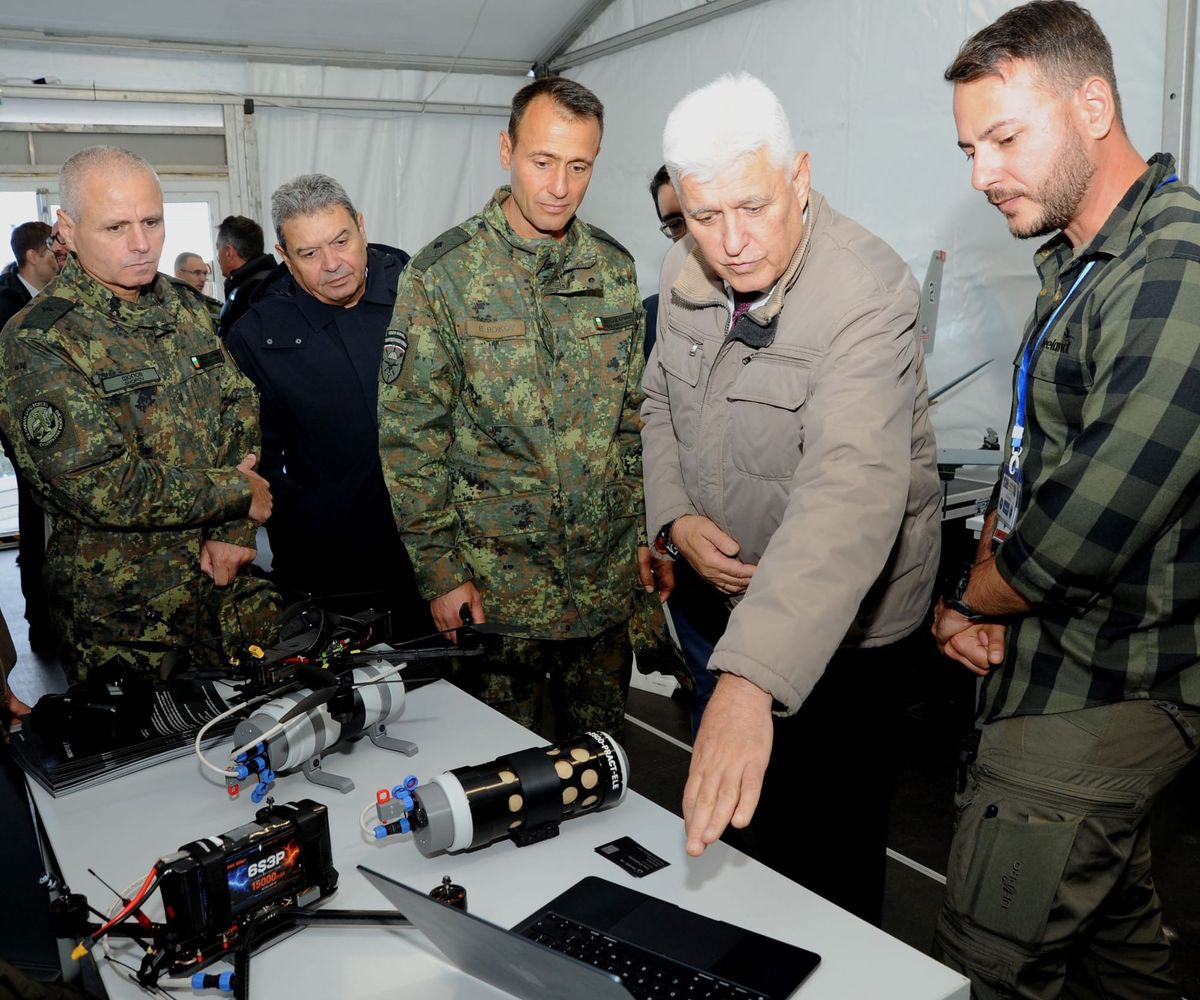
NATO's Allied Special Operations Forces Command (SOFCOM) has completed a multinational exercise in Bulgaria involving 20 defense industry companies and military units from 15 NATO member and partner countries, testing drone and counter-drone technologies under realistic operational conditions.
The exercise, designated BOLD ADRA 26 (BOAD-26), took place from October 19 to 23 at Cheshnegirovo airfield near Plovdiv. Organized by NATO SOFCOM and hosted by the Bulgarian Joint Special Operations Command, it brought military operators together with industry representatives to evaluate technologies for detecting, tracking, disrupting, and engaging unmanned aerial systems.
Drone Detection, Electronic Warfare and Target Engagement
The exercise combined reconnaissance, logistics, and first-person-view (FPV) strike drones with stationary and mobile electronic warfare systems designed to jam or neutralize unmanned aircraft.
Participants demonstrated sensor integration, real-time information sharing, and the transmission of targeting data into a common operational picture. The objective was to assess how different technologies could operate together, allowing military personnel to identify threats, select appropriate countermeasures, and engage targets more effectively.
Bulgarian Defense Minister Dimitar Stoyanov attended the final demonstrations on October 23 alongside Chief of Defense Admiral Emil Eftimov.
Stoyanov acknowledged that counter-drone technologies are struggling to keep pace with the rapid development of unmanned systems, underscoring the need for more effective defensive capabilities.
Eftimov emphasized that countering drones requires more than a single weapon or electronic warfare system. Effective protection depends on integrating surveillance, identification, command-and-control capabilities, and suitable effectors into a coordinated response.
Military Testing Exposes Technology and Procurement Challenges
Brigadier General Bozhidar Boykov, commander of Bulgaria's Joint Special Operations Command, highlighted the importance of testing commercial technologies before making procurement decisions.
According to Boykov, some technologies evaluated during the exercise did not perform as manufacturers had claimed. He argued that Bulgaria's armed forces should have greater opportunities to validate equipment under operational conditions before purchasing it.
He also identified lengthy military acquisition procedures as an obstacle to adopting autonomous systems, given the speed at which drone technologies are evolving.
Major General Tony Turner, Deputy Commander of NATO SOFCOM, described the exercise as an opportunity for special operations forces and industry to experiment with new battlefield capabilities and adapt tactics to rapidly changing technologies.
The exercise provided a platform for defense manufacturers to demonstrate systems directly to military users and gather operational feedback. However, no procurement awards, selected suppliers, or formal performance rankings were announced following the demonstrations.