MSPO 2026: Poland Prepares for Major Defense Industry Show
MSPO 2026 returns to Kielce on September 8-11 as Poland expands defense procurement and the exhibition opens a new 15,500-square-meter hall.

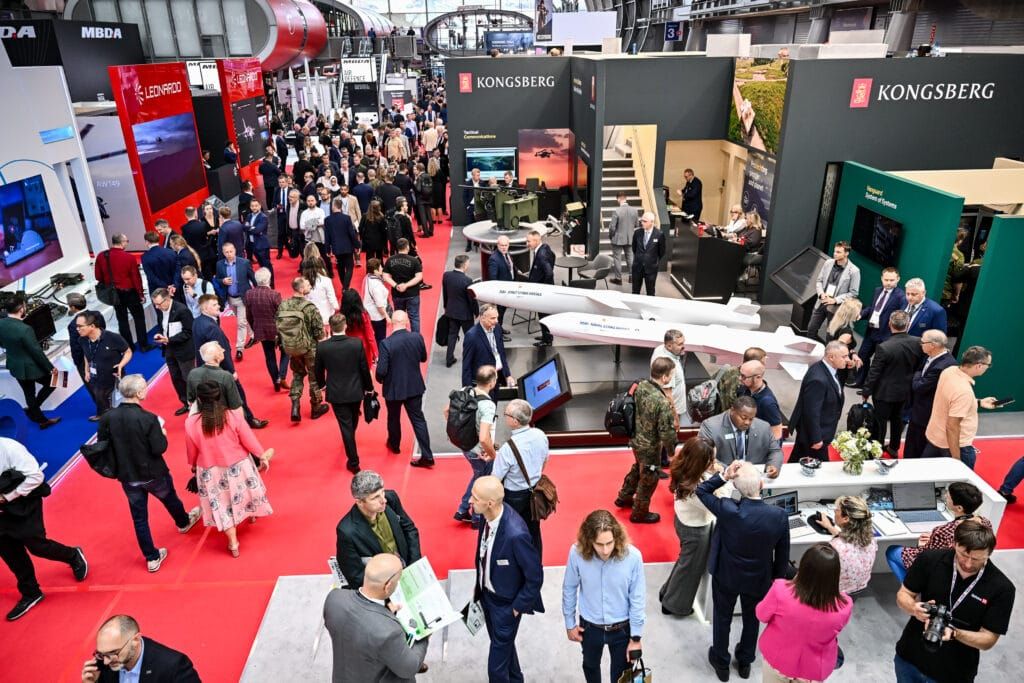
The 34th International Defence Industry Exhibition, known as MSPO, will take place in Kielce, Poland, from September 8 to 11, 2026, bringing defense manufacturers, military delegations and government officials together at one of Central and Eastern Europe’s main defense industry events. This year’s exhibition comes as Poland continues major military modernization programs and expands its role as a defense industrial and procurement market on NATO’s eastern flank.
MSPO 2026 will also mark a physical expansion of the event. For the first time, exhibitors and visitors are expected to use a new 15,500-square-meter exhibition hall at Targi Kielce, increasing the venue’s capacity after the 2025 edition drew nearly 39,000 participants.
MSPO 2026 expands after a record 2025 exhibition
Last year’s MSPO brought 811 exhibitors from 35 countries to almost 40,000 square meters of exhibition space. Targi Kielce reported nearly 39,000 participants, official delegations from 42 countries and 670 accredited journalists.
Those figures provide the benchmark for the 2026 exhibition. The new hall is intended to increase available exhibition capacity as MSPO accommodates a growing number of Polish and international defense companies.
The 2026 exhibitor list is already taking shape. Companies and organizations currently listed by Targi Kielce include Rheinmetall AG, Kongsberg Defence & Aerospace, Anduril Industries, Auterion, the National Association of Ukrainian Defense Industries and the Estonian Defence and Aerospace Industry Association.
The presence of Ukrainian defense industry organizations is particularly relevant as European manufacturers study technologies and operational lessons emerging from the war in Ukraine. Uncrewed systems, electronic warfare, counter-drone technologies, air defense, ammunition and battlefield digitalization are likely to remain closely watched areas across the European defense exhibition calendar.
Poland remains one of Europe’s key defense procurement markets
The timing gives MSPO significance beyond the exhibition itself. Poland has become one of NATO’s most active military procurement markets, combining orders from domestic producers with major acquisitions from the United States, South Korea and European suppliers.
Warsaw’s modernization programs cover air and missile defense, artillery, armored vehicles, combat aircraft, helicopters, ammunition and command systems. This makes Kielce an important venue for manufacturers seeking both Polish contracts and industrial partnerships connected to longer-term production, maintenance and technology cooperation.
MSPO also gives Poland’s domestic defense sector an opportunity to position itself within European supply chains. Polish companies increasingly operate in a market where governments are seeking greater production capacity, shorter delivery timelines and more resilient European supply chains.
For companies from Central, Eastern and South-Eastern Europe, this creates a second layer of relevance. MSPO offers access not only to the Polish market but also to manufacturers and procurement officials looking for suppliers in areas including components, ammunition production, electronics, unmanned systems, vehicle subsystems and maintenance.
Kielce brings NATO suppliers closer to eastern flank requirements
MSPO’s location distinguishes it from larger Western European defense exhibitions. Poland borders Ukraine, Belarus, Lithuania and the Russian exclave of Kaliningrad, placing Polish procurement requirements directly within NATO’s eastern flank security environment.
That geography has influenced Poland’s emphasis on force expansion, air and missile defense, long-range fires, armored maneuver, logistics and ammunition stocks. It also makes MSPO a venue where equipment can be assessed against requirements shaped by high-intensity warfare in Europe rather than primarily by expeditionary operations.
The exhibition is therefore increasingly relevant to companies from the Baltic states, Czechia, Slovakia, Romania, the Nordic countries and the wider Adriatic and Balkan region. Many of these countries face overlapping requirements involving air defense, drones, artillery, ammunition, military mobility and modernization of Soviet-era equipment.
MSPO 2026 opens September 8 in Kielce
The exhibition will run at Targi Kielce, Zakładowa 1, from Tuesday, September 8 through Friday, September 11. Visitor hours are scheduled for 10:00 to 17:00 during the first three days and 10:00 to 15:00 on September 11. Admission is restricted to adult industry professionals, according to the organizer.
The first day is designated as VIP Day. The current program includes the official opening ceremony and events addressing defense technologies and dual-use capabilities.
With less than a month remaining before the doors open, the final exhibitor lineup and company announcements will provide a clearer indication of which systems and procurement campaigns will dominate MSPO 2026.
MSPO 2026: Key questions
When is MSPO 2026?
MSPO 2026 will take place from September 8 to 11, 2026, at Targi Kielce in Kielce, Poland. The exhibition opens at 10:00 each day, closing at 17:00 from September 8 to 10 and at 15:00 on September 11.
What is MSPO?
MSPO is the International Defence Industry Exhibition held annually in Kielce. It brings together defense manufacturers, armed forces representatives, government delegations and other defense and security sector participants.
How large was MSPO in 2025?
MSPO 2025 hosted 811 exhibitors from 35 countries across almost 40,000 square meters of exhibition space. Organizers reported nearly 39,000 participants and official delegations from 42 countries.
Why is MSPO important for the European defense industry?
MSPO provides direct access to Poland’s expanding defense market while connecting manufacturers with military and government delegations from NATO and partner countries. Its location in Poland also gives the exhibition particular relevance to procurement requirements on NATO’s eastern flank.