Poland Expands East Shield With 29 Border Military Warehouses
Poland is expanding East Shield with 29 military warehouses and preparations for rapid minefield deployment along NATO’s eastern flank.

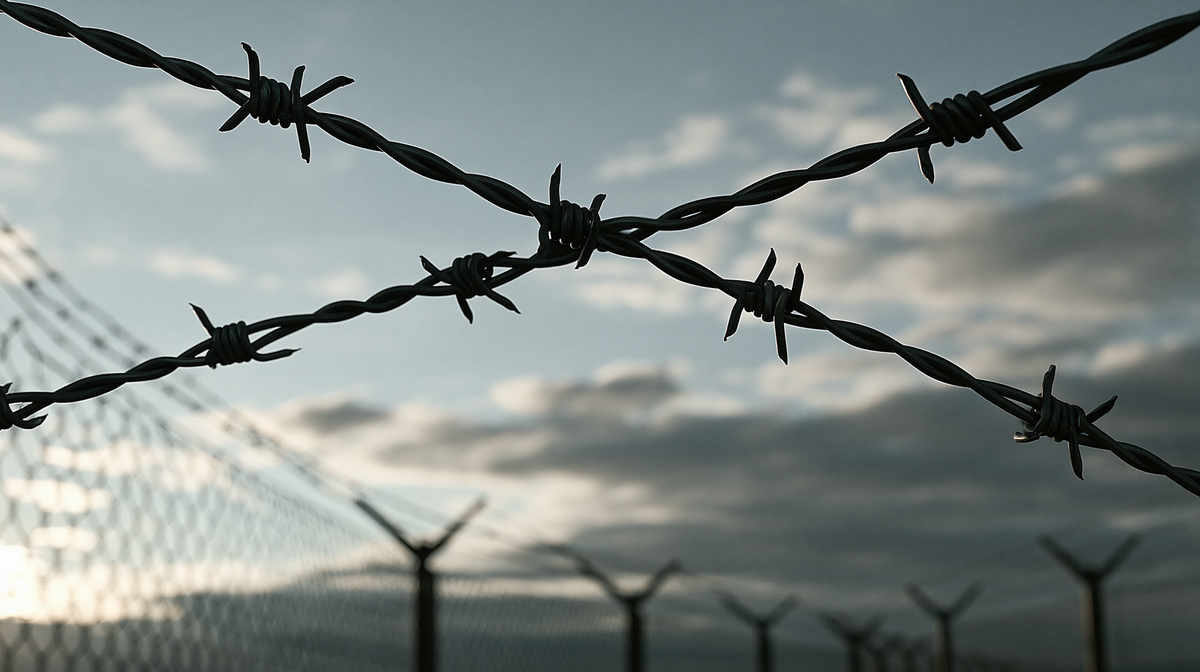
Poland is expanding its East Shield defensive network with 29 military storage facilities near its eastern and northeastern borders while preparing the infrastructure needed to rapidly establish minefields during a crisis. The measures form part of Warsaw’s effort to reinforce NATO territory facing Russia and Belarus and shorten the time required to activate prepared defensive positions.
Deputy Minister of National Defense Cezary Tomczyk said 15 storage facilities have already been established and that the total will reach 29 in the coming months, according to reporting published on August 21. The facilities are intended to support military engineering operations in areas bordering Russia, Lithuania, Belarus and Ukraine.
The 29 sites represent a nearer-term phase of a substantially larger logistics network. The General Staff of the Polish Armed Forces said in November 2025 that East Shield would eventually include more than 100 material storage sites, with one planned for each municipality along the relevant border areas.
East Shield warehouses shorten the time needed to fortify the border
The warehouses are a central part of Poland’s approach because East Shield is not designed as a continuous permanent wall of fortifications. Instead, Warsaw is combining fixed defenses with equipment and engineering materials positioned close enough to threatened sectors for rapid deployment.
The storage network includes materials for trenches, barbed wire, concrete obstacles and other fortification work. Poland had secured 60 kilometers of its eastern border under East Shield by the end of 2025, including 10 kilometers of constructed fortifications and materials at 13 storage locations sufficient to rapidly secure another 50 kilometers.
For 2026, the Polish Armed Forces planned to secure another 200 kilometers. That target includes 20 kilometers of constructed fortifications and pre-positioned materials intended to support the rapid blocking of another 180 kilometers.
This model allows Poland to retain normal use of much of the border region in peacetime while preparing the equipment required to create obstacles during mobilization. Brigadier General Mariusz Ochalski, head of the Polish military engineering directorate, described storage sites in May as a foundation of the current East Shield implementation model.
Poland prepares minefields after leaving the Ottawa Convention
Mine warfare is becoming another component of the border defense architecture. Poland formally ceased to be a party to the Ottawa Convention prohibiting anti-personnel mines on February 20, 2026, six months after Warsaw submitted its withdrawal notification to the United Nations.
Prime Minister Donald Tusk said in February that East Shield was being developed to give Poland the ability to mine its eastern frontier within 48 hours if required. Poland has also been developing the Bluszcz scatterable mine-laying system, while other mine-laying capabilities are being integrated into the wider border defense effort.
The distinction is important: Poland is preparing the capability and infrastructure for rapid minefield deployment rather than maintaining a continuously mined eastern border in peacetime. Polish officials have tied potential deployment to a military threat, while the wider East Shield design combines minefields with anti-tank obstacles, trenches, surveillance systems and terrain features.
Poland’s withdrawal from the Ottawa Convention followed a joint recommendation by the defense ministers of Poland, Estonia, Latvia and Lithuania in March 2025. The four governments cited the deteriorating security environment and the military threat posed by Russia and Belarus as reasons for restoring the option to use anti-personnel mines.
Poland builds a layered defense up to 50 kilometers deep
East Shield extends beyond physical barriers at the frontier. The program is intended to create a layered defensive zone reaching as far as 50 kilometers into Polish territory, incorporating logistics hubs, shelters, storage facilities, surveillance, drone detection and anti-drone capabilities.
The International Institute for Strategic Studies assesses that the Polish system will cover roughly 700 kilometers of borders with Belarus and Russia’s Kaliningrad region. Rather than establishing an uninterrupted fortified line, planners intend to use layered positions adapted to forests, wetlands, waterways and other terrain that can restrict an attacking force.
The program is also becoming increasingly multinational. German military engineers deployed to Poland on a rotational basis in July 2026 to support construction under East Shield, while Warsaw has sought participation from other NATO allies.
The expansion of storage facilities and preparations for mine warfare indicate that Poland is moving East Shield from a construction program toward a pre-positioned defense system designed for rapid activation. For NATO, that creates a prepared engineering and logistics network on one of the alliance’s most exposed land frontiers rather than relying solely on fortifications built after a crisis begins.